Abu Dhabi Crown Prince visits Pak, meets Pak PM Imran Khan for talks on economic aid
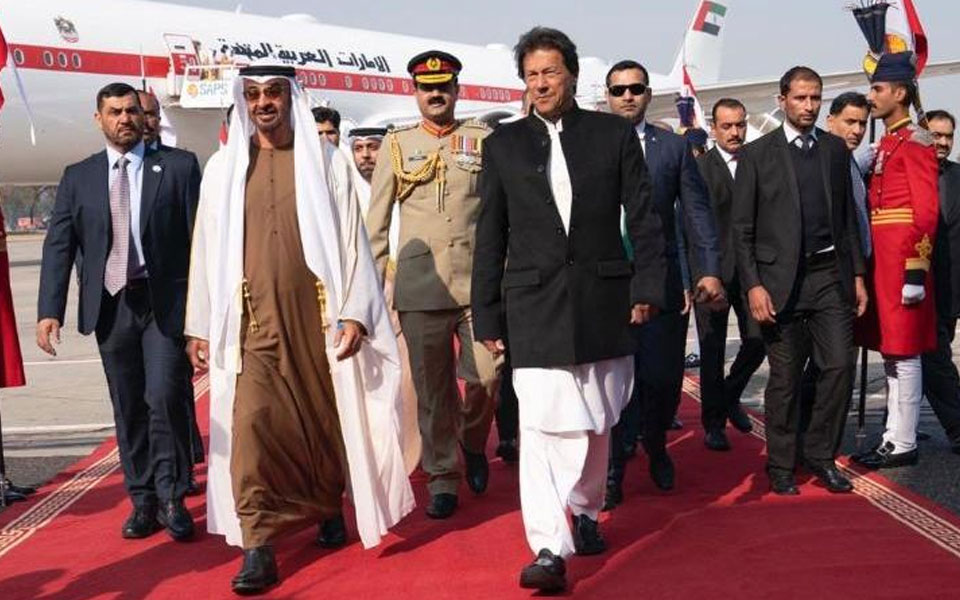
Islamabad, Jan 6 : Abu Dhabi Crown Prince Sheikh Mohammed bin Zayed bin Sultan Al-Nahyan met Pakistan Prime Minister Imran Khan here Sunday as the cash-strapped country seeks economic assistance to bolster its foreign exchange reserves and the government's fiscal policies.
Pakistan, reeling under severe financial crisis, reached out to some "friendly countries" for economic assistance including Saudi Arabia, China and the UAE since Prime Minister Khan assumed office in August.
The Crown Prince, who is on a day-long visit to the country after nearly 12 years, was received by Khan upon his arrival at Nur Khan airbase in Rawalpindi, Dawn reported.
He was given a guard of honour and a fly-past during the red carpet welcome. The high-level delegation will hold talks with the Pakistani side after the two leader's one-on-one meeting.
Pakistan's Foreign Office said the visit is aimed at building on the fresh momentum in ties injected by recent contacts at the leadership level.
Khan visited the UAE twice since August to seek economic assistance to ward off the country's foreign exchange crisis.
Pakistan and the UAE last week finalised the terms and conditions of a USD 6.2 billion support package for Islamabad, which the crown prince is expected to announce during his visit, the report said, adding that the package is to help Islamabad address its balance of payment crisis.
The report quoted a cabinet member as saying that the UAE package is exactly the same size and has the same terms and conditions as those given by Saudi Arabia.
With the new package, Pakistan will save a total of about USD 7.9 billion on oil and gas imports from the UAE, accounting for over 60 per cent of the annual oil import bill amounting to roughly USD 12 to 13 billion, the news report said.
This includes about USD 3.2 billion each of oil supplies on deferred payments from the UAE and Saudi Arabia and about USD 1.5 billion trade finance from the International Islamic Trade Finance Corporation (ITFC), it said.
The total financing support from the UAE and Saudi Arabia, including the ITFC's trade finance, is to be around USD 13.9 to 14 billion when cash deposits of USD 3 billion each from the two countries are also included, according to the cabinet member.
Additionally, a deep-conversion oil refinery is to be set up by Parco a joint venture of Pakistan and Abu Dhabi worth USD 5 to 6 billion at Khalifa Point and an expected petro-chemical complex by Saudi Arabia at Gwadar Oil City.
The Pakistani government has also started backchannel discussions with Qatar for some relief in terms of reduction in LNG prices or a relaxed payment schedule.
Last month, the UAE said it will soon give USD 3 billion to Islamabad.
Pakistan's all weather ally China has also pledged to provide a generous aid to Islamabad to overcome its financial woes. Beijing has not yet revealed the quantum of its financial support.
Pakistan is negotiating a USD 8 billion bailout package from the International Monetary Fund (IMF) to overcome a severe balance-of-payments crisis that threatens to cripple the country's economy.
Pakistan apprehends the IMF will come with stringent conditions of austerity besides scrutiny of USD 60 billion China-Pakistan Economic Corridor projects whose terms till now remained confidential.
The Trump administration is making all efforts to ensure that any IMF loan to Pakistan is not used to repay its Chinese debt.
Let the Truth be known. If you read VB and like VB, please be a VB Supporter and Help us deliver the Truth to one and all.
Bhojshala complex registered as 'mosque' in old revenue records: Muslim side to MP HC
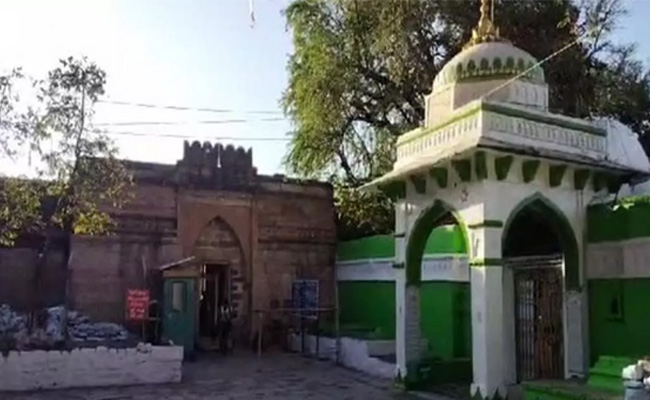
Indore (PTI): The disputed Bhojshala Temple-Kamal Maula Mosque complex has historically been registered as a 'mosque' in revenue records and available sources don't clearly mention any Saraswati temple established by then-king Raja Bhoj, the Muslim side has told the Madhya Pradesh High Court.
The Hindu community considers Bhojshala a temple dedicated to Goddess Saraswati, while the Muslim side calls the 11th-century monument Kamal Maula Mosque. The disputed complex located in Dhar district is protected by the Archaeological Survey of India (ASI).
During the hearing before the HC's Indore bench of Justices Vijay Kumar Shukla and Justice Alok Awasthi on Wednesday, Qazi Moinuddin questioned two PILs filed as intervenors in the Bhojshala case by an organisation named Hindu Front for Justice, one Kuldeep Tiwari and another individual.
Moinuddin claims to be a descendant of Sufi saint Maulana Kamaluddin Chishti and the 'Sajjadanashin' (spiritual head, guru, or successor of a Sufi shrine, khanqah, or religious site).
The PILs state that Bhojshala is actually a Saraswati temple and only Hindus should be granted the right to worship at the disputed complex.
Moinuddin's lawyer, Noor Ahmed Sheikh, claimed in the court that his client's ancestors, who are descendants of Maulana Kamaluddin Chishti, have historically held titles to the complex, and the site was also recorded as a "mosque" in government revenue records.
He contended that those associated with the management of the Kamal Maula Mosque, located within the complex, have been in "continuous and peaceful occupation" of the site for a long time.
Citing Muslim law, Sheikh argued that in the case of religious property, particularly a mosque or its related properties, officials such as the Sajjadanashin and Mutawalli (person entrusted with management, maintenance, and administration of a Waqf), and their descendants, not only have the right to intervene, but also have the right to manage and use such a structure.
Citing provisions of the Ancient Monuments Preservation Act 1904, the Muslim side's lawyer said the term "in-charge of the property" is used in this law, which makes it clear that the person or party who has been in charge of a property for a long time has rights over it.
During the hearing, Touseef Warsi, the lawyer representing the Maulana Kamaluddin Welfare Society of Dhar, claimed that Hindu parties in both PILs had made "misleading representations" regarding historical facts before the high court.
He further claimed that available historical sources do not clearly mention the existence of a Saraswati temple established by Raja Bhoj, the legendary king of the Parmar dynasty who ruled Dhar from 1010 to 1055.
The ASI, a central government agency, has adopted three different positions in the lawsuits filed regarding the Bhojshala dispute, changing its answers from time to time, and this situation raises serious questions about judicial scrutiny of the complex, Warsi submitted.
He raised objections regarding the ASI's process of scientific survey of the Bhojshala complex, carried out on the HC order in 2024, and the method of videography and requested the court to examine these objections.
The hearing in the Bhojshala case will continue on Thursday.
The HC has been regularly hearing four petitions and one writ appeal since April 6, contesting the religious nature of the monument.