ADB asks Pakistan to adopt Indian plan on education

Islamabad (PTI): The Asian Development Bank (ADB) has advised Pakistan to adopt India's scheme ULLAS to fix its dysfunctional education system and impart quality training to its citizens, according to a media report.
The Manila-based lender's recommendation came in response to Pakistan's request for financial support to improve its education system and impart education to all out-of-school children, The Express Tribune newspaper said.
The Understanding of Lifelong Learning for All in Society (ULLAS) was launched by the Government of India in July last year to help non-literates and adults who missed out on formal schooling.
The ADB recommends that the government adopt a strategic and multi-stakeholder consultative approach, drawing on international best practices, such as the government of India's new centrally sponsored scheme "ULLAS", according to the lender.
The ADB emphasised that the ULLAS scheme emphasises the need for both federal and provincial governments to collaborate urgently to enhance access to quality education and can offer insightful lessons of success and challenges when considering a similar vertical scheme in Pakistan.
Prime Minister Narendra Modi approved the new centrally-sponsored scheme ULLAS for the five-year period to cover all the aspects of "Education for All".
The objective of the Indian scheme is to impart not only foundational literacy and numeracy but also to cover other components which are necessary for a citizen of the 21st century such as critical life skills including financial literacy, digital literacy, commercial skills, health care and awareness, child care and education and family welfare.
The ADB's recommendation came just days before a scheduled visit of ADB President Masatsugu Asakawa to Pakistan. The ADB president will meet with Pakistani stakeholders on Monday.
A Planning Commission's report revealed that Pakistan's education delivery system had become dysfunctional and all the 134 districts, barring Islamabad, were lagging on indicators ranging from learning outcomes to public financing.
The findings of the Planning Commission's District Education Performance Index Report 2023 underscored the human resource crisis in Pakistan where people are entering into job markets either with no or low education.
Pakistan last week declared an education emergency on International Literacy Day to educate around 26 million out-of-school children in the country.
Let the Truth be known. If you read VB and like VB, please be a VB Supporter and Help us deliver the Truth to one and all.
CM Siddaramaiah alleges ‘criminal conspiracy’ in Sringeri recount, vows legal action
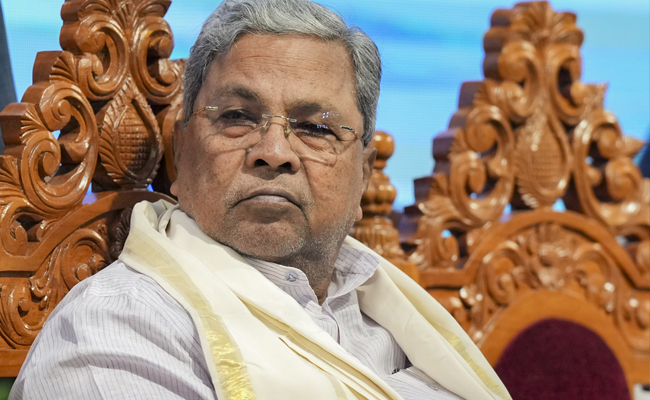
Bengaluru (PTI): Alleging a “criminal conspiracy” by BJP candidate D N Jeevaraj in the Sringeri Assembly poll recounting, Karnataka CM Siddaramaiah on Tuesday said the outcome was manipulated after valid postal ballot votes in favour of Congress leader T D Raje Gowda were tampered with during the recounting process.
Following a Karnataka High Court order on an election petition filed by Jeevaraj, challenging Raje Gowda’s election, the reverification and recounting were conducted on Saturday.
After the reverification and recount of postal ballots for the Sringeri Assembly constituency, votes polled in favour of Raje Gowda were reduced by 255, the returning officer said.
A report on the matter has been submitted to the Election Commission of India for further action, the officer added.
Congress leader Raje Gowda had won the 2023 Assembly polls from Sringeri by 201 votes, defeating his nearest rival Jeevaraj.
Addressing a press conference in Bengaluru, Siddaramaiah said the High Court had directed the recounting of postal ballots and that irregularities were noticed during the exercise conducted on May 2.
“This is a clear case of criminal conspiracy,” Siddaramaiah said, alleging that valid votes cast in favour of Raje Gowda were altered after being accepted by counting agents of all parties, including Congress, BJP, and JD(S).
He claimed that during the recounting of postal ballots, 255 votes were initially accepted as valid by all agents but were later tampered with by subordinate officials.
“There is a second mark on the votes polled in favour of Raje Gowda. They had accepted these as valid votes. Subsequently, another mark was made by officials. This is a clear case of criminal conspiracy,” he said.
When asked who was behind the alleged conspiracy, the CM replied, “It was hatched by Jeevaraj and others. It is planned.”
Siddaramaiah further alleged that the returning officer acted improperly by declaring the result despite the presence of an Election Commission observer during the recounting.
“Immediately after the counting, the returning officer announced the result. He should not have done so; this is against the law,” he said.
He pointed out that Raje Gowda had originally won by 201 votes, but after the recounting, the BJP candidate was declared the winner by 52 votes.
“The BJP has committed a criminal act of conspiracy. This is not vote chori but vote dacoity,” he alleged.
The CM said a police complaint had already been filed by Raje Gowda’s election agent, Sudhir Kumar, and emphasised the need for electoral integrity.
“We want transparency and free and fair elections. That is what our Constitution mandates,” he added.
Stating that the government would pursue legal remedies, Siddaramaiah said, “We are preparing an appeal challenging the returning officer’s announcement in a court of law.”
Responding to a separate query on elections in other states, the CM said there appeared to be an anti-incumbency factor in West Bengal, while results in Tamil Nadu were “surprising,” adding that Vijay’s party was emerging as the largest there.
Following the victory of party candidates in Bagalkote and Davanagere South, Siddaramaiah expressed confidence about future electoral prospects in Karnataka.
“Even in 2028, we will win the Assembly elections. We will come back,” the CM said.
Siddaramaiah added that he would order a forensic examination into the alleged tampering of postal ballots.