Afghan farmers lose income of more than USD 1 billion after the Taliban banned poppy cultivation
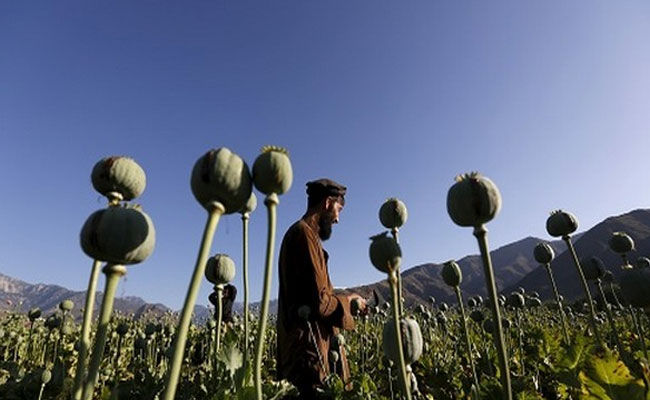
Islamabad (AP): Afghan farmers have lost income of more than USD 1 billion from opium sales after the Taliban outlawed poppy cultivation, according to a report from the UN drugs agency published on Sunday.
Afghanistan was the world's biggest opium producer and a major source for heroin in Europe and Asia when the Taliban seized power in August 2021.
They pledged to wipe out the country's drug cultivation industry and imposed a formal ban in April 2022, dealing a heavy blow to hundreds of thousands of farmers and day labourers who relied on proceeds from the crop to survive.
Opium cultivation crashed by 95 per cent after the ban, the report from the UN Office on Drugs and Crime said.
Until 2023, the value of Afghanistan's opiate exports frequently outstripped the value of its legal exports.
UN officials said the strong contraction of the opium economy is expected to have far-reaching consequences for the country as opiate exports before the ban accounted for between 9-14 per cent of the national GDP.
Afghans need urgent humanitarian assistance to meet their most immediate needs, absorb the shock of lost income and save lives, said UNODC executive director, Ghada Waly.
"Afghanistan is in dire need of strong investment in sustainable livelihoods to provide Afghans with opportunities away from opium," she said.
Afghans are dealing with drought, severe economic hardship and the continued consequences of decades of war and natural disasters.
The downturn, along with the halt of international financing that propped up the economy of the former Western-backed government, is driving people into poverty, hunger, and addiction.
A September report from the UNODC said that Afghanistan is the world's fastest-growing maker of methamphetamine, with seizures of the synthetic drug increasing as poppy cultivation shrinks.
Lower incomes along the opiate supply chain could stimulate other illegal activities like the trafficking of arms, people or synthetic drugs, the most recent UNODC report said.
Let the Truth be known. If you read VB and like VB, please be a VB Supporter and Help us deliver the Truth to one and all.
Injured Phil Salt returns home for scans

New Delhi (PTI): Royal Challengers Bengaluru opener Phil Salt has returned to England for scans on a finger injury sustained last month.
The injury has kept Salt out of RCB's last three matches, with compatriot Jacob Bethell stepping in at the top of the order.
The 29-year-old is reported to have "damaged a finger on his left hand" while diving to save a boundary at deep backward square leg during RCB's defeat to Delhi Capitals at the M. Chinnaswamy Stadium on April 18.
"Salt, who is centrally contracted by the ECB, has since returned home at the request of England's management and has undergone scans on his finger," ESPNCricinfo reported.
According to the report, both RCB and Salt are hopeful of a speedy recovery and the opener can return to India later this month.
Salt had enjoyed a strong start to the season, amassing 202 runs in six innings at an impressive strike rate of 168.33.
RCB are currently second on the points table behind Punjab Kings. They take on Lucknow Super Giants (LSG) on Thursday next.