Afghanistan earthquake death toll passes 1,400, says Taliban government spokesman
Jalalabad (AP): The death toll from a major earthquake in eastern Afghanistan passed 1,400 on Tuesday, with more than 3,000 people injured, Zabihullah Mujahid, a Taliban government spokesman, said on social platform X.
Rescuers are scrambling in a “race against time” to reach the mountainous and remote area devastated by Sunday's powerful 6.0 magnitude earthquake, a UN official said, warning of an exponential rise in the number of casualties.
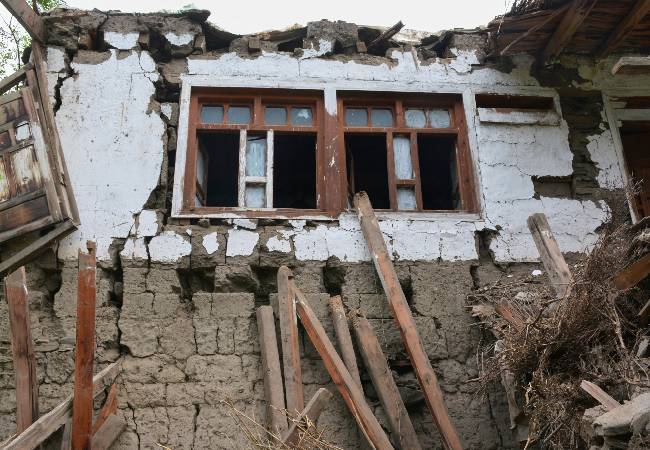
The quake struck in several provinces, causing extensive damage. It flattened villages and trapped people under the rubble of homes that were constructed mostly of mud bricks and wood and were unable to withstand the shock. Rough terrain is hampering rescue and relief efforts.
“We cannot afford to forget the people of Afghanistan who are facing multiple crises, multiple shocks, and the resilience of the communities has been saturated,” said Indrika Ratwatte, the UN's resident coordinator for Afghanistan.
He urged the international community to step forward. “These are life and death decisions while we race against time to reach people.”
It is the third major earthquake since the Taliban seized power in 2021, and the latest crisis to beset Afghanistan, which is reeling from deep cuts to aid funding, a weak economy, and millions of people forcibly returned from Iran and Pakistan.
Ratwatte said that when the walls of wooden and mud homes collapse, the roof falls on to the occupants, causing injury or death. While the area was low-density, the earthquake struck when everybody was asleep.
“If you were to model it based on what has happened before, clearly there's no question that the casualty rate is going to be rather exponential,” he said.
The Taliban government, which is only recognised by Russia, has appealed for assistance from foreign governments and the humanitarian sector.
However, help for Afghanistan is in short supply due to competing global crises and reduced aid budgets in donor countries.
There is also opposition toward the Taliban government's restrictive policies. Earlier this year, the US gutted aid money to Afghanistan, partly due to concerns that money was going to the Taliban government.
Kate Carey, who is the deputy head of the UN Office for the Coordination of Humanitarian Affairs in Afghanistan, said more than 420 health facilities had closed or were suspended due to the “massive reduction” in funding, with 80 of them in the eastern region, the heart of Sunday's quake.
“The consequence is that the remaining facilities are overwhelmed, have insufficient supplies and personnel, and are not as close to the affected populations as the more local facilities at a time when providing emergency trauma care is needed in the first 24 to 72 hours of the earthquake response,” said Carey.
Let the Truth be known. If you read VB and like VB, please be a VB Supporter and Help us deliver the Truth to one and all.
Delhi to adopt fully digital system for time bound traffic challan disposal
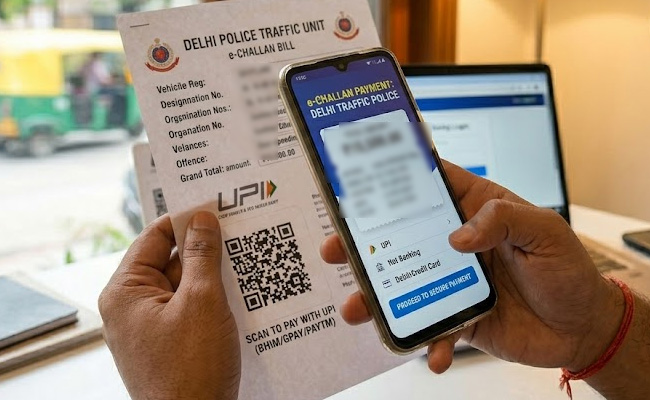
New Delhi (PTI): The Delhi government will soon implement amended Central Motor Vehicles Rules, 1989, making the traffic challan process completely digital and time-bound, to curb violations and enhance road safety, Chief Minister Rekha Gupta said on Sunday.
Under the new framework, avoiding challans will no longer be possible and timely resolution will be mandatory for all citizens. Importantly, violators will not be able to approach courts directly to contest a challan without first going through the prescribed process, said a Delhi CMO statement.
Anyone committing five or more traffic violations within a year will be classified as a "serious offender" and will risk suspension or disqualification of their driving licence under the amended rules, it said.
Gupta noted that the issuance of challans will now be fully modernised.
Police or authorised officers can issue challans either physically or electronically. In addition, violations captured through cameras and digital surveillance systems will automatically generate challans. The e-challans will be delivered within three days to the violators through their mobile numbers, and a physical notice will be delivered within 15 days.
Once a challan is issued, the violator will have 45 days to either pay the fine or challenge it before a grievance redressal officer through the online portal, supported by documentary evidence. If no action is taken within this period, the challan will be deemed accepted, and payment must be made within the next 30 days, the statement said.
If a challenge is rejected, the individual can either pay the fine within 30 days or approach the court after depositing 50 per cent of the challan amount.
Failure to act within the stipulated time will result in the challan being treated as accepted, with payment required within 15 days thereafter.
Payments can be made through electronic modes. The grievance redressal officer will be required to upload a decision on the portal within 30 days, it said.
The chief minister made it clear that once deadlines lapse, daily electronic notices will be issued. Continued non-payment will lead to restrictions on all vehicle-related services, including payment of taxes and processing of driving licence or registration-related requests.
The vehicle will be flagged on the official portal as 'not to be transacted,' effectively blocking any further transactions until the dues are cleared. In cases where necessary, and subject to court orders, police or authorised officers may also impound vehicles involved in violations.
All challans will be issued in the name of the registered vehicle owner, who will be notified via SMS, email or other digital means, it added.