After 17 years in exile, BNP leader Tarique Rahman returns to Dhaka to rousing welcome
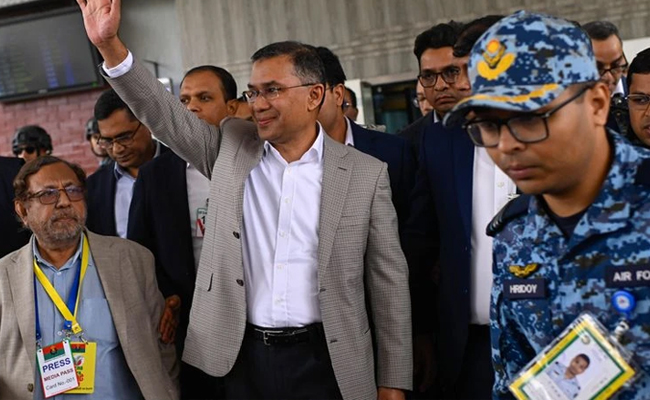
Dhaka (PTI): Bangladesh Nationalist Party (BNP) acting chairman Tarique Rahman returned home to a rousing welcome on Thursday after over 17 years in self-exile, a move that is expected to energise his party workers ahead of the February 12 parliamentary elections.
Rahman, the 60-year-old son of ailing former prime minister Khaleda Zia, has emerged as a leading contender for prime ministership in the polls even as the country's Islamist party, Jamaat-e-Islami has been trying to expand its support base.
The homecoming of the BNP heir apparent comes amid a fresh wave of unrest and political instability gripping Bangladesh following the killing of prominent youth leader Sharif Osman Hadi, who was a prominent face in last year's mass protests that forced the collapse of the Sheikh Hasina government.
ALSO READ: India entered semiconductor industry a bit late, but it will soon start exporting: Shah
Rahman, accompanied by wife Zubaida and daughter Zaima, was received at the Hazrat Shahjalal International airport in Dhaka by BNP Secretary General Mirza Fakhrul Islam Alamgir and other senior party leaders amid tight security.
BNP emerged as the forerunner to capture power in the February polls as former prime minister Hasina's Awami League party has been barred from contesting the election.
Jamaat-e-Islami, the BNP's coalition partner during its 2001-2006 tenure in power, has emerged as its main rival in the upcoming polls after the interim government blocked Awami League's participation under the country's tough Anti-Terrorism Act.
After BNP announced Rahman's plan to return from London, he had said, "like any child, he longs to be near his critically ill mother at her moment of crisis."
Rahman's return to Dhaka also comes at a time Bangladesh-India relations are on a sharp downturn.
The BNP leader left the airport in a bulletproof bus. He is set to attend a mass reception with tens of thousands of his supporters waiting to greet him.
Rahman is also expected to go to see his octogenarian ailing mother and BNP chairperson Khaleda Zia, at the nearby Evercare hospital.
Before leaving the airport Rahman held a phone conversation with interim government chief Muhammad Yunus, BNP’s media cell said.
It is not immediately known what transpired in the phone conversation.
Zia, a three-time prime minister, has been undergoing treatment at the intensive care unit (ICU) at the hospital.
Around 4,000 army personnel, paramilitary Border Guard Bangladesh (BGB) and police in riot gear and plainclothes were deployed in Dhaka to ensure Rahman's security.
"We have enforced an overt and covert security vigil," a senior police official earlier said as supporters queued in long lines on both sides of the street from the airport to the reception site.
Civil aviation authorities disallowed any use of drones near the airport and the Evercare hospital and restricted photography at the reception site.
Bangladesh witnessed violent protests after the death of Hadi. His killing has also triggered some fresh strain in India-Bangladesh ties.
India on Tuesday sought a thorough probe into Hadi's death. India's call for a detailed probe into the case came as unsubstantiated allegations about an Indian hand in Hadi's death triggered anti-India sentiment in Bangladesh.
The relations between India and Bangladesh came under strain after the interim government headed by Muhammad Yunus came to power following the collapse of the Hasina government.
India has been expressing concerns over attacks on minorities, especially Hindus, in that country.
Let the Truth be known. If you read VB and like VB, please be a VB Supporter and Help us deliver the Truth to one and all.
Karnataka MLA Vinay Kulkarni disqualified after conviction in Goudar murder case
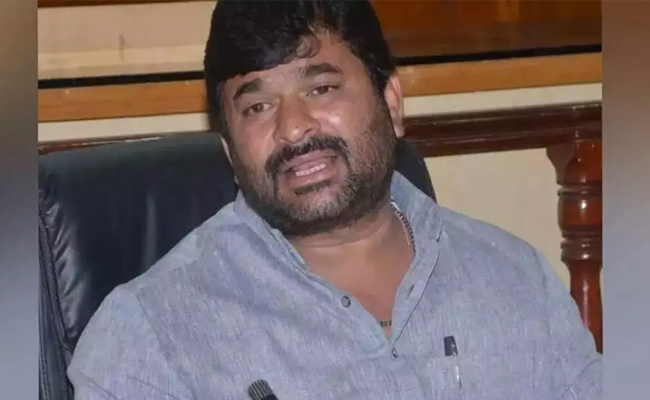
Bengaluru (PTI): The Karnataka Legislative Assembly on Saturday issued an official notification regarding the disqualification of Congress MLA Vinay Kulkarni following his conviction in the murder case of BJP leader Yogeshgouda Goudar.
The former minister is currently in prison, serving life imprisonment in the case.
“Consequent upon the conviction of Vinay Kulkarni, Member of the Karnataka Legislative Assembly representing the Dharwad constituency, by the LXXXI Additional City Civil & Sessions Judge, Bengaluru City (CCH-82), in Spl CC No. 565/2021, he stands disqualified from the membership of the Karnataka Legislative Assembly from the date of conviction, i.e, April 15, 2026,” the notification read.
“He stands disqualified in terms of the provisions of Article 191(1)(e) of the Constitution of India, read with Section 8 of the Representation of the People Act, 1951, and such disqualification shall continue for a further period of six years after his release, unless the conviction is stayed by a competent court,” it added.
Hence, one seat in the Karnataka Legislative Assembly has fallen vacant, the notification said.
Bypolls were held on April 9 to fill two other seats in the 224-member Assembly that fell vacant due to the death of sitting MLAs. The results will be declared on May 4.
On April 15, Judge Santhosh Gajanan Bhat convicted Kulkarni and others under various IPC sections, including criminal conspiracy and murder. Subsequently, on April 17, the court sentenced Kulkarni and 15 others convicted in the case to life imprisonment.
The case pertains to the killing of Goudar, a BJP Zilla Panchayat member, in Dharwad on June 15, 2016. Kulkarni was a minister at that time. Hired assailants attacked and hacked Goudar to death in his gym at Saptapur in Dharwad.
Following demands from Goudar’s family and others, the then-BJP government transferred the case to the CBI in 2019.
The CBI filed a supplementary chargesheet in 2020, naming Vinay Kulkarni as the “main conspirator.” It alleged that he perceived Yogeshgouda Goudar as a growing political rival in Dharwad and hired contract killers to eliminate him.
Kulkarni was arrested by the CBI in 2020. He was granted bail by the Supreme Court in August 2021 under certain conditions, including a ban on entering Dharwad district. However, in June 2025, the apex court cancelled his bail following allegations of witness tampering and attempts to influence prosecution witnesses.
Kulkarni again sought bail in January 2026, but the High Court rejected it, citing judicial propriety.
However, the Supreme Court granted him bail on February 27 after noting that all witnesses had been examined.