Airbus pulls plug on costly A380 superjumbo
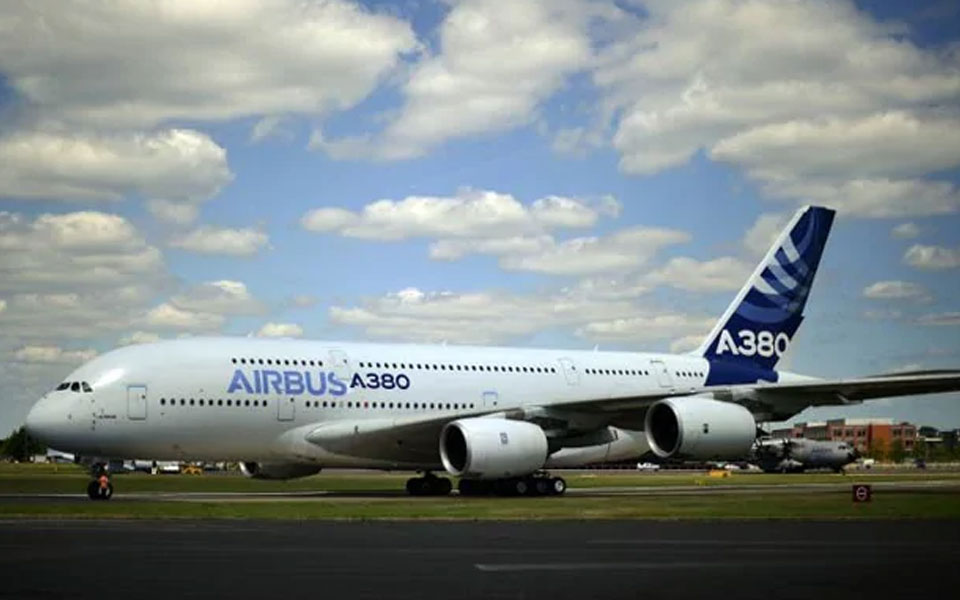
Paris : European aerospace giant Airbus said Thursday it would stop building its A380 superjumbo, the double-decker jet which earned plaudits from passengers but failed to win over enough airlines to justify its massive costs.
The company announced it would stop deliveries of the superjumbo after just over a decade in operation, following a decision by the A380's biggest customer, the Dubai-based carrier Emirates, to reduce its total orders by 39 planes.
It marks an disappointing end to a bold bet on how millions of people would travel in the future, as airlines struggled to fill a plane capable of carrying anywhere from 500 to 850 people.
"Without Emirates, Airbus has no substantial order backlog and no basis to sustain A380 production after 2021," Guillaume Faure, who is taking over as Airbus CEO from Tom Enders this spring, said in a conference call with analysts.
Airbus chalked up 321 orders for the superjumbo, which has a list price of 446 million (396 million euros) -- though the European aviation giant often had to offer substantial discounts.
Analysts had warned the company wouldn't start to recover the billions of euros in investment and production costs unless at least 400 planes were sold, and possibly up to 600.
The programme's future had been in doubt for years as Airbus slowed production, and the company acknowledged last year that the A380 would be scrapped if no new orders came in.
It received a lifeline when Emirates ordered 36 more A380s, but on Thursday Airbus said the airline had balked and would buy smaller A320 and A350 models instead.
After just 10 deliveries last year, Airbus will build eight this year, seven in 2020 and the final two in 2021.
"The A380 is a world-class feat of engineering, much loved by passengers, and we are obviously saddened that deliveries will come to an end," said Chris Cholerton, head of civil aerospace at Rolls-Royce, one of the A380's engine suppliers.
Winding up the programme cut Airbus's 2018 earnings by 463 million euros, but it still posted a 29 percent surge in net profit to three billion euros.
Investors appeared to welcome the results, pushing Airbus shares up more than five percent in early trading in Paris.
The jobs of up to 3,500 A380 workers are at risk, but Airbus said that given its solid order book for other planes, it expects to move most of these employees to other projects.
Airbus said it expects to deliver 880 to 890 planes this year after 800 last year, reflecting steady demand for the A320, the workhorse midsize jet for short and medium-range flights.
It is also targeting more clients for its A350 long-haul jet, aimed at competing more directly with its US archrival Boeing.
But the A380's demise is a stark admission of defeat in the race against Boeing, which had pointedly dismissed Airbus's bet that airlines wanted huge transporters serving a handful of global hubs.
Airbus has faced scepticism over the plane's prospects since the 1990s, when it began to envision a competitor to Boeing's hugely successful 747.
Initial orders however were solid, especially among Asian and Middle East airlines with extensive long-haul operations.
And passengers raved at a noticeably quieter cabin with decent legroom even in economy class -- most airlines configured the plane for 500 to 550 passengers, instead of the all-economy potential for 850 seats.
But Airbus suffered a series of costly delays before the A380's first commercial flight by Singapore Airlines in 2007.
Production problems, including extensive wiring issues, and cost overruns in the billions of euros continued to plague the project, forcing Airbus to report its first-ever annual loss for the 2006 financial year.
Airbus stood by the A380 even after it was slammed by the global financial crisis of 2008, when airlines started having second thoughts about owning huge planes that were profitable only when filled to the brim.
And in 2006 the plane was at the centre of a suspected insider trading scandal, after top managers and key shareholders were accused of selling shares in Airbus's parent company shortly before the superjumbo's production problems were made public, though no one was ever convicted.
Pledges to get the A380 programme back on track were unable to avoid further delays, even as a series of safety scares raised questions among potential clients, including long-targeted Chinese airlines.
Let the Truth be known. If you read VB and like VB, please be a VB Supporter and Help us deliver the Truth to one and all.
Power struggle in ruling Cong has 'created massive confusion' in Karnataka: BJP leader Ashoka
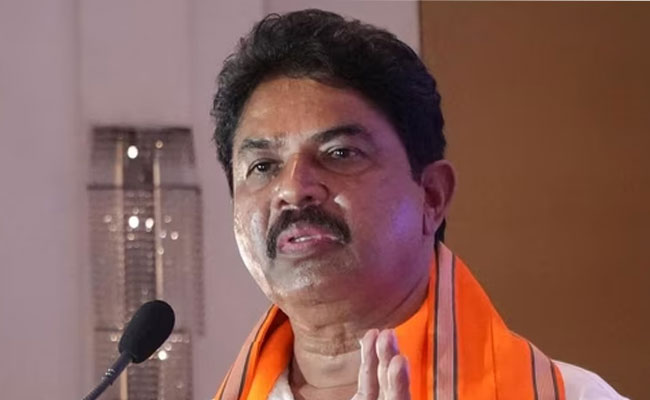
Bengaluru (PTI): BJP leader R Ashoka on Friday claimed that the ongoing power struggle between Chief Minister Siddaramaiah and his deputy D K Shivakumar has created massive confusion in Karnataka.
He remarked that the proverb “when two people fight, the third one benefits” has come true, as AICC President Mallikarjun Kharge is also now making efforts to become Chief Minister.
Speaking to reporters here, Ashoka said the entire government has turned into a house of confusion due to the alleged power tussle.
Kharge’s new statement has only added to the chaos, he said.
Congress chief Mallikarjun Kharge had on Friday said that no date has been fixed yet to discuss possible leadership change in Karnataka.
This came a day after Kharge said there was no change of CM in Karnataka "for now" and that the leadership issue in the state would be resolved soon.
The BJP leader said that Kharge too has aspirations and that he was cheated earlier.
"Perhaps he has received a green signal from the Congress high command to become CM. Everyone is already saying Kharge should become CM. Kharge himself has declared, “I am ready to become CM.” Despite many attempts in the past, he never became CM. Now he is trying to seize the opportunity," the Leader of Opposition in the state assembly said.
According to him, the situation in Congress has perfectly become a case of “two people fighting, third one benefits.”