Alexei Navalny's doctors prevented from seeing him at prison clinic
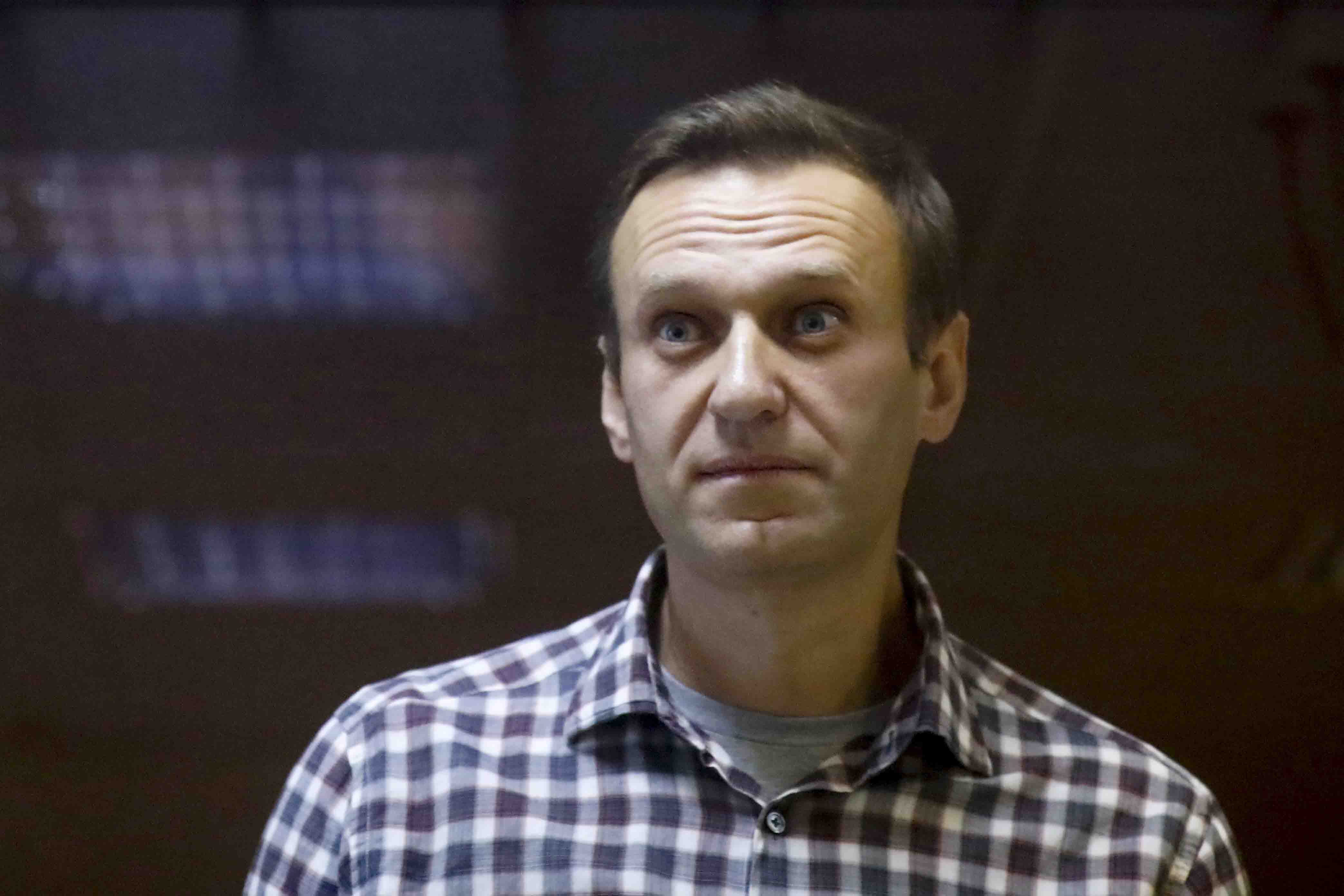
Moscow, Apr 20: Several doctors were prevented Tuesday from seeing Russian opposition leader Alexei Navalny in a prison hospital after his three-week hunger strike and prosecutors detailed a sweeping, new case against his organisation.
Navalny was transferred Sunday from a penal colony east of Moscow to a hospital unit at a prison in Vladimir, a city 180 kilometers (110 miles) east of the capital after his lawyers and associates said his condition has dramatically worsened.
In a post on his Instagram account, Navalny described a grueling search that lasted for several hours before his transfer and wryly described his condition.
You would laugh if you see me now a skeleton staggers around his cell, the post read. "They can use me to scare children who refuse to eat: If you don't eat porridge, you will be like that man with big ears, shaven head and hollow eyes.'
Navalny added a serious note that he was glad to hear from his lawyer about broad sympathy and support for him in Russia and abroad.
His lawyer, Vadim Kobzev, tweeted that Navalny so far has received only one glucose injection since Sunday at the hospital unit, which is intended to treat tuberculosis patients.
Six other attempts to give him a shot failed because paramedics apparently weren't qualified enough to find his vein, he said. His arms are all blue with the shots, Kobzev said.
Reports about Navalny's rapidly deteriorating health have drawn international outrage.
His personal physician, Dr. Anastasia Vasilyeva, led three other medical experts to try to visit Navalny at the prison clinic and the IK-3 prison in the city of Vladimir. They were denied entry after waiting for hours outside the gates.
It's a show of disrespect and mockery of the doctors, Vasilyeva tweeted, adding that Navalny's life and health are clearly in danger.
Navalny, who is Russian President Vladimir Putin's most adamant opponent, has been on a hunger strike since March 31 to protest the refusal by prison officials to let his doctors visit him and provide adequate treatment for back pains and numbness in his legs.
Russia's penitentiary service insists that Navalny was getting all the medical help he needs.
Navalny was arrested in January upon his return from Germany, where he had spent five months convalescing from the Novichok nerve agent poisoning he blames on the Kremlin an accusation Russian officials have rejected.
His arrest triggered the biggest protests seen across Russia in recent years. In February, a Moscow court ordered him to serve 2 1/2 years in prison on a 2014 embezzlement conviction that the European Court of Human Rights deemed to be arbitrary and manifestly unreasonable.
The prison service said in a statement Monday that Navalny's condition was deemed satisfactory, but another of his physicians, Dr. Yaroslav Ashikhmin, said over the weekend that test results provided by his family show Navalny has sharply elevated levels of potassium, which can bring on cardiac arrest, as well as heightened creatinine levels that indicate impaired kidney function.
Despite his worsening condition, Navalny still showed his sardonic humor.
I laughed when I saw medical luminaries' comments that with such a level of potassium that I had in my tests, I should have been either in emergency care or in a coffin, he went on. No, they wouldn't get me that easily. I wouldn't be scared with potassium after Novichok.
In response to Navalny's deteriorating health, his associates have called for a nationwide rally Wednesday, the same day that Putin is scheduled to deliver his annual state of the nation address.
Russian authorities, meanwhile, have escalated their crackdown on Navalny's allies and supporters, with the Moscow prosecutor's office asking a court to brand Navalny's Foundation for Fighting Corruption and his network of regional offices as extremist organisations.
Human rights activists say such a move would paralyze their activities and expose their members and donors to prison sentences of up to 10 years.
Let the Truth be known. If you read VB and like VB, please be a VB Supporter and Help us deliver the Truth to one and all.
Allahabad HC orders probe into 'reinstatement' of teacher in UP's Barabanki
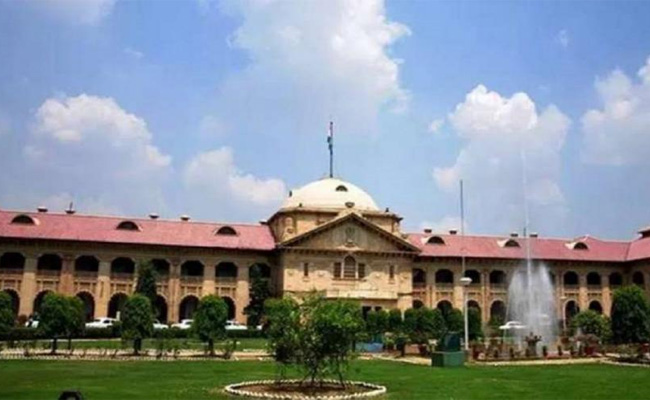
Lucknow (PTI): The Lucknow Bench of the Allahabad High Court on Friday ordered a probe by the special task force (STF) into alleged irregularities in the rejoining of a teacher at City Intermediate College in Barabanki, observing that the reinstatement appeared to be prima facie illegal.
The court also directed the recovery of the salary paid to the teacher during the disputed period.
A bench of Justice Rajeev Singh passed the order on a petition filed by the college management committee. The court expressed doubts over the roles of the District Inspector of Schools (DIOS), Barabanki, the college principal and the teacher concerned and hence, directed a detailed inquiry into the matter.
Taking note of alleged manipulation of records and misleading submissions, the court ordered the immediate transfer of the Barabanki DIOS to ensure a fair probe. It also directed the initiation of disciplinary proceedings against the then joint director of education of the Ayodhya division.
In its order, the court found that the teacher, Abhay Kumar, was initially appointed as an assistant teacher in 2018 but joined an Eklavya Model Residential School in Chhattisgarh as a lecturer in June 2024 without obtaining permission from the management. His subsequent request to retain the lien was rejected.
Despite this, he was allowed to rejoin the Barabanki College in September 2025 on the directions of the joint director of education and the DIOS, and was even paid the salary for October 2025. The court termed the rejoining "wholly illegal" and lacking any legal basis.
The bench also expressed concern over lapses in communication within the education department and directed the Uttar Pradesh chief secretary to ensure that official orders are communicated through email and WhatsApp as well, to prevent disputes.
The matter is next listed for hearing on May 28 when a compliance report is sought.