American national killed by tribespeople in Andaman
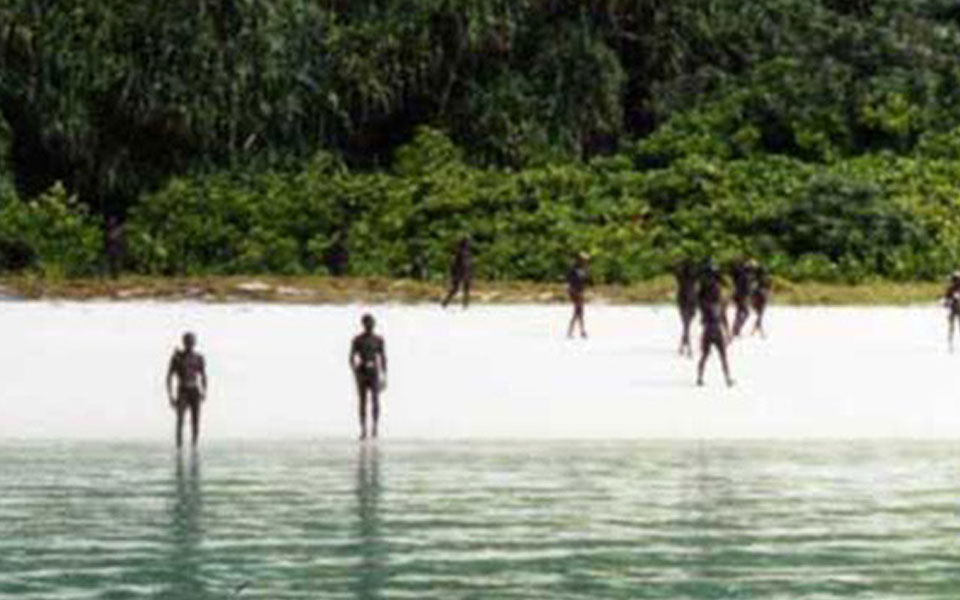
Port Blair, Nov 21: An American national was killed by members of a protected and reclusive tribe in the Andamans, possibly with arrows, when he tried to enter the North Sentinel Island, police said Wednesday.
John Allen Chau, 27 was killed by the Sentinelese Tribes on November 17, they said.
"His body was most probably buried in the sands last week," SP (Headquarters) and PRO of Andaman and Nicobar Police, Jatin Narwal, told PTI.
"His death was caused by traditional weapons but we cannot specifically say whether he was killed by arrows or spears. The details will come out in course of detail investigation," he said.
When the US Embassy here was reached for a response, its spokesperson said, "We are aware of reports concerning a US citizen in the Andaman and Nicobar Islands. The welfare and safety of US citizens abroad is one of the highest priorities of the US Department of State."
"When a US citizen is missing, we work closely with local authorities as they carry out their search efforts. Due to privacy considerations, we have no further comment," the spokesperson said in the email response.
The Sentinelese people are among the tribes that survived the tsunami of 2004 without any help from the outside world. For the 2011 Census, enumerators could locate only 15 Sentinelese people - 12 men and three women. However, their numbers could be anything between 40 and 400, according to experts.
P C Joshi, professor of Department of Anthropology at Delhi University, said the tribe has remained completely isolated from the outside world and despite efforts of the Anthropological Society of India which has tried to contact them indirectly by leaving bananas, coconuts for them, they have failed to make contact.
"We have tried but the tribe has not shown any interest. They are the most private of the tribes in the Andamans. They are aggressive and are known to attack outsiders with arrows and stones. I do not know what made this American visit the island, but this tribe has stayed in isolation for so long that I do not blame them for what they saw as an intrusion and a threat," said the professor.
In 2006, two Indian fishermen, who had moored their boat near North Sentinel to sleep after poaching in the waters around the island, were killed when their boat broke loose and drifted onto the shore.
While the timeline leading to Chau's death is still not clear, the fishermen who took him near the island have told the police that he had visited the Andaman and Nicobar Islands five times earlier. He had expressed a desire to meet the Sentinelese Tribe, whose name is derived from that of the island they inhabit, Sentinel, which is at a distance of 102 km from Port Blair.
Chau had hired a fishing dinghy from the Chidiyatapu area and reached close to the island on November 16, from where he travelled in his own canoe. He had made a failed attempt to reach the island on November 14 as well, they said.
His absence was first red flagged by the fishermen who took him near the island. They informed Chau's friend about his trip who in turn informed the US Consulate.
Two FIRs have been registered with Humfrigunj police station under IPC sections 302 and 304 and seven fishermen who took the American to the island have been arrested, police said.
Joshi said it was a cause of concern that this island, where the Sentinelese have lived for hundreds of years with no outside contact was recently opened for visitors.
"These people are not specimens for tourists to see. They are extremely vulnerable to diseases and any contact might lead to their extinction. We cannot expose them for a few dollars. We need to respect their choice," said Joshi.
In a major step earlier this year, the government excluded this island and 28 others in the Union Territory from the Restricted Area Permit (RAP) regime till December 31, 2022.
The lifting of RAP meant that foreigners could be allowed to visit these islands without permission from the government.
Let the Truth be known. If you read VB and like VB, please be a VB Supporter and Help us deliver the Truth to one and all.
NIA court to complete framing of charges against 2010 hand-chopping case accused on May 15

Kochi (PTI): A special court here will complete proceedings for framing charges against the prime accused in the 2010 hand-chopping case involving professor T J Joseph, in which PFI activists were accused of attacking him at Muvattupuzha.
Ernakulam Special Court for NIA cases judge P K Mohandas, on April 30, heard the arguments of counsel for accused Savad and Shafeer C and decided to proceed with framing charges against the duo.
A group chopped off Thodupuzha Newman College professor Joseph's right hand in July 2010, accusing him of religious blasphemy in a question paper he had prepared.
The case, later taken over by the National Investigation Agency (NIA), resulted in the conviction of 19 accused.
The first accused, Savad, who allegedly chopped off Joseph’s palm, was arrested in Berram in Mattannur, Kannur, in January 2024, where he had allegedly been hiding under the pseudonym Shajahan.
The NIA also arrested Shafeer, who allegedly arranged shelter and provided logistical support to Savad at Chakkad and Mattannur in Kannur since 2020.
On April 30, the court heard the counsel for the accused and the NIA prosecutor on framing charges against the duo.
"On going through the documents and evidence in the case and on hearing the counsel for the accused and the prosecutor, I am of the opinion that there are grounds for presuming that the first accused has committed offences punishable under provisions of the IPC, the Explosive Substances Act and the Unlawful Activities (Prevention) Act, and that the second accused has committed offences punishable under the IPC and the UAPA, and there are materials for framing charges under these provisions against the accused," the court said.
The court directed that Savad be produced and Shafeer, who is on bail, appear before it on May 15 for recording their pleas as part of the charge-framing process.
After framing the charges, the court will schedule the trial in the case.