Amid COVID-19 impact, Indian economy forecast to contract 5.4% in 2020: UN

United Nations: Impacted by disruptions caused by the COVID-19 pandemic, India's economy is forecast to contract by 5.9 per cent in 2020, the UN has said in a report, warning that while growth will rebound next year, the contraction is likely to translate into a permanent income loss.
The Trade and Development Report 2020 by UN Conference on Trade and Development (UNCTAD) said on Tuesday that the world economy is experiencing a deep recession amid a still-unchecked pandemic.
It said the global economy will contract by an estimated 4.3 per cent this year, leaving global output by year's end over USD 6 trillion short (in current US dollars) of what economists had expected it to be before the coronavirus began to spread.
"In short, the world is grappling with the equivalent of a complete wipeout of the Brazilian, Indian and Mexican economies. And as domestic activity contracts, so goes the international economy; trade will shrink by around one-fifth this year, foreign direct investment flows by up to 40 per cent and remittances will drop by over USD 100 billion," the UNCTAD report said, painting a grim picture of the global economic scenario.
UNCTAD expects South Asia to contract 4.8 per cent in 2020 and recover to 3.9 per cent in 2021. India's GDP is forecast to contract 5.9 per cent in 2020 and recover to 3.9 per cent next year, the report said.
"In the case of India, the baseline scenario is a sharp recession in 2020 as strict lockdown measures to stem the virus' spread brought many productive activities to a halt across the country," it said.
The report said that while UNCTAD expects a rebound in India's GDP growth in 2021 in line with the growth rates of the Indian economy in recent years, "the contraction registered in 2020 is likely to translate into a permanent income loss".
In the US, UNCTAD expects GDP to fall 5.4 per cent in 2020 and recover 2.8 per cent in 2021. China is expected to register an economic growth of 1.3 per cent this year and a whopping 8.1 per cent in 2021, the report said, recording the highest economic growth rate in the world.
"This year is shaping up to be a very difficult year for the global economy. With many countries unprepared to respond to a health pandemic, lockdown seemed to be the only plausible way to protect lives and preserve health systems. Doing so triggered an economic crisis that spread as quickly as the virus itself," the UN trade agency added.
Data for the first two quarters of this year show output contracted more sharply than in 2008-2009, and in some cases registering the steepest drop on record.
Estimates for the year point to a generalised global recession matching the Great Depression of the 1930s, it said.
While 2021 will likely see a rebound, it will be uneven within and across countries and uncertainty will persist, the report said, warning that unemployment will be on an upward trend, more and more companies will be facing the threat of bankruptcy; supply chains will be fragile; confidence will be shaken and demand will be weak.
"Debt levels across the world, in both the public and private sectors, will have risen significantly from the historically high levels registered before the crisis. In this condition, the wrong policy steps and ignoring the experience of the last decade could trigger further shocks which would not only derail recovery but could usher in a lost decade," the report said.
It said that the biggest absolute falls in output will be in the developed world, with some countries set to register a double-digit decline over the year.
"But the greatest economic and social damage will be in the developing world, where levels of informality are high, commodities and tourism major sources of foreign exchange, and fiscal space has been squeezed under a mountain of debt," it said.
Between 90 million and 120 million people will be pushed into extreme poverty in the developing world, with close to 300 million facing food insecurity, it said.
UNCTAD Secretary-General Mukhisa Kituyi said building a better world require smart actions.
"The lives of future generations, indeed of the planet itself, will depend on the choices we all take over the coming months, Kituyi said.
The report also said that even if economic activity continues to bounce back and advanced country governments continue with the current mix of fiscal and monetary measures, employment will not fully recover, and many countries will remain in debt distress and income gaps will widen.
"Forecasters' talk of a V-shaped recovery can easily mislead. Such a recovery would require double-digit global growth next year, which is out of the question, said Richard Kozul-Wright, UNCTAD's director of the division on globalisation and development strategies.
The report asserted that a global recovery plan must be both bold and comprehensive, built around a coordinated macroeconomic expansion focused on job creation and higher wages and supported by a big public investment push into cleaner energy, environmental protection, sustainable transport systems and the care economy.
Let the Truth be known. If you read VB and like VB, please be a VB Supporter and Help us deliver the Truth to one and all.
4 workers die after being buried under coal slurry in Jharkhand's Dhanbad
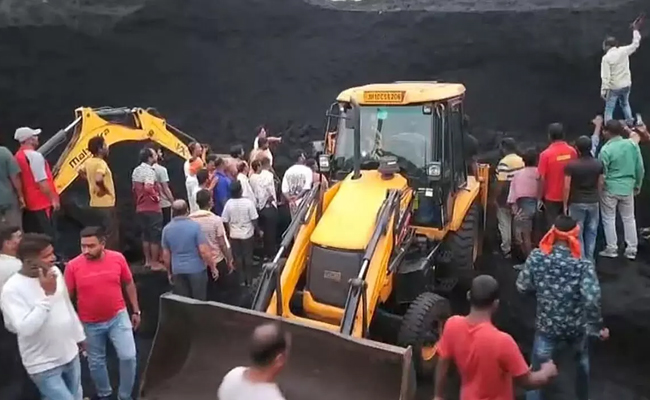
Dhanbad (Jharkhand) (PTI): At least four workers died after being buried under coal slurry in Jharkhand's Dhanbad district on Saturday, a police official said.
The incident took place at Moonidih coal washery in the command area of Bharat Coking Coal Limited (BCCL).
"Bodies of all four workers were dug out of debris during a rescue operation," Putki police station in-charge Waqar Hussain told PTI.
The incident took place when coal slurry was being loaded into trucks by workers, during which a large chunk of slurry fell and trapped several workers underneath, officials said.
The deceased have been identified as Manik Bauri, Dinesh Bauri, Deepak Bauri, and Hemlal Gope.
Meanwhile, the family members of the deceased and local villagers placed the bodies in front of the washery gate and began a protest.
They demanded compensation, jobs for dependents and action against those responsible for the incident.
Police and administration officials are trying to pacify the protesters, an official said.