Amnesty International calls for war crimes probe into Israeli attacks on Lebanon’s health sector
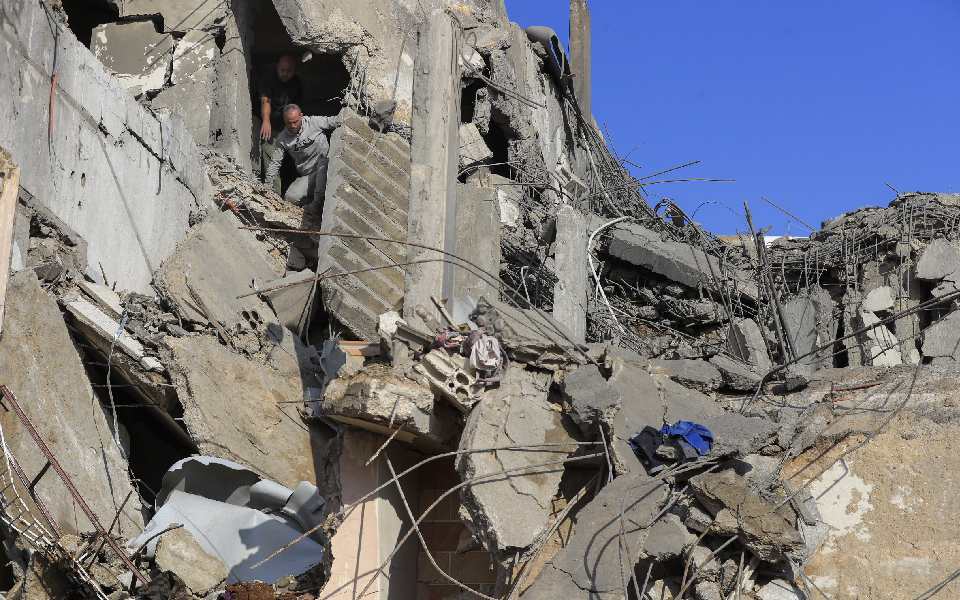
Beirut, Lebanon: Amnesty International has called for an investigation into Israel’s attacks on ambulances, paramedics, and health facilities during its recent conflict with Hezbollah, urging that these actions be examined as potential war crimes.
The human rights organisation stated that Israel’s military had repeatedly targeted medical institutions and personnel, which are protected under international law. “The Israeli military’s repeated unlawful attacks during the war in Lebanon on health facilities, ambulances, and health workers must be investigated as war crimes,” Amnesty said.
The fighting between Israel and Hezbollah lasted for over a year, with two months of full-scale conflict that saw Israeli ground forces deployed. The hostilities effectively ended with a truce on 27 November, as reported by AFP.
During the conflict, the Israeli military alleged that Hezbollah was using ambulances operated by the Islamic Health Committee to transport fighters and weapons. However, Hezbollah denied these claims.
Amnesty International investigated four Israeli strikes on medical vehicles and facilities in Beirut and southern Lebanon between 3 and 9 October last year. The attacks resulted in the deaths of 19 medical personnel, injuries to 11 others, and the destruction of multiple ambulances and two medical facilities. The organisation stated it found no evidence that these facilities or vehicles were being used for military purposes at the time.
Lebanon’s then-health minister, Firass Abiad, reported in December that Israeli strikes had killed 16 people in 67 attacks on hospitals, including 40 direct strikes. He also noted 238 attacks on emergency response organisations, resulting in 206 deaths, and the targeting of 256 emergency vehicles, including fire trucks and ambulances.
Amnesty urged the Lebanese government to grant the International Criminal Court (ICC) jurisdiction to investigate crimes committed on Lebanese territory and ensure victims’ right to legal recourse.
The rights group said it had sent a letter detailing its findings to the Israeli military in November but had not received a response. “The Israeli military has not provided sufficient justifications or specific evidence of military targets being present at the strike locations,” Amnesty stated, adding that the repeated attacks had further weakened Lebanon’s already fragile healthcare system.
According to Lebanese authorities, the conflict resulted in over 4,000 deaths and caused widespread devastation in southern and eastern Lebanon, as well as parts of Beirut’s southern suburbs. The reconstruction costs are estimated to exceed $10 billion.
Let the Truth be known. If you read VB and like VB, please be a VB Supporter and Help us deliver the Truth to one and all.
Maharashtra sets up state vaccination task force to strengthen immunisation programme

Mumbai (PTI): The Maharashtra government has set up a State Vaccination Task Force to strengthen the regular immunisation programme and review the progress of related campaigns, a health department official said on Monday.
The State Vaccination Task Force will comprise at least 29 members and will be headed by the administrative head of the health department, he informed.
The government has also constituted separate district-level and municipal vaccination task forces to improve implementation and address challenges at the grassroots level, he said.
Municipal task forces, chaired by respective civic commissioners, have been constituted in view of the vast urban population in Maharashtra and the role of civic bodies in implementing different health programmes.
The district-level task forces will function under the chairmanship of collectors.
"Complete immunisation of children at the appropriate age is an extremely simple, cost-effective and highly effective measure to reduce child mortality and the prevalence of diseases among kids. Immunisation is a powerful tool for reducing illness in children," maintained the official.
To ensure full vaccination of all children, the state government implements various campaigns from time to time as per the central government guidelines, he pointed out.
"Active participation and cooperation of other relevant government departments are essential (in making these campaigns successful)," according to the official.
The state-level body will review the regular immunisation programme, associated campaigns and vaccine-preventable diseases in detail. It will also conduct focused assessments of high-risk districts and municipal corporations, including vacancies at district, municipal and sub-district levels, availability of cold chain equipment, resource gaps and training requirements, he noted.
The state task force will review allocation and utilisation of funds for immunisation and ensure timely action by officers concerned based on reports from district and municipal task forces and state-level monitoring mechanisms, the official said.
It will also ensure active coordination and participation of other government departments in immunisation drives, while district and municipal task forces will carry out similar functions at their respective levels, the official added.