Amnesty International says genocide being committed against Palestinians in Gaza
Israel rejects accusation
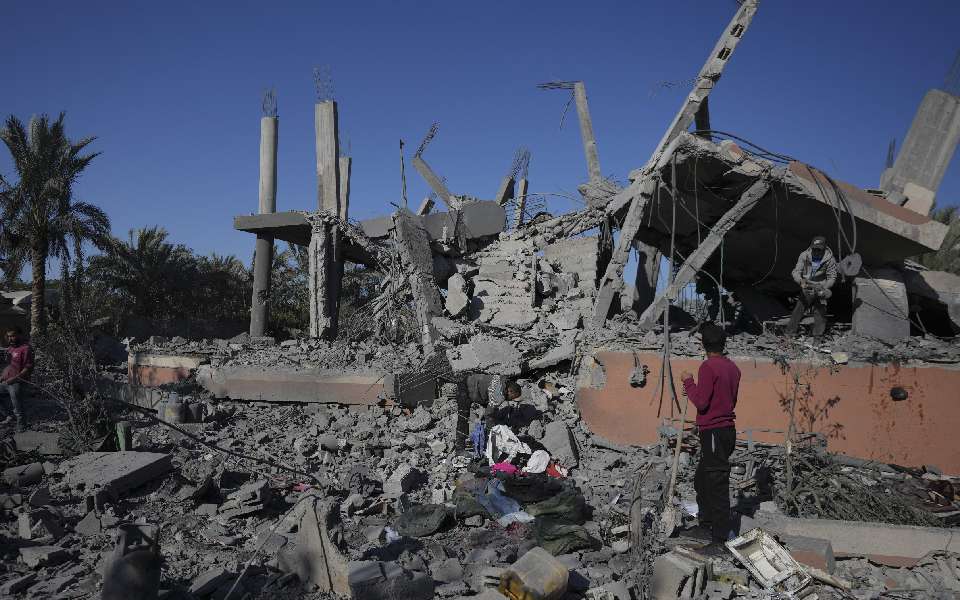
Cairo, Dec 5: Amnesty International accused Israel of committing genocide in the Gaza Strip during its war with Hamas, saying it has sought to deliberately destroy Palestinians by mounting deadly attacks, demolishing vital infrastructure and preventing the delivery of food, medicine and other aid.
The human rights group released a report Thursday in the Middle East that said such actions could not be justified by Hamas' Oct. 7, 2023, attack into Israel, which ignited the war, or the presence of its members in civilian areas. Amnesty said the United States and other allies of Israel could be complicit in genocide, and called on them to halt arms shipments.
“Our damning findings must serve as a wake-up call to the international community: this is genocide. It must stop now,” Agnès Callamard, Secretary General of Amnesty International, said in the report.
Israel, which was founded in the aftermath of the Holocaust, has adamantly rejected genocide allegations against it as an antisemitic “blood libel.” It is challenging such allegations at the International Court of Justice, and it has rejected the International Criminal Court's accusations that Prime Minister Benjamin Netanyahu and his former defense minister committed war crimes in Gaza.
“The deplorable and fanatical organization Amnesty International has once again produced a fabricated report that is entirely false and based on lies," Israel's Foreign Ministry said in a statement. Israel accused Hamas, which has vowed to annihilate Israel, of carrying out a genocidal massacre in the attack that triggered the war, and said it is defending itself in accordance with international law.
Amnesty says Palestinians face a slow, calculated death
Amnesty's report adds an influential voice to a growing list of players that have accused Israel of committing genocide — which would put it in the company of some of the deadliest conflicts of the past 80 years, including Cambodia, Sudan and Rwanda.
The accusations have largely come from human rights groups and allies of the Palestinians. But last month, Pope Francis called for an investigation to determine if Israeli actions amounted to genocide, and Saudi Arabia's crown prince, Mohammed bin Salman, who has signaled readiness to establish diplomatic relations with Israel, accused it of committing genocide.
Israel says it is at war with Hamas, not the people of Gaza. And key allies, including the U.S. and Germany, have also pushed back against the genocide allegations. But Amnesty accused Israel of violating the 1951 Genocide Convention through acts it says are intended to bring about the physical destruction of Gaza's Palestinian population by exposing them to “a slow, calculated death.”
Amnesty said it analyzed the overall pattern of Israel's conduct in Gaza between Oct. 7, 2023 and early July. It noted that there is no casualty threshold in proving the international crime of genocide, which is defined by the United Nations as acts intended to destroy, in whole or in part, a national, ethnic, racial or religious group.
To establish intent, Amnesty said it reviewed over 100 statements by Israeli government and military officials and others since the start of the war that “dehumanized Palestinians, called for or justified genocidal acts or other crimes against them.”
Israeli officials have previously said that such statements were taken out of context or referred to their stated goal of destroying Hamas, not Palestinian civilians.
Israel says it goes to great lengths to protect civilians and comply with international law -- including ordering civilians to evacuate areas ahead of airstrikes and ground offensives. It also says it has facilitated the deliveries of large quantities of food and humanitarian supplies -- a claim that is disputed by the U.N. and aid organizations working inside Gaza.
On Sunday, a former top Israeli general and defense minister accused the government of ethnic cleansing in northern Gaza, where the army has sealed off the towns of Beit Hanoun and Beit Lahiya and the Jabaliya refugee camp and allowed almost no humanitarian aid to enter.
Amnesty said it found that Israel “deliberately inflicted conditions of life on Palestinians in Gaza intended to lead, over time, to their destruction.” Those actions included the destruction of homes, farms, hospitals and water facilities; mass evacuation orders; and the restriction of humanitarian aid and other essential services.
It also analyzed 15 airstrikes from the start of the war until April that killed at least 334 civilians, including 141 children, and wounded hundreds of other people. It said it found no evidence that any of the strikes were directed at military objectives.
It said one of the strikes destroyed the Abdelal family home in the southern city of Rafah on April 20, killing three generations of Palestinians, including 16 children, while they were sleeping. An Associated Press investigation identified at least 60 families in which at least 25 members had been killed.
Amnesty has previously angered Israel by joining other major rights groups in accusing it of the international crime of apartheid, saying that for decades it has systematically denied Palestinians basic rights in the territories under its control. Israel has also denied those allegations.
Israel blames civilian deaths on Hamas, lack of aid on UN
Israel says it only targets Hamas members and blames civilian deaths on Hamas because the group fight in dense, residential areas and have built tunnels and other infrastructure near homes, schools and mosques.
It blames the lack of humanitarian aid on United Nations agencies, accusing them of not delivering hundreds of truckloads of aid that have been allowed in. The U.N. says it is often too dangerous to retrieve and deliver the aid. It blames Israel as the occupying power for the breakdown of law and order — which has enabled armed groups to steal aid convoys — while also accusing it of heavily restricting movement within the territory.
The war began when Hamas-led group stormed into southern Israel on Oct. 7, 2023, killing some 1,200 people, mostly civilians, and taking around 250 hostage, including children and older adults. Some 100 captives are still held inside Gaza, at least a third of whom are believed to be dead.
Israel's retaliatory military campaign has killed more than 44,500 people, according to Gaza health officials, whose count doesn't distinguish between civilians and fighters, though they say more than half the dead are women and children.
The offensive is among the deadliest and most destructive since World War II, and has destroyed vast areas of the besieged coastal territory. It has displaced some 90% of the population of 2.3 million, often multiple times. Hundreds of thousands of people have crammed into squalid tent camps with little in the way of food, water or toilets.
Aid groups say the population is at risk of disease and malnutrition, especially as winter sets in. Experts have warned of famine in northern Gaza, which Israel has almost completely sealed off since launching a major military operation there in early October. Hamas members have repeatedly regrouped there and in other areas, and the group has faced no major internal challenge to its rule.
Amnesty says the US needs to press for an end to the war
The United States, which has provided crucial military aid to Israel and shielded it from international criticism, has repeatedly appealed to Israel to facilitate more aid, with limited results.
The Biden administration said in May that Israel's use of U.S.-provided weapons in Gaza at times likely violated international humanitarian law but that the evidence was incomplete.
Callamard urged the United States, Germany and other countries supplying arms to Israel to pressure Netanyahu to end the war.
Let the Truth be known. If you read VB and like VB, please be a VB Supporter and Help us deliver the Truth to one and all.
EC role, Hindu vote consolidation among factors for BJP win in Bengal polls: J-K CM Omar
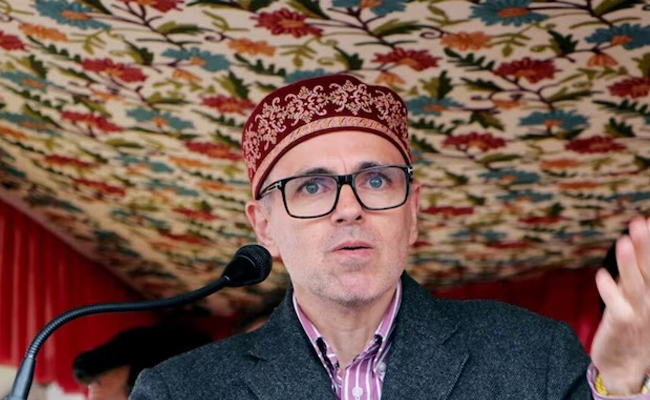
Srinagar (PTI): Jammu and Kashmir Chief Minister Omar Abdullah on Tuesday attributed the BJP's West Bengal win to a "significant role" played by the Election Commission (EC), alongside a consolidation of Hindu votes and a fractured minority mandate.
Abdullah also said the INDIA bloc needs to define its role in the political landscape of the country and make it clear whether the opposition alliance was limited to the parliamentary elections or extended to the state elections as well.
Talking to PTI Videos, Abdullah hinted that the EC has compromised its neutrality by conducting the Special Intensive Revision (SIR) in West Bengal and linked it to the BJP's gains in the state, claiming large-scale deletion of legitimate voters.
On the performance of the BJP in the just concluded assembly elections, Abdullah said the saffron party has almost nothing to show in southern states.
"So then you look at West Bengal and Assam. Yes, the BJP improved its tally in Assam. There are various reasons for that. You know as well as I do, what those are. West Bengal, I think we need to look at the results very carefully," he said.
"The easiest explanation for the West Bengal result is the serious curtailing of voter list," Abdullah said.
"Voters found their names deleted. People who served in uniform and fought for this country on the borders, who were considered Indian citizens all their lives, were suddenly held to a higher standard and not allowed to vote. Something is not right," he said.
While alleging that the EC played a "significant part" in the results, the chief minister admitted the outcome was multifaceted and noted a consolidation of over 60 per cent of the Hindu vote towards the BJP and a "significant fracture" in the minority vote, particularly in seats where Muslims constitute over 50 per cent of the population.
"There is no doubt that the role of the Election Commission played a significant part in the results but we will also have to look at the other factors," he said.
He said the results of West Bengal cannot be compared to those in other states. "The situation was unique to West Bengal. The SIR that was done, the way in which the voter lists were changed, the sort of minute scrutiny that the Election Commission subjected West Bengal to, the role of the central investigative agencies.
"All of these are situations that at least in recent electoral history of India are unique to West Bengal. So to suggest that we can learn lessons from West Bengal and implement them in other parts of the country, I think would not be correct," he said.
Abdullah had recently said that if the West Bengal results throw a surprise, the role of EC will come under scrutiny.
However, during Tuesday's interview, the chief minister said he still maintains that electronic voting machines (EVMs) do not lead to vote theft.
"What we saw in West Bengal...I know there are a lot of people who believe that the EVMs themselves are flawed. I am not a proponent of that conspiracy theory.
"But I do believe that the Election Commission has done itself no favours in the way in which it has gone about both the process of delimitation and the process of finalisation of electoral rolls," he said and cited the example of delimitation exercise in Jammu and Kashmir or Assam.
"These are clear examples of how the process was done to benefit one party or in the case of Jammu and Kashmir, one party and its allies. And the results speak for themselves. You created seven new seats in Jammu and Kashmir and out of those six seats were won by the BJP. You redrew assembly constituencies to benefit one particular party or its allies. And the same is true for West Bengal as well," he said.
Referring to the INIDA bloc, he said the election results were no new message for the alliance.
"We need to decide what the INDIA bloc is for. Is it only for Parliament or for state elections as well?" he asked.
"What happened in West Bengal is unfortunate. The Congress and TMC fought against each other. Now the Congress agrees with Mamata Banerjee that 100 seats were stolen, but the fact is they fought each other," he said.
Despite the friction, Abdullah reaffirmed the "pre-eminent position" of the Congress within the opposition alliance, dismissing the idea of any other party assuming the mantle.
"The Congress is the only party other than the BJP with a pan-India presence. All of us acknowledge this," he stated.
"To suggest someone else can assume a leadership role would be incorrect. Kharge Sahib is the president of the Congress, and by virtue of that, he assumes leadership of the INDIA bloc meetings. That is the way it should be," the chief minister said.
Abdullah said any 'Common Minimum Programme' would depend on whether the opposition alliance decides to fight state assembly elections collectively, noting that he would share his specific views with the bloc internally rather than through the media.