Andaman: Unable to airlift accident victim to Chennai hospital
family makes desperate calls for help
Port Blair: The family of a young man battling for life after a road accident in Andaman is desperately seeking urgent medical evacuation to Chennai, but bureaucratic hurdles and lack of immediate stretcher facilities have left them helpless.
The accident took place on Friday at Tushnabad, Andaman, when a speeding SSV Transport bus collided with the victim, causing severe injuries. The man, who remains unconscious for over 24 hours, has suffered a serious head injury and is currently receiving treatment at GB Pant Hospital in Port Blair. Doctors have stated that the next 48 hours are critical and have recommended shifting him to Chennai for advanced medical care. However, the family has been struggling to find an immediate way to transport him.
One of the victim’s relatives, Shahrukh Sayed, took to social media platform X on Saturday, pleading for urgent help. In his post, he expressed shock at the lack of immediate airlift options for stretcher patients from Andaman. He tagged various government authorities, airlines, politicians, and celebrities, hoping that someone would intervene and help with the medical evacuation.
According to Sayed, IndiGo Airlines informed the family that it would take at least 48 hours after payment and necessary formalities, and even then, it would be subject to seat availability. Meanwhile, Air India Express' website mentioned that their process could take 72 hours, but the family has reportedly received no response from the airline's customer care or staff at the Port Blair (IXZ) airport counter.
Air India, which previously offered stretcher facilities, has completely discontinuedthe service, leaving the family with even fewer options. Akasa Air, another airline operating in the region, does not offer stretcher facilities at all.
The family, in their desperate search for solutions, learned that another patient was shifted to Chennai on a stretcher via IndiGo Airlines, but only after a painstaking process that took 10 days of intensive follow-ups before approval was granted. The victim’s relatives are devastated as they do not have that much time and require immediate assistance.
“We need urgent help NOW. We have already started the medical documentation process, but time is running out. If anyone can help arrange an emergency medical transfer, please contact me immediately,” Sayed wrote in his plea.
He tagged prominent figures such as actors Akshay Kumar, Shah Rukh Khan, and Sonu Sood, as well as Andaman-based politicians and organizations. Calls have also been made to the Ministry of Civil Aviation, DGCA, Airport Authority of India, and Prime Minister Narendra Modi’s Office, urging them to intervene.
As of now, no concrete solution has been found. The family continues to appeal for immediate action, hoping that authorities or organizations specializing in medical evacuation will step in before it is too late.
URGENT HELP NEEDED
— Shahrukh Sayed (@Shahrukh_333) March 1, 2025
My cousin brother met with an accident yesterday at Tushnabad, #Andaman when a speeding SSV Transport bus collided him. He has suffered a head injury and is currently unconscious for the past 24+ hours at #GBPantHospital, #PortBlair. Doctors have advised that…
Let the Truth be known. If you read VB and like VB, please be a VB Supporter and Help us deliver the Truth to one and all.
Youngsters should be made aware of UP's condition before 2017: Adityanath
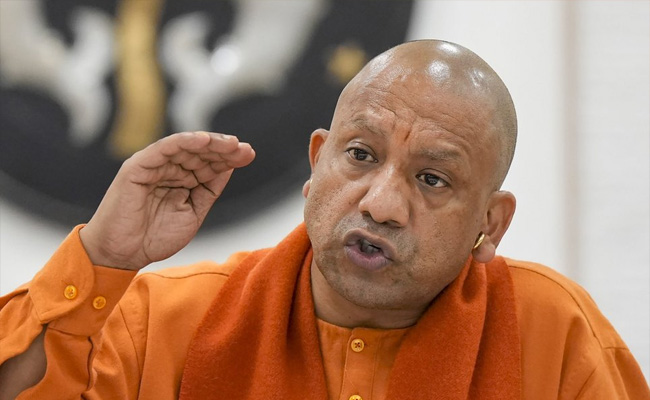
Gorakhpur (UP) (PTI): Uttar Pradesh Chief Minister Yogi Adityanath on Friday urged intellectuals and opinion makers to educate the younger generation about the condition of the state before 2017 and the transformation witnessed in recent years.
Addressing the "Prabuddh Samvad" programme organised by the BJP's Rapti Nagar Mandal at a marriage hall in Gorakhpur, Adityanath said youngsters must be made aware of the "era of riots, curfews, lawlessness and appeasement politics", so that such a situation does not return.
He said many youngsters today were too young to understand the condition of Uttar Pradesh 10 years ago. "If we do not tell the present generation what the state faced earlier, they will forget the consequences of misgovernance and appeasement politics," he said.
The chief minister alleged that before 2017, the state suffered from "goondaism, corruption, anarchy and exploitation by regional parties". He claimed that traders were forced to pay the "goonda tax", women felt unsafe and employment opportunities were limited, forcing many to migrate.
Highlighting the changes under the present government, Adityanath said Uttar Pradesh now offers development, security and employment opportunities.
Referring to Gorakhpur, he said the fertiliser plant has resumed operations, the All India Institute of Medical Sciences (AIIMS) is functioning smoothly and the Baba Raghav Das (BRD) Medical College has improved healthcare services.
The chief minister added that industrial projects worth Rs 15,000 crore have generated jobs for nearly 50,000 youngsters in eastern Uttar Pradesh.
Praising Prime Minister Narendra Modi, Adityanath said India has emerged as a global inspiration under his leadership.
Referring to global tensions and rising fuel prices, he appealed to people to conserve fuel and adopt alternatives, such as solar energy, public transport, electric vehicles and carpooling.
Calling intellectuals the "opinion makers of the society", he said teachers, doctors, lawyers and entrepreneurs have a responsibility to guide people in the right direction. He also urged citizens to remain balanced during both favourable and challenging times.
Local MP Ravi Kishan and Bharatiya Janata Party (BJP) MLC Dharmendra Singh also addressed the programme. Mayor Manglesh Srivastava and several BJP leaders, professionals and social workers were present.