Anti-govt protesters in SL claim they found millions of rupees inside President Rajapaksa's house
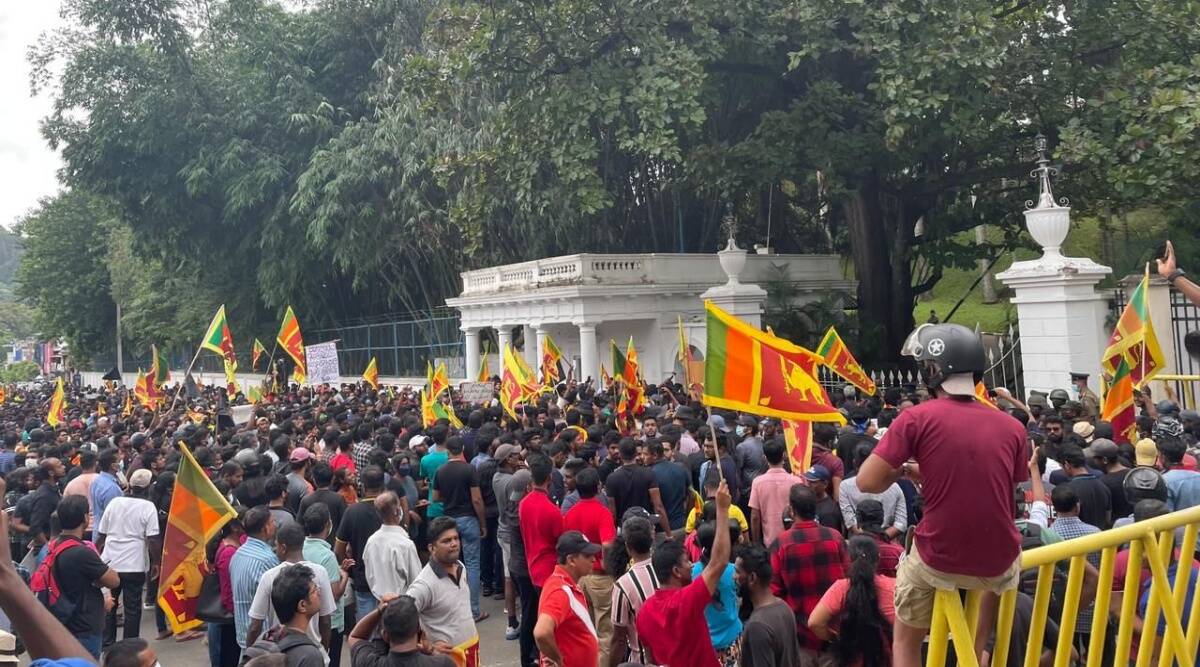
Colombo, Jul 10: The anti-government protesters in Sri Lanka who stormed embattled President Gotabaya Rajapaksa's official residence have claimed to have recovered millions of rupees inside his mansion, according to a media report on Sunday.
A video is being shared on social media showing the protesters counting the currency notes that were unearthed. The recovered money was said to be handed over to the security units, the Daily Mirror newspaper reported.
Authorities have informed that they will take steps to announce the ground situation after probing the relevant facts, the daily reported.
Hundreds of anti-government protesters on Saturday stormed into Rajapaksa's residence in central Colombo's high-security Fort area after breaking the barricades, as they demanded his resignation over the island nation's worst economic crisis in recent memory. Another group of protesters entered the private residence of Prime Minister Ranil Wickremesinghe and set it on fire.
The President's whereabouts is still not known. His only communication outside since the protesters stormed into the city has been with the Parliament Speaker Mahinda Yapa Abeywardena, who announced late Saturday night that the President would resign on Wednesday.
President Rajapaksa informed the Speaker about this decision to quit after Abeywardena wrote to him seeking his resignation following the all-party meeting of leaders held Saturday evening.
The Speaker would become the acting President in the absence of both the President and the Prime Minister. Later, an election among MPs must happen to elect a new President. Prime Minister Wickremesinghe has also offered to resign.
In May, President Gotabaya Rajapaksa's elder brother and Prime Minister Mahinda Rajapaksa had to quit in the face of massive anti-government protests.
The Rajapaksa brothers, Mahinda and Gotabaya, were hailed by many in Sri Lanka as heroes for winning the civil war against the LTTE but they are now blamed for the country's worst economic crisis.
The expected exit of President Gotabaya Rajapaksa on Wednesday and the resignation of Mahinda Rajapaksa as Prime Minister in May is a dramatic fall from grace for a powerful family that has dominated Sri Lankan politics for more than a decade.
Sri Lanka, a country of 22 million people, is under the grip of an unprecedented economic turmoil, the worst in seven decades, crippled by an acute shortage of foreign exchange that has left it struggling to pay for essential imports of fuel, and other essentials.
The country, with an acute foreign currency crisis that resulted in foreign debt default, had announced in April that it is suspending nearly USD 7 billion foreign debt repayment due for this year out of about USD 25 billion due through 2026.
Sri Lanka's total foreign debt stands at USD 51 billion.
Let the Truth be known. If you read VB and like VB, please be a VB Supporter and Help us deliver the Truth to one and all.
3 women die after giant tree falls on them in Odisha’s Koraput
Koraput (PTI): Three women died and another was injured after a giant tree fell on them following thunderstorms in Odisha’s Koraput district, police said on Tuesday.
The incident took place on Monday evening when they were in a market at Pedabayalu in Nandapur block near the Andhra-Odisha border.
The tree was uprooted due to strong winds amid rain and thunderstorms, a police officer said.
Two women died on the spot and another in hospital, he said.
Nandapur BDO Durga Prasad Dora and MLA Rama Chandra Kadam visited the spot, and assured the victims’ families of government support.