Argentine authorities detain relatives of Hitler’s advisor over missing Nazi-looted painting

Buenos Aires: Argentine authorities have detained the daughter and son-in-law of Friedrich Kadgien, a financial adviser to Adolf Hitler, following the disappearance of a 17th-century painting believed to have been looted by the Nazis, prosecutors confirmed on September 2.
NDTV Profit reported that the artwork is thought to be ‘Portrait of a Lady’ by Italian baroque painter Giuseppe Ghislandi (1655–1743). It was seen earlier this year in photographs of a property listed for sale in Mar del Plata, once owned by Kadgien. The discovery was first reported by Dutch newspaper AD. Soon after the story appeared, the painting vanished.
Kadgien, who fled to Argentina after World War II, died in 1978. His daughter and her husband were placed under house arrest for three days and are expected to face charges linked to the painting’s disappearance.
The family maintains the artwork belongs to them. Their lawyer, Carlos Murias, told local daily La Capital that they are cooperating with investigators. Argentine newspaper La Nación reported that the couple insisted the painting was inherited lawfully. Despite these claims, prosecutors told The Times of Israel that the painting has not been surrendered.
Interpol and Argentina’s federal police are assisting in the search. Investigators carried out four property raids last week, recovering two 19th-century paintings from the home of another Kadgien daughter. Authorities said the works are undergoing analysis to determine whether they too were taken during the Nazi era.
Jacques Goudstikker, a Jewish art dealer from the Netherlands, was thought to have the missing Ghislandi painting in his collection. During the Nazi invasion Goudstikker fled the country in 1940 and died while escaping. His collection of more than 1,000 pieces was seized and many were taken by top Nazi officials, including Hermann Goering, founder of the Gestapo.
The Dutch government recovered about 300 of Goudstikker’s works after the war and later restituted them to his heirs. In 2011, the Getty Museum in Los Angeles returned another piece linked to his collection.
Let the Truth be known. If you read VB and like VB, please be a VB Supporter and Help us deliver the Truth to one and all.
Delhi to adopt fully digital system for time bound traffic challan disposal
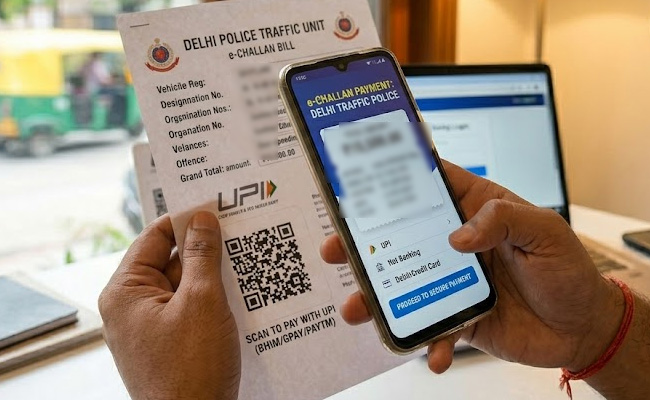
New Delhi (PTI): The Delhi government will soon implement amended Central Motor Vehicles Rules, 1989, making the traffic challan process completely digital and time-bound, to curb violations and enhance road safety, Chief Minister Rekha Gupta said on Sunday.
Under the new framework, avoiding challans will no longer be possible and timely resolution will be mandatory for all citizens. Importantly, violators will not be able to approach courts directly to contest a challan without first going through the prescribed process, said a Delhi CMO statement.
Anyone committing five or more traffic violations within a year will be classified as a "serious offender" and will risk suspension or disqualification of their driving licence under the amended rules, it said.
Gupta noted that the issuance of challans will now be fully modernised.
Police or authorised officers can issue challans either physically or electronically. In addition, violations captured through cameras and digital surveillance systems will automatically generate challans. The e-challans will be delivered within three days to the violators through their mobile numbers, and a physical notice will be delivered within 15 days.
Once a challan is issued, the violator will have 45 days to either pay the fine or challenge it before a grievance redressal officer through the online portal, supported by documentary evidence. If no action is taken within this period, the challan will be deemed accepted, and payment must be made within the next 30 days, the statement said.
If a challenge is rejected, the individual can either pay the fine within 30 days or approach the court after depositing 50 per cent of the challan amount.
Failure to act within the stipulated time will result in the challan being treated as accepted, with payment required within 15 days thereafter.
Payments can be made through electronic modes. The grievance redressal officer will be required to upload a decision on the portal within 30 days, it said.
The chief minister made it clear that once deadlines lapse, daily electronic notices will be issued. Continued non-payment will lead to restrictions on all vehicle-related services, including payment of taxes and processing of driving licence or registration-related requests.
The vehicle will be flagged on the official portal as 'not to be transacted,' effectively blocking any further transactions until the dues are cleared. In cases where necessary, and subject to court orders, police or authorised officers may also impound vehicles involved in violations.
All challans will be issued in the name of the registered vehicle owner, who will be notified via SMS, email or other digital means, it added.