Army experts comb cargo plane crash site in Greece; 8 dead
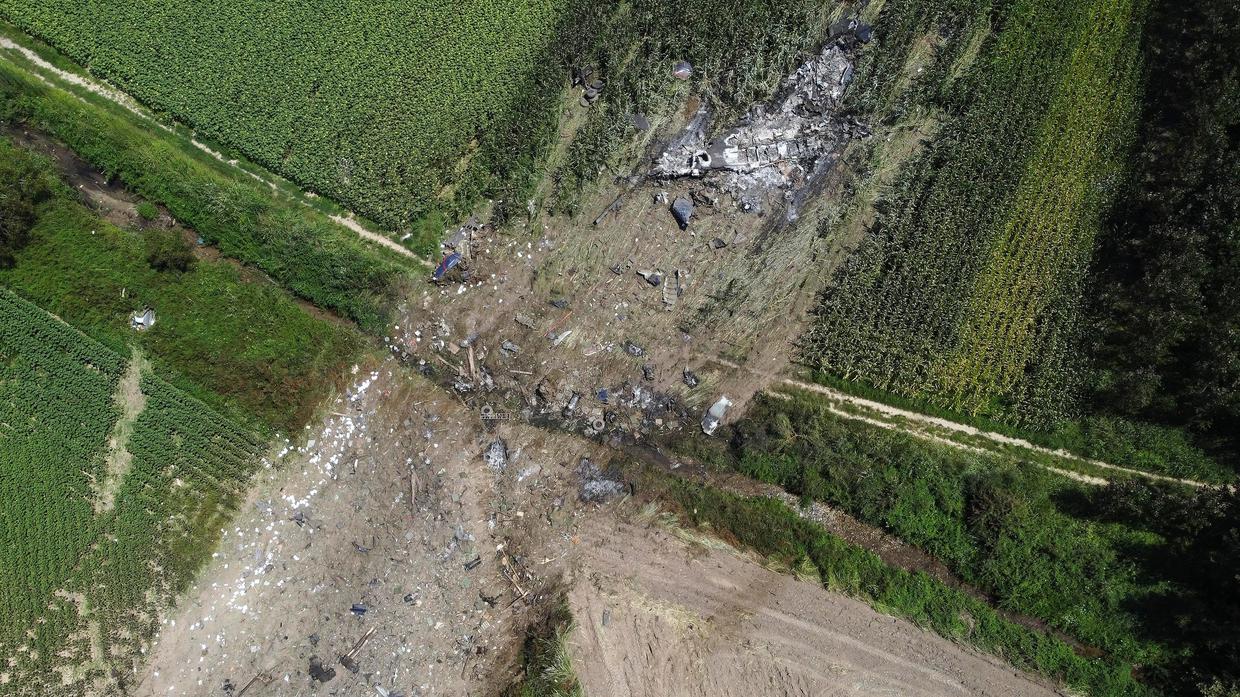
Palaiochori, Jul 17: Experts investigating the site of a cargo plane crash in northern Greece said Sunday they have found no evidence of dangerous substances but say there is still a lot of widespread ordnance, while Serbia's defense minister confirmed that all eight crew members had died in the crash.
The An-12 cargo plane from Serbia flown by a Ukrainian aviation crew smashed into fields between two Greek villages late Saturday. Its fuselage dragged on the ground for 170 meters (nearly 190 yards) before it disintegrated, authorities said. Locals reported seeing a fireball and hearing explosions for two hours after the crash.
Serbian Defence Minister Nebojsa Stefanovic told a news conference Sunday that the plane was carrying 11.5 tons of Serbian-made mortar ammunition to Bangladesh, which was the buyer. It had taken off from the Serbian city of Nis and had been due to make a stopover in Amman, Jordan.
The Greek Army's Special Joint Nuclear, Biological and Chemical Defense Unit cleared two paths Sunday for forensics experts to move in before leaving. The new team was on the site Sunday afternoon collecting body parts. They have so far identified six of the eight crew members and aim to collect their evidence by sunset, authorities say.
Explosives disposal experts have also started working on the site, although it looks like they will have to resume their work at dawn Monday, local authorities said. It is only when their work is done that Civil Aviation Authority experts will try to retrieve the plane's black box.
The fire service and police have created an extended security perimeter because of the widespread ordnance. Residents have been allowed to leave their homes since early Sunday, but have been told that their fields may not be safe to work in because of the likely presence of explosives. Nearby dirt roads have been closed to vehicles.
A plume of white smoke was still rising from the front end of the plane on Sunday morning.
The plane was operated by Ukrainian cargo carrier Meridian. The Ukrainian consul in Thessaloniki, who arrived at the crash site, told local officials that the crew were all Ukrainian.
These were illuminating mortar mines and training (mines). ... This flight had all necessary permissions in accordance with international regulations, Stefanovic said.
The plane crashed shortly before 11 p.m. about 40 kilometers (25 miles) west of Kavala International Airport. Minutes before, the pilot had told air traffic controllers he had a problem with one engine and he had to make an emergency landing. He was directed to Kavala Airport but never made it there.
The plane is a Soviet-era four-engine turboprop cargo carrier.
Drone footage shows that small fragments are all that is left of the plane. Firefighters who rushed to the scene Saturday night were prevented from reaching the crash site by smoke and an intense smell that they feared might be toxic.
Nearby residents were told to keep their windows shut all night, not to leave their homes and to wear masks.
Let the Truth be known. If you read VB and like VB, please be a VB Supporter and Help us deliver the Truth to one and all.
People of Assam have made Pawan Khera eat pera, mocks Himanta Biswa Sarma

Dispur: In the backdrop of the BJP-led NDA’s sweeping win in the Assam elections on Monday, Chief Minister Himanta Biswa Sarma hit out at the Congress party, picking senior leader of the rival party Pawan Khera who had alleged that Sarma’s wife had multiple passports.
Speaking to BJP activists and reporters after the poll results were announced, the CM opined that Khera should no longer hold the position of spokesperson in the Congress, adding, “The people of Assam have Pawan Khera eat ‘pera’.”
Sarma, who called the people’s mandate in the state both historic and emotional, said, “The state’s image had started changing since 2016, under the influence of Prime Minister Narendra Modi and Union Home Minister Amit Shah. Assam is now being considered a development-orientated state because of them.”
Commenting on the Congress leadership, the CM said that the people believed the BJP’s allegations during the campaign. “Congress leaders, however, faced rejection from their own communities,” he claimed and added that the BJP government would continue raising certain issues even after the elections.