Arnab Goswami’s programme fined 20,000 pounds by UK broadcast regulator
This report was first published in scroll.in and has been posted here without any alterations or editing. To read the original report, CLICK HERE
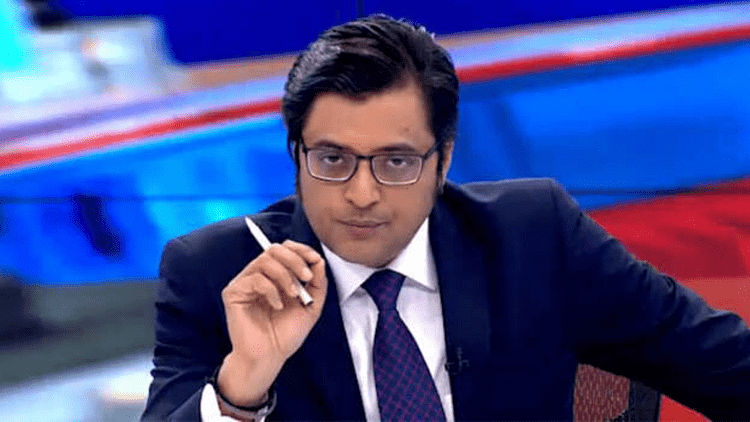
Republic Bharat, the Hindi news channel arm of Republic TV, was fined 20,000 pounds (approximately Rs 19.73 lakh) by the United Kingdom’s communications regulator Office of Communications on Tuesday for broadcasting content that involved “offensive language”, “hate speech” and “ abusive or derogatory treatment of individuals, groups, religions or communities”. Republic Bharat has also been asked to air an apology on the channel.
In a release detailing on the strictures, the Office of Communications, or Ofcom, said that in the channel’s “Poochta Hai Bharat” programme that was aired on September 6, 2019, views expressed by the presenter Republic TV Editor-in-Chief Arnab Goswami and some of the guests violated its broadcasting norms. The sanctions have been imposed on Worldview Media Network Limited, which holds the licence for airing Republic Bharat in the UK.
The programme for which Republic Bharat has been penalised was related to India’s Chandrayaan 2 spacecraft mission to the moon and “involved a comparison of India’s space exploration and technological advancements compared to Pakistan, and Pakistan’s alleged terrorist activities against Indian targets,” the release noted.
Ofcom took exception to comments made by Goswami and his guests on the discussion panel, which the regulator said “amounted to hate speech against Pakistani people, and derogatory and abusive treatment of Pakistani people”.
The release pointed out that referring to Pakistani people, the guests and Goswami said: “Their scientists, doctors, their leaders, politicians all are terrorists. Even their sports people. Every child is a terrorist over there. Every child is a terrorist. You are dealing with a terrorist entity”.
“In the context of these criticisms, the presenter [Goswami], addressing Pakistan and/or Pakistani people, said: We make scientists, you make terrorists.”
Ofcom also mentioned comments made by one of the guests identified as “General Sinha”, who referred to people of Pakistan as “beggars” and threatened military attack on the country.
Ofcom noted that the content of the programme was “potentially offensive and was not sufficiently justified by the context”. It added that the comments made were “expressions of hatred based on intolerance of Pakistani people based on their nationality alone” and promoted and justified intolerance towards Pakistani people among viewers.
It also took note of the use of the term “Paki”, which it said was a racist word and unacceptable to the audience of UK.
Courtesy: scroll.in
Let the Truth be known. If you read VB and like VB, please be a VB Supporter and Help us deliver the Truth to one and all.
Fire breaks out in residential building in east Delhi, nine killed
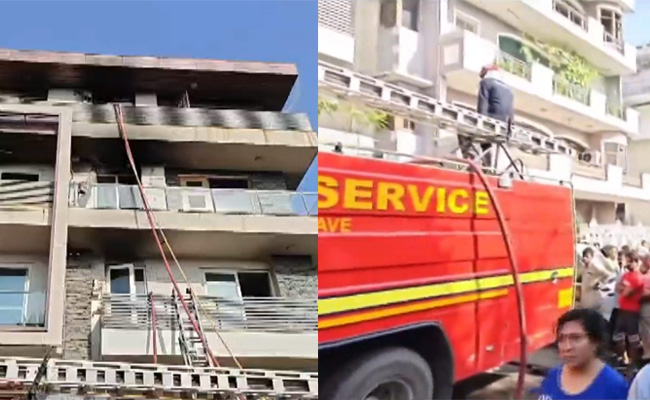
New Delhi (PTI): At least nine people were killed after a fire broke out in a residential building in east Delhi's Vivek Vihar early Sunday, officials said.
The incident was reported around 3.48 am at a four-storey building in Vivek Vihar Phase-I, following which police, fire and disaster management teams rushed to the spot.
According to the police, the blaze engulfed flats on the second, third and fourth floors of the building, prompting a large-scale rescue operation.
The cause of the fire is yet to be ascertained.
"Around 10 to 15 people were rescued from the premises during the firefighting operation. Two of them, who sustained minor injuries, were shifted to the Guru Teg Bahadur Hospital," a senior police officer said.
A total of 12 fire tenders were pressed into service to douse the flames, while teams from the Delhi Disaster Management Authority (DDMA), traffic police and local police assisted in the rescue and evacuation efforts.
Police said the fire was brought under control after several hours.
The identities of the deceased are yet to be ascertained, and efforts are underway to determine the cause of the fire, police said.
Further investigation and proceedings are underway.