Australia will recognise Palestinian state, Prime Minister Albanese says
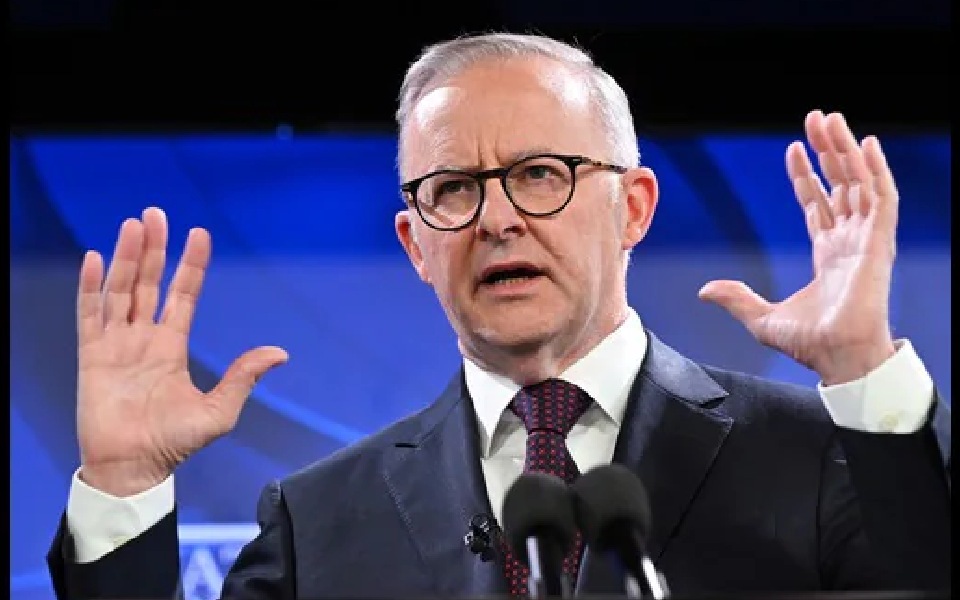
Wellington, Aug 11 (AP): Australia will recognise a Palestinian state, Prime Minister Anthony Albanese said Monday, joining the leaders of France, Britain and Canada in signalling they would do so.
His remarks followed weeks of urging from within his Cabinet and from many in Australia to recognise a Palestinian state and amid growing criticism from officials in his government over suffering in Gaza, which Albanese on Monday referred to as a “humanitarian catastrophe.”
Australia's government has also criticised plans announced in recent days by Israeli leader Benjamin Netanyahu for a sweeping new military offensive in Gaza.
Albanese told reporters after a Cabinet meeting Monday that Australia's decision to recognise a Palestinian state will be formalised at the United Nations General Assembly in September. The acknowledgement was “predicated on commitments Australia has received from the Palestinian Authority,” Albanese said.
Those commitments included no role for Hamas in a Palestinian government, demilitarisation of Gaza and the holding of elections, he said.
“A two-state solution is humanity's best hope to break the cycle of violence in the Middle East and to bring an end to the conflict, suffering and starvation in Gaza,” Albanese said.
“The situation in Gaza has gone beyond the world's worst fears,” he said. “The Israeli government continues to defy international law and deny sufficient aid, food and water to desperate people, including children.”
Ahead of Albanese's announcement, Netanyahu on Sunday criticised Australia and other European countries that have moved to recognise a Palestinian state.
“To have European countries and Australia march into that rabbit hole ... this canard, is disappointing and I think it's actually shameful,” the Israeli leader said.
The Australian leader last week spoke to Palestinian President Mahmoud Abbas, whose authority administers parts of the occupied West Bank, supports a two-state solution and cooperates with Israel on security matters. Abbas has agreed to conditions with Western leaders, including Albanese, as they prepared to recognise a Palestinian state.
“This is an opportunity to deliver self-determination for the people of Palestine in a way isolates Hamas, disarms it and drives it out of the region once and for all,” Albanese said. He added that Hamas did not support a two-state solution.
Nearly 150 of the 193 members of the United Nations have already recognised Palestinian statehood, most of them decades ago. The United States and other Western powers have held off, saying Palestinian statehood should be part of a final agreement resolving the decades-old Middle East conflict.
Recognition announcements are largely symbolic and are rejected by Israel.
A two-state solution would see a state of Palestine created alongside Israel in most or all of the occupied West Bank, the war-ravaged Gaza Strip and annexed east Jerusalem, territories Israel seized in the 1967 Mideast war that the Palestinians want for their state.
Albanese dismissed suggestions Monday that the move was solely symbolic.
“This is a practical contribution towards building momentum,” he said. “This is not Australia acting alone.”
Albanese had discussed Australia's decision with the leaders of Britain, France, New Zealand and Japan, he said. He also had a “long discussion" with Netanyahu this month, he added.
In neighbouring New Zealand, Foreign Minister Winston Peters said Monday his government “will carefully weigh up its position” on recognising a Palestinian state before making a formal decision in September.
“New Zealand has been clear for some time that our recognition of a Palestinian state is a matter of when, not if,” Peters said in a statement.
Let the Truth be known. If you read VB and like VB, please be a VB Supporter and Help us deliver the Truth to one and all.
Indian startup's 'Drishti' satellite launched aboard SpaceX rocket
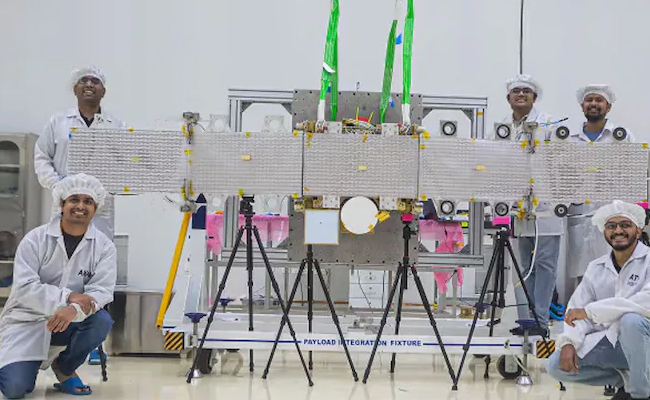
New Delhi (PTI): Bengaluru-based space start-up GalaxEye's Mission Drishti satellite was launched on Sunday aboard SpaceX's Falcon 9 rocket from California.
Mission Drishti is the world's first OptoSAR satellite, integrating electro-optical (EO) and synthetic aperture radar (SAR) sensors into a single operational platform, according to the company.
While EO sensors capture high-resolution images during sunlight and clear skies, SAR sensors provide all-weather and all-time images, using radar pulses.
In a statement, Suyash Singh, founder and CEO of GalaxEye, said, "With the satellite (Mission Drishti) now successfully in orbit, our immediate focus is on completing its commissioning. As we move through this phase, we are already witnessing strong global interest in the differentiated datasets enabled by our OptoSAR payload."
The satellite will help address long-standing limitations of conventional systems and enable more reliable and consistent data acquisition across diverse environmental conditions, the company said.
As a dual-use Earth observation satellite, the mission will support use cases across defence, agriculture, disaster management, maritime monitoring, and infrastructure planning.
The satellite is also expected to complement India's broader initiatives, including the 29 active Earth Observation satellites outlined in ISRO's recent annual report.
The launch came after five years of indigenous research and development, and extensive environmental testing and performance validation of the Mission Drishti.
In a statement, Lt Gen AK Bhatt (Retd), director general of Indian Space Association (ISpA), said, "GalaxEye has achieved what only a few global players have, which is seamlessly combining optical and SAR capabilities on a single platform to enable persistent, all-weather intelligence."
What stands out is not just the technology, but its broader impact on how downstream applications will increasingly define value in the space economy, particularly in Earth observation, where timely, decision-grade insights are critical," he added.
ISpA is the premier industry association of space and satellite companies in the country.
Union Minister Jitendra Singh also took note of the Mission Drishti launch, saying the development marked a significant milestone in India's space journey.
In a post on X, the minister said, "The successful launch of the world's first OptoSAR satellite, and the largest privately-built satellite in the country, reflects the immense potential of our young innovators driving nation-building."
GalaxEye aims to scale up Mission Drishti to a constellation of 10 satellites by 2030, developing a robust and sovereign Earth observation infrastructure for India.