Australian court rules media liable for Facebook comments

Canberra, (AP): Australia's highest court on Wednesday made a landmark ruling that media outlets are publishers of allegedly defamatory comments posted by third parties on their official Facebook pages.
The High Court dismissed an argument by some of Australia's largest media organisations Fairfax Media Publications, Nationwide News and Australian News Channel that for people to be publishers, they must be aware of the defamatory content and intend to convey it.
The court found in a 5-2 majority decision that by facilitating and encouraging the comments, the companies had participated in their communication.
The decision opens the media organizations to be sued for defamation by former juvenile detainee Dylan Voller.
Voller wants to sue the television broadcaster and newspaper publishers over comments on the Facebook pages of The Sydney Morning Herald, The Australian, Centralian Advocate, Sky News Australia and The Bolt Report.
His defamation case launched in the New South Wales state Supreme Court in 2017 was put on hold while the separate question of whether the media companies were liable for Facebook users' comments was decided.
The companies posted content on their pages about news stories that referred to Voller's time in a Northern Territory juvenile detention centre.
Facebook users responded by posting comments that Voller alleges were defamatory.
News Corp Australia, which owns the two broadcast programmes and two of the three newspapers targeted in the defamation case, called for the law to be changed.
The ruling was significant for anyone who maintains a public social media page by finding they can be liable for comments posted by others on that page even when they are unaware of those comments, News Corp Australia executive chairman Michael Miller said in a statement.
This highlights the need for urgent legislative reform and I call on Australia's attorneys general to address this anomaly and bring Australian law into line with comparable western democracies, Miller added.
Nine, the new owner of The Sydney Morning Herald, said it hoped a current review of defamation laws by Australian state and territory governments would take into account the ruling and its consequences for publishers.
We are obviously disappointed with the outcome of that decision, as it will have ramifications for what we can post on social media in the future, a Nine statement said.
We also note the positive steps which the likes of Facebook have taken since the Voller case first started which now allow publishers to switch off comments on stories, Nine added.
Facebook did not immediately respond to a request for comment.
Voller's lawyers welcomed the ruling for its wider implications for publishers.
This is a historic step forward in achieved justice for Dylan and also in protecting individuals, especially those who are in a vulnerable position, from being the subject of unmitigated social media mob attacks, a lawyers' statement said.
This decision put responsibility where it should be; on media companies with huge resources, to monitor public comments in circumstances where they know there is a strong likelihood of an individual being defamed, the statement added.
The High Court decision upholds the rulings of two lower courts on the question of liability.
Courts have previously ruled that people can be held liable for the continued publication of defamatory statements on platforms they control, such as notice boards, only after they became aware of the comments. (AP)
Let the Truth be known. If you read VB and like VB, please be a VB Supporter and Help us deliver the Truth to one and all.
Allahabad HC orders probe into 'reinstatement' of teacher in UP's Barabanki
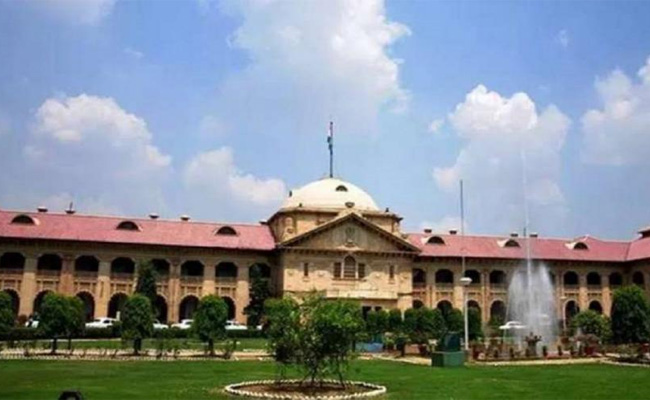
Lucknow (PTI): The Lucknow Bench of the Allahabad High Court on Friday ordered a probe by the special task force (STF) into alleged irregularities in the rejoining of a teacher at City Intermediate College in Barabanki, observing that the reinstatement appeared to be prima facie illegal.
The court also directed the recovery of the salary paid to the teacher during the disputed period.
A bench of Justice Rajeev Singh passed the order on a petition filed by the college management committee. The court expressed doubts over the roles of the District Inspector of Schools (DIOS), Barabanki, the college principal and the teacher concerned and hence, directed a detailed inquiry into the matter.
Taking note of alleged manipulation of records and misleading submissions, the court ordered the immediate transfer of the Barabanki DIOS to ensure a fair probe. It also directed the initiation of disciplinary proceedings against the then joint director of education of the Ayodhya division.
In its order, the court found that the teacher, Abhay Kumar, was initially appointed as an assistant teacher in 2018 but joined an Eklavya Model Residential School in Chhattisgarh as a lecturer in June 2024 without obtaining permission from the management. His subsequent request to retain the lien was rejected.
Despite this, he was allowed to rejoin the Barabanki College in September 2025 on the directions of the joint director of education and the DIOS, and was even paid the salary for October 2025. The court termed the rejoining "wholly illegal" and lacking any legal basis.
The bench also expressed concern over lapses in communication within the education department and directed the Uttar Pradesh chief secretary to ensure that official orders are communicated through email and WhatsApp as well, to prevent disputes.
The matter is next listed for hearing on May 28 when a compliance report is sought.