B.1.617 COVID-19 variant, first detected in India, now found in 53 countries: WHO
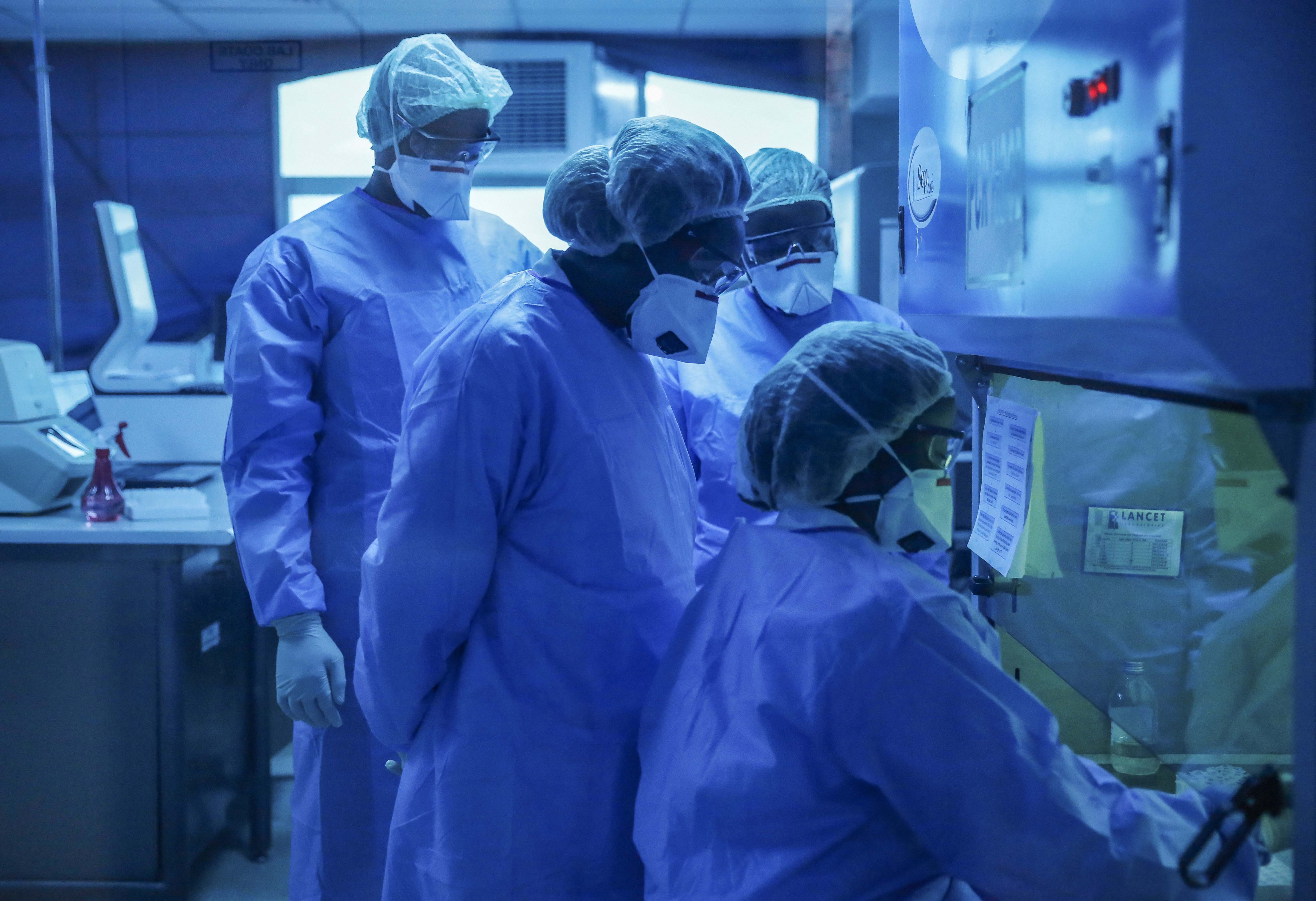
United Nations/Geneva: The B.1.617 COVID-19 variant, first detected in India, has now been found in 53 countries, according to the WHO, which noted that India recorded a 23 per cent decrease in the number of new cases in the last seven days but they were still the highest in the world.
The World Health Organisation's COVID-19 Weekly Epidemiological Update, published May 25, said that over the past week, the number of new cases and deaths continued to decrease globally, with over 4.1 million new cases and 84,000 new deaths reported, a 14 per cent and 2 per cent decrease respectively compared to the previous week.
According to the update, the B.1.617 variant, first detected in India, is now prevalent in 53 countries globally.
The B.1.617 viruses are divided in three lineages - B.1.617.1, B.1.617.2 and B.1.617.3. The update gave a break-up of prevalence of the three sub-lineages of the B.1.617 variant in countries, territories and areas as of May 25.
According to it, B.1.617.1 is found in 41 countries, B.1.617.2 in 54 countries and B.1.617.3 in six. In addition, information for the B.1.617.1, B.1.617.2 sub-lineages was received by WHO from unofficial sources in 11 countries, including China, and will be reviewed as more information becomes available.
WHO has declared B.1.617 as a variant of concern and the update noted that this variant has increased transmissibility , disease severity is under investigation , risk of reinfection is under investigation, possible modest reduction in neutralization activity (B.1.617.1).
It said that the highest numbers of new COVID cases in the last seven days were reported from India (1,846,055 new cases; 23 per cent decrease), Brazil (451,424 new cases; 3 per cent increase), Argentina (213,046 new cases; 41 per cent increase), the United States of America (188,410 new cases; 20 per cent decrease), and Colombia (107,590 new cases; 7 per cent decrease).
Despite a declining global trend over the past four weeks, incidence of COVID-19 cases and deaths remain high, and substantial increases have been observed in many countries throughout the world, it said.
The update further said that the South-East Asia Region reported over 2 million new cases and over 32,000 new deaths, a 21 per cent decrease and a 4 per cent increase respectively compared to the previous week.
"While the overall incidence of cases continues to decrease (driven primarily by trends in India), death incidence continued to increase for a tenth consecutive week, and sizable increases have been observed in other countries in the region, it said.
In the region, the highest numbers of new deaths were reported from India (28,982 new deaths; 2.1 new deaths per 100,000; a 4 per cent increase), Nepal (1,297 new deaths; 4.5 new deaths per 100,000; a 6 per cent increase), and Indonesia (1,238 new deaths; 0.5 new deaths per 100,000; a 10 per cent increase).
Let the Truth be known. If you read VB and like VB, please be a VB Supporter and Help us deliver the Truth to one and all.
Two injuries, one DNF, a DQ as India end messy World Relays campaign
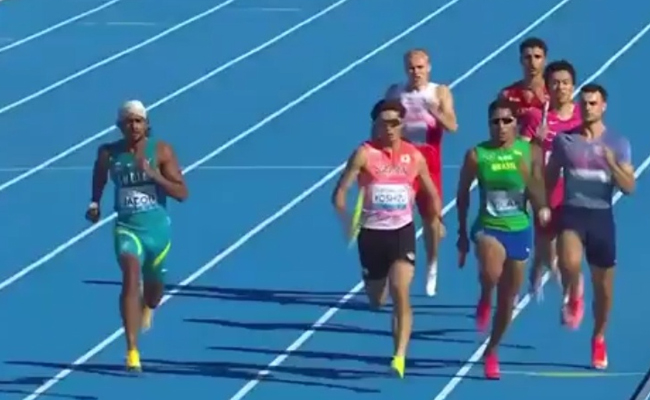
Gaborone (Botswana) (PTI): Amoj Jacob and Ragul Kumar got injured during the men's 4x400m and 4x100 races respectively as India ended their World Athletics Relays campaign in disappointment on the second day of competitions here on Sunday.
The Indian camp had high hopes of making the 2027 World Championships in the men's 4x400m relay but the team did not finish (DNF) the race as Jacob suffered cramps and pulled out of the race after taking the baton from the first leg runner Dharamveer Choudhary. Rajesh Ramesh and Vishal TK were to run in the third and fourth legs.
Those teams which could not qualify for the 2027 Beijing World Championships by reaching the final round of each of the six relay events on Saturday were given another chance in the second qualification round on Sunday.
The top two teams in each of the two heats (in all six relay events) booked the Beijing ticket on Sunday.
India will now have to try and qualify for the World Championships through the Top Lists of the World Athletics, which is a long and tedious process.
In the men's 4x100m race, third leg runner Ragul Kumar fell down the track after failing to hand over the baton inside the exchange zone to fourth leg runner Gurindervir Singh, which clearly showed the lack of coordination among the runners.
Harsh Santosh Raut and Animesh Kujur ran the first two legs.
The Indian quartet was disqualified and Kumar was seen being taken away from the Field of Play with the help of the volunteers.
It was a comedy of errors in the case of the women's 4x100m race, which saw the baton being dropped during an exchange between first leg runner Tamanna and second runner Nithya Gandhe, though the Indians finished the race in 53.09 seconds.
Gandhe started running quite a distance, but after realising that the baton was not in her hand, she turned and ran back to pick it up.
The only silver-lining for the Indian contingent was the national record time in the mixed 4x100m relay race, though the quartet of Ragul Kumar, Nithya Gandhe, Animesh Kujur and Sneha SS finished sixth in heat number two with a time of 41.35 seconds, bettering the previous national mark of 42.30 seconds set in March in Chandigarh.
The mixed 4x400m relay quartet of Theerthesh P Shetty, Kumari Saloni, Nihal William and Rashdeep Kaur ended at fifth in heat number one with a time of 3 minutes and 19.40 seconds.
On Saturday, all the five Indian relay teams had failed to make it to the respective final rounds and thus missed out on the 2027 World Championships berths.