Bangladesh opts against sending players to India for T20 World Cup
Wants matches to be shifted to Sri Lanka
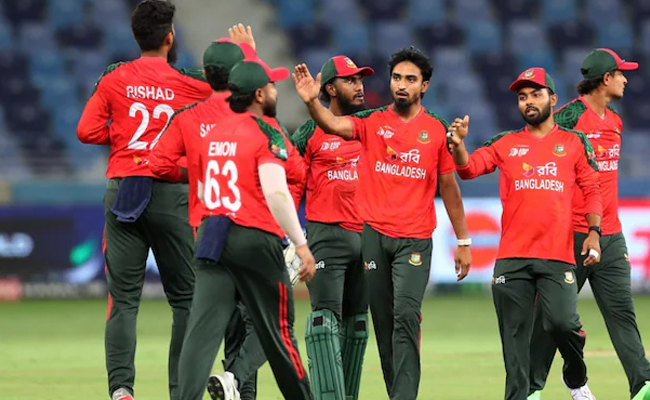
Dhaka: In the wake of the controversy regarding Bangladeshi pacer Mustafizur Rahman’s ouster from the Indian Premier League (IPL) contract by the Kolkata Knight Riders (KKR) amid increased tension between the neighboring nations over the recent cases of lynching in Bangladesh, the Bangladesh Cricket Board (BCB) has decided against sending its players to India for the upcoming T20 World Cup.
It has also now been confirmed that, while the BCB is not pulling out of the World Cup, it no longer finds it safe to send its players to India and wants the World Cup matches to be shifted from India to Sri Lanka.
Asif Nazrul, an advisor to Bangladesh and overseer of the country’s Youth and Sports Ministry, had posted on Facebook also confirmed that the BCB had decided against travelling to India for the T20 World Cup. “Bangladesh will not go to India to play the World Cup. The Bangladesh Cricket Board has taken this decision today. We welcome this decision, which has been taken in the context of the aggressive communal policies of the Indian Cricket Board,” he said.
The KKR, which had added the name of the 30-year-old left-arm pacer into its list of players for Rs 9.2 crore, had released the cricketer as instructed by the Board of Control for Cricket in India (BCCI).
Nazrul, therefore, expressed his apprehension regarding the safety of the other players in India and supported a change of venue for the matches.
“I have instructed the Cricket Control Board to submit a written explanation of the entire matter to the ICC. The Board should clearly state that when a Bangladeshi cricketer, despite being under contract, is unable to play in India, the Bangladesh national team cannot feel safe travelling there to participate in the World Cup. I have also directed the Board to request that Bangladesh's World Cup matches be held in Sri Lanka,” Nazrul had written in an earlier Facebook post.
Nazrul has asked the advisor to stop broadcasting IPL matches in Bangladesh. “Additionally, I have asked the Adviser for Information and Broadcasting to suspend the broadcast of IPL matches in Bangladesh. Under no circumstances will we tolerate any disrespect toward Bangladesh cricket, Bangladeshi cricketers, or Bangladesh itself,” he added.
Bangladesh will play against the West Indies on February 7, Italy on February 9, England on February 14, and Nepal on February 17. The matches are to be held at the Eden Gardens in Kolkata and the Wankhede Stadium in Mumbai.
Let the Truth be known. If you read VB and like VB, please be a VB Supporter and Help us deliver the Truth to one and all.
26-year-old youth from Andhra dies by suicide in US
Kurnool (Andhra Pradesh) (PTI): A 26-year-old youth from this district has died allegedly by suicide in Chicago, US, recently, due to distress over debt, sources said on Saturday.
The family members of the deceased have requested that the identity of their relative be withheld, noting that his parents are senior citizens suffering from medical conditions.
Reacting to the incident, Andhra Pradesh IT Minister Nara Lokesh expressed condolences and assured assistance for the repatriation of the mortal remains of the deceased.
"My heartfelt condolences to the bereaved family. I request Union Aviation Minister K Ram Mohan Naidu to ensure smooth and hassle-free transport of the mortal remains," Lokesh said in a post on X.
An NRI community member from the US posted on social media that one of their members from Kurnool on Optional Practical Training (OPT) passed away in Chicago a few days ago.
He said Telugu Association of North America (TANA) had completed all necessary documentation and formalities to send the mortal remains to India for final rites.
He further requested assistance in expediting the cargo pickup, currently scheduled for Sunday, seeking an earlier arrangement considering the urgency.
(Assistance for overcoming suicidal thoughts is available on the state’s health helpline 104, Tele-MANAS 14416.)