Bangladeshi immigrant NYPD officer Didarul Islam killed in Manhattan mass shooting
Despite Shooter Shane Tamura being a U.S.-born non-Muslim, Islamophobes blame immigrants, Muslims
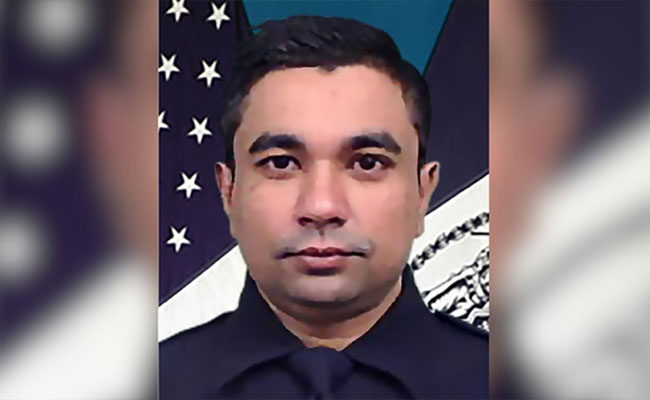
New York City: In one of the deadliest mass shootings in New York City in nearly 25 years, four people were killed when a gunman opened fire inside a Manhattan office building Monday evening. Among the victims was 36-year-old NYPD officer Didarul Islam, a Bangladeshi immigrant and father of two, who is now being remembered as a hero by city officials and his community.
According to NYPD Commissioner Jessica Tisch, the suspect, identified as Shane Devon Tamura, a 27-year-old Nevada resident with a documented mental health history, entered the lobby of 345 Park Avenue just after business hours and began shooting with an M4-style rifle. After killing Officer Islam and others on multiple floors of the building, Tamura ultimately died by suicide.
Police recovered a note from the scene in which Tamura expressed anger over his mental health struggles, suggesting a possible link to chronic traumatic encephalopathy (CTE) from his time playing football. Authorities believe this may explain why Tamura appeared to target the building, which houses the NFL’s headquarters among other major firms.
Officer Islam, who was working an off-duty security job at the time, was the first person shot. Eyewitnesses say he tried to respond to the threat before being fatally struck. He leaves behind a pregnant wife, two sons, and elderly parents. According to reports, his father suffered a stroke upon hearing the tragic news.
New York City Mayor Eric Adams and NYPD colleagues have publicly praised Officer Islam’s bravery. “He died doing what he believed in — serving his community,” said a senior police official. Officer Islam had joined the force three and a half years ago after leaving a job as a school security guard. Friends and family recall that he took great pride in wearing the NYPD badge as a symbol of dedication and sacrifice.
Community leaders and civil rights advocates have pointed out that while Islam’s heroism was clear, right-wing figures quickly resorted to Islamophobic rhetoric in the immediate aftermath of the attack, despite the fact that the shooter was a U.S.-born non-Muslim man. Commentator Wajahat Ali, writing in Zeteo, condemned far-right influencers like Laura Loomer and Charlie Kirk for using the tragedy to spread hate against immigrants and Muslims.
“Even facts can’t deter Loomer’s relentless crusade to demonize and annihilate Muslims,” Ali wrote. “Officer Islam died protecting his neighbors. That’s his legacy. Not even their hate can erase that.”
Ali also drew parallels to Mohammad Salman Hamdani, a 23-year-old Muslim NYPD cadet who was vilified in the media after 9/11, only to be later recognized as a hero who died trying to save lives during the terror attack.
The shooting has reignited debates around mental health, gun violence, and racialized narratives in media and politics. Yet amid the noise, Officer Islam’s story stands out, a Muslim immigrant who gave his life in service of a city that too often overlooks the sacrifices of its most marginalized residents.
As New York mourns, tributes continue to pour in for Officer Islam from across the country. From local mosques to fellow officers, one message is clear: he died a hero, and his legacy will not be forgotten.
Let the Truth be known. If you read VB and like VB, please be a VB Supporter and Help us deliver the Truth to one and all.
Double-decker electric bus gutted in fire at Kurla BEST depot

Mumbai (PTI): An empty double-decker electric bus was gutted in a fire during servicing at a BEST depot in Mumbai's Kurla area on Sunday, officials said, adding that nobody was injured.
The blaze broke out inside the Kurla BEST bus depot near Kanakia Building at 4.14 pm, according to preliminary information from the Mumbai Fire Brigade.
The parked bus was unoccupied at the time of the incident.
Fire brigade personnel rushed to the spot and brought the blaze under control. The exact cause of the fire was yet to be ascertained, they said.
No injuries were reported in the incident, officials added.
The Brihanmumbai Electricity Supply and Transport (BEST) Undertaking has hired 50 electric double-decker buses from Switch Mobility in its fleet of around 2,700 buses.