Bangladesh’s interim government bans deposed PM Sheikh Hasina’s Awami League
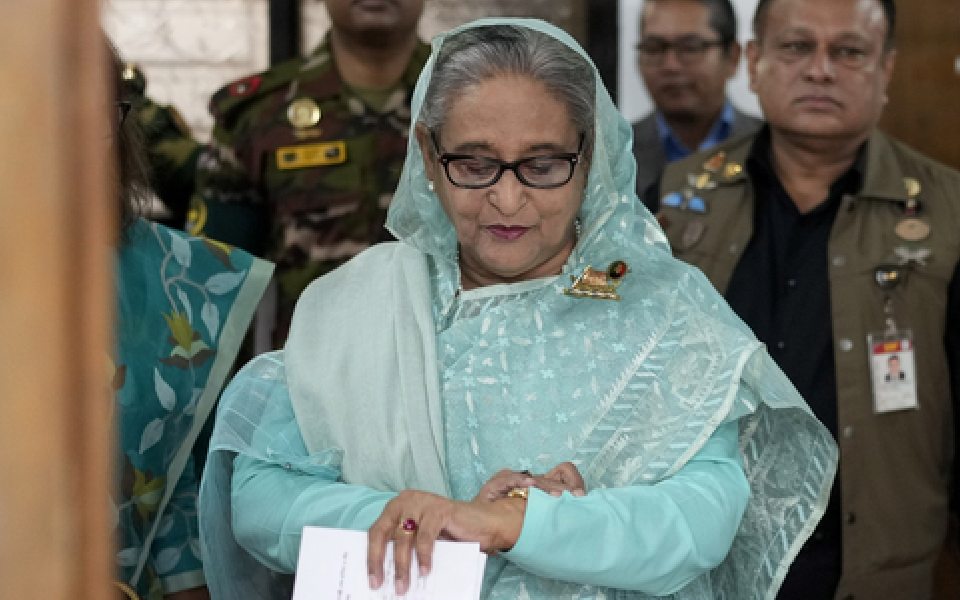
Dhaka/New Delhi, May 11 (PTI): Bangladesh’s interim government led by Muhammad Yunus on Saturday evening banned deposed prime minister Sheikh Hasina’s Awami League under an anti-terrorism law.
The announcement to ban Hasina’s Awami League came after the student-led newly-floated National Citizen Party (NCP) activists rallied since Thursday and carried out blockades across Dhaka demanding the ban.
“The official gazette notification will be issued in this regard on the next working day,” Yunus’s office said, describing it as a “statement of the Council of Advisers” or the Cabinet.
The statement said the Council decided that the ban would remain effective until the completion of the “trial of the Awami League and its leaders in Bangladesh’s International Crimes Tribunal in the interest of protecting the country’s security and sovereignty”.
It said the decision was also taken for the security of the leaders and activists of the July 2024 uprising that eventually led to the ousting of the Awami League regime alongside the complainants and witnesses of the trial in the International Crimes Tribunal (ICT).
The meeting chaired by Yunus simultaneously amended the ICT law allowing the tribunal to try any political party, its front organisations and affiliated bodies.
Hasina’s 16-year-long Awami League regime was toppled on August 5 last year in a student-led violent mass uprising prompting the 77-year-old former prime minister to flee to India.
Three days after her ouster, Yunus took charge as the chief adviser of the interim government.
Hasina and many of her party leaders have been facing 100s of cases, including that of mass murder and corruption, since then. Most of her party leaders and ministers in her government are either arrested or fled abroad.
A large part of Students against Discrimination (SAD), which led the last year’s movement that ousted Hasina, crystalised as the National Citizen Party (NCP) earlier this year.
Formed in 1949, the Awami League led the movement for the autonomy of Bengalis in the then East Pakistan for decades and eventually led the Liberation War in 1971.
The announcement to ban Awami League came as Bangladesh on Saturday witnessed an escalating tension as NCP supporters marched towards Yunus’s official residence to mount pressure for the ban.
Media reports suggested that the NCP activists were joined by several Islamist and right-wing groups while they were staging a sit-in in front of nearby Shahgabh area of the capital.
Yunus’s office in a statement on Friday said the government had established contacts with different political parties in the run up to taking a decision to ban Awami League.
The Bangladesh Nationalist Party (BNP), which is Awami League’s main rival, has distanced itself from the demand saying they are opposed to a ban on any political party.
Let the Truth be known. If you read VB and like VB, please be a VB Supporter and Help us deliver the Truth to one and all.
BJP's win in WB not through right means, communalism and SIR defeated Mamata: Raut
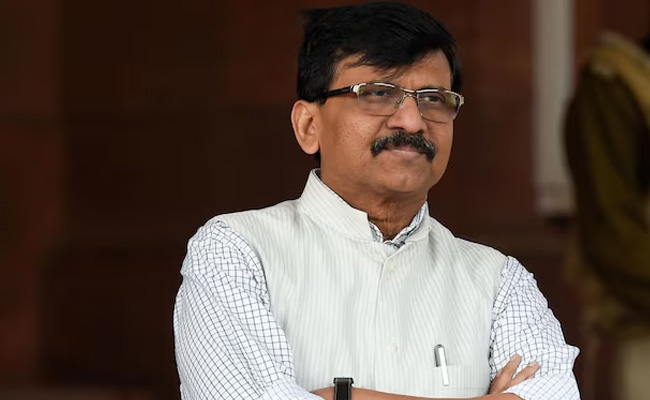
Mumbai (PTI): Shiv Sena (UBT) leader Sanjay Raut on Monday said hatred, communalism and SIR (Special Intensive Revision of electoral rolls) defeated Mamata Banerjee in West Bengal, adding that the BJP achieved victory in the eastern state "not through the right means".
Talking to reporters, Raut said the candle burns brightest right before it burns out. This is the beginning of the end of the NDA, the Rajya Sabha MP claimed.
He also said it is time for the Opposition to unite as major parties like the DMK in Tamil Nadu and TMC in West Bengal are headed for defeat.
"Hatred, communalism, SIR stopped Mamata Banerjee's victory. Her defeat was impossible. Today's BJP victory was achieved not through right means," Raut said while pointing out that 92 lakh names were deleted from the voters list in the SIR carried out by the Election Commission.
He further alleged that central para-military forces also helped BJP workers.
The BJP allied with the Election Commission, which led to TMC's defeat, Raut said.
"Even if the BJP wins in West Bengal or Assam, it is not easy for them to govern the country. What great work has the NDA done in the last one year. There is unemployment, there is inflation, people are not getting gas cylinders. India's image is being defamed," Raut said.
Reacting to the assembly poll results, NCP (SP) leader Rohit Pawar said anti-incumbency appeared to have affected the INDI bloc parties in Tamil Nadu and West Bengal.
If elections were held now, similar public sentiment could unseat those in power at the Centre and in Maharashtra, he said in a swipe at the BJP.
"It was expected that DMK in Tamil Nadu and Trinamool Congress in West Bengal would return to power, but both seem to have faced anti-incumbency. Those celebrating these results should remember that the same sentiment exists against them as well," Pawar claimed.
He alleged that Union Home Minister Amit Shah campaigned in West Bengal for 15 days, while 90 lakh names were removed through the SIR process, which helped clear the path for BJP's victory.
Pawar further criticised the BJP, alleging that its workers vandalised an office of the Trinamool Congress in West Bengal amid declaration of results.
"Even before the final results were declared, such incidents show how governance may unfold in the future," he said while condemning the act.