Bangladesh's top police official urges policemen to resume their duties and maintain public safety
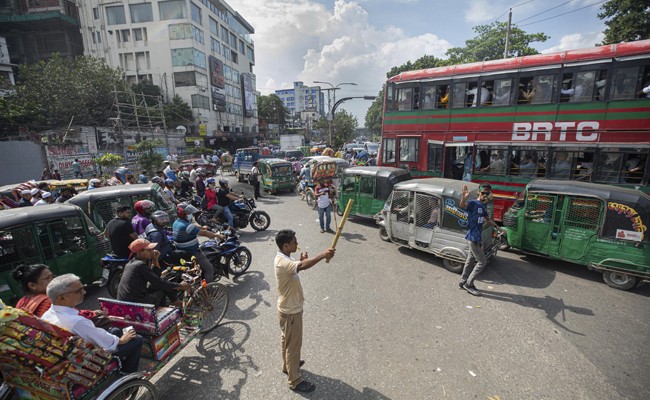
Dhaka (PTI): A top police official in Bangladesh has called on every member of the police force to resume their duties gradually and maintain public safety and law and order amidst reports of attacks on the law enforcement authorities in the violence-hit nation.
Additional Inspector General of Police (AIG) A.K.M. Shahidur Rahman, who was appointed as the focal person of the Bangladesh Police on Tuesday to handle the current crisis, asked his force to ignore rumours.
"The police are friends of the people and work for the public. We cannot imagine a society without the police. Therefore, I request our police members once again to ignore rumours and return to their duties in a phased manner, ensuring that security arrangements are properly in place," he said, emphasising the crucial role of the police in maintaining public safety.
Most police stations in the country, including the capital Dhaka, currently have no police personnel present, the Dhaka Tribune reported.
Multiple police officers have reported that over four hundred police stations across the country have experienced attacks, vandalism, arson, and looting. In this situation, no one feels safe staying in their respective stations or offices, leading everyone to seek safe shelters.
A police headquarters official mentioned that the police have not faced such a situation since 1971, the report said.
In many places, clashes broke out between the police and agitated mobs. Consequently, law enforcement officers vacated various stations overnight.
After the attack on the police headquarters on Monday night, senior officials were evacuated to safety by helicopter. Many climbed over walls to escape the headquarters. Law enforcement broke down in Bangladesh after the fall of the Sheikh Hasina government on Monday, with police absent from their duty to keep law and order or manage traffic, bdnews24 newsportal reported on Wednesday.
Since Monday afternoon, the police presence in urban areas dwindled, and by Tuesday, the breakdown of the police system was evident throughout the country.
Attacks on police stations and facilities across the country, resulting in numerous police casualties, have led to this unprecedented situation, the report said.
As the army took charge following Hasina’s ouster and the death toll in the violence in which temples were also attacked rose to 440, President Mohammed Shahabuddin dissolved Parliament on Tuesday and appointed 84-year-old Nobel laureate Mohammad Yunus as the head of an upcoming interim government.
Meanwhile, the readymade garment (RMG) and textile factories across the country will reopen on Wednesday, the Dhaka Tribune newspaper said.
Bangladesh Garment Manufacturers and Exporters Association (BGMEA), the apex trade body of the country's RMG manufacturers, urged its members to open their factories on Wednesday.
BGMEA Director Mohiuddin Rubel, a participant at the meeting, told the paper that they were going to reopen their factories for the betterment of the country's economy and workers.
In a separate statement, Sulov Chowdhury, CEO of the Bangladesh Knitwear Manufacturers and Exporters Association (BKMEA), urged its members to reopen their factories as there is an announcement to keep industrial units open in the present context.
However, considering the current situation, he also urged the BKMEA member factories to ensure the overall safety of the factories, along with their workers.
Let the Truth be known. If you read VB and like VB, please be a VB Supporter and Help us deliver the Truth to one and all.
Bhojshala case: Disputed structure built from remains of pre-existing temples, claims ASI
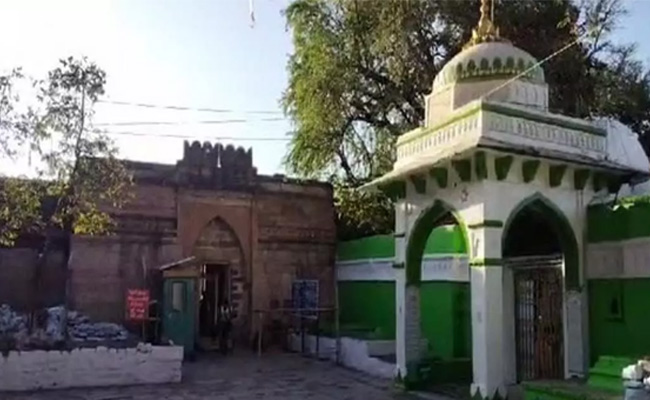
Indore (PTI): The ASI has told the Madhya Pradesh High Court that a massive structure dating back to the Paramara kings' rule existed at the disputed Bhojshala temple-Kamal Maula mosque complex, and the current structure was built from the remains of temples.
The Archaeological Survey of India (ASI) made the claim on Tuesday based on its 98-day scientific survey and over 2,000-page report.
The Hindu community considers Bhojshala a temple dedicated to Vagdevi (Goddess Saraswati), while the Muslim side claims the monument as the Kamal Maula Mosque. The disputed complex is protected by the ASI.
During the hearing before Justices Vijay Kumar Shukla and Alok Awasthi of the HC's Indore bench, Additional Solicitor General Sunil Kumar Jain, representing the ASI, presented a detailed account of the scientific survey conducted two years ago at the complex.
Referring to the ASI's survey report, he said, "Retrieved architectural remains, sculptural fragments, large slabs of inscriptions with literary texts, Nagakarnika inscriptions on pillars, etc, suggest that a large structure associated with literary and educational activities existed at the site. Based on scientific investigations and archaeological remains recovered during the investigations, this pre-existing structure can be dated to the Paramara period."
It can be said that the existing structure was made from the parts of earlier temples, based on scientific investigations, survey and archaeological excavations conducted, study and analysis of retrieved finds, study of architectural remains, sculptures, and inscriptions, art and sculptures, Jain said quoting the report.
Summarising the report, he also drew the court's attention to the fact that the archaeological study identifies that many architectural components, such as pillars and beams, were originally part of temple structures before being repurposed for a mosque.
"The evidence of this transition includes Sanskrit and Prakrit inscriptions that were damaged or hidden, alongside sculptures of deities and animals that were often mutilated or defaced," Jain contended.
The report also states that "all Sanskrit and Prakrit inscriptions are older than the Arabic and Persian inscriptions, indicating that users or engravers of the Sanskrit and Prakrit inscriptions occupied the place earlier".
In light of the Muslim side's earlier objections, the bench wanted to know why there were some discrepancies in the ASI's responses regarding the status of the disputed complex in the cases filed over the years.
The Additional Solicitor General argued that earlier studies of the complex involved only officials, while the current survey involved scientists and the use of advanced technologies such as Ground Penetrating Radar (GPR).
The hearing in the Bhojshala case will continue on Wednesday.
The high court has been regularly hearing four petitions and one writ appeal regarding the religious nature of the Bhojshala temple-Kamal Maula mosque complex since April 6.