BBC crisis escalates as players, stars rally behind Gary Lineker
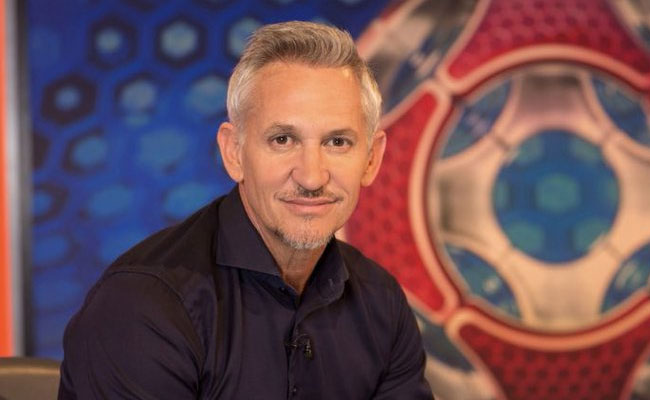
London (AP): The BBC was forced to scrap much of its weekend sports programming as the network scrambled to stem an escalating crisis over its suspension of soccer host Gary Lineker for comments criticizing the British government's new asylum policy.
As a growing number of English Premier League players and BBC presenters rallied to Lineker's support and refused to appear on the airwaves on Saturday, Britain's national broadcaster faced allegations of political bias and suppressing free speech, as well as praise from some Conservative politicians.
The broadcaster said it would air only "limited sport programming" this weekend after hosts of many of its popular sports shows declined to appear, in solidarity with Lineker. The former England captain was suspended from "Match of the Day," a popular soccer highlights show, over a Twitter post that compared lawmakers' language about migrants to that used in Nazi Germany.
Instead of blanket coverage on Saturday of the most popular league in the world, the BBC had no preview shows on radio or TV and no early evening summary of the final scores of Premier League games. Lunchtime TV program "Football Focus" was replaced with a rerun episode of antiques show "Bargain Hunt," while early evening "Final Score" was swapped for "The Repair Shop."
"Match of the Day" the late-night program that has been a British institution for 60 years was reduced from the usual hour and a half of highlights and analysis to a 20-minute compilation of clips from the day's games, without commentary or punditry just cheers and jeers from the stadium crowds for a soundtrack.
There will not be any post-match player interviews, either. The Professional Footballers' Association said some players wanted to boycott the show, and as a result "players involved in today's games will not be asked to participate in interviews with Match of The Day.'"
The union said it was a "common sense solution" to avoid players facing sanctions for breaching their broadcast commitments.
The BBC said it was "sorry for these changes which we recognize will be disappointing for BBC sport fans. We are working hard to resolve the situation and hope to do so soon."
British Prime Minister Rishi Sunak even weighed in, urging Lineker and the BBC to settle their disagreement.
"Gary Lineker was a great footballer and is a talented presenter. I hope that the current situation between Gary Lineker and the BBC can be resolved in a timely manner, but it is rightly a matter for them, not the government," he said.
Lineker, 62, was a household name in Britain even before he became chief "Match of the Day" presenter in 1999.
One of English soccer's most lauded players, he was the leading scorer at the 1986 World Cup and finished his international career with 48 goals in 80 matches for England.
After retiring from a career that included stints with Barcelona, Tottenham, Everton and Leicester, Lineker has become one of the U.K.'s most influential media figures and the BBC's best-paid star, earning 1.35 million pounds (USD 1.6 million) last year.
An enthusiastic social media user with 8.7 million Twitter followers, Lineker has long irked right-of-center politicians and activists with his liberal views, including criticism of Britain's decision to leave the European Union.
The latest controversy began with a tweet on Tuesday from Lineker's account describing the government's plan to detain and deport migrants arriving by boat as "an immeasurably cruel policy directed at the most vulnerable people in language that is not dissimilar to that used by Germany in the 30s."
The Conservative government called Lineker's Nazi comparison offensive and unacceptable, and some lawmakers said he should be fired.
In his statement, Sunak doubled down on the government's plan to deter people from making dangerous journeys across the English Channel in small boats, saying it was the only way to "break this cycle of misery once and for all."
On Friday, the BBC said Lineker would "step back" from "Match of the Day" until it had "an agreed and clear position on his use of social media." Lineker has yet to comment publicly, and on Saturday went to his hometown of Leicester to watch Leicester City play Chelsea in the Premier League. He was greeted with cheers from bystanders as he arrived for a match Chelsea won 3-1.
The 100-year-old BBC, which is funded by a license fee paid by all households with a television, has a duty to be impartial in its news coverage, and BBC news staff are barred from expressing political opinions.
Lineker, as a freelancer who doesn't work in news or current affairs, isn't bound by the same rules, and has sometimes pushed the boundaries of what the BBC considers acceptable. Last year, the BBC found Lineker breached impartiality rules with a tweet about the Conservatives' alleged Russian donations.
BBC neutrality has come under recent scrutiny over revelations that its chairman, Richard Sharp a Conservative Party donor helped arrange a loan for then Prime Minister Boris Johnson in 2021, weeks before Sharp was appointed to the BBC post on the government's recommendation.
Former BBC Director General Greg Dyke said the network "undermined its own credibility" by appearing to bow to government pressure.
Keir Starmer, leader of the main opposition Labour Party, said the BBC was "caving in" to political pressure from Conservative lawmakers.
Let the Truth be known. If you read VB and like VB, please be a VB Supporter and Help us deliver the Truth to one and all.
T'gana RTC strike: Talks between govt, employees successful

Hyderabad (PTI): Talks between employees of Telangana State Road Transport Corporation (RTC) who were on strike and the state government concluded successfully on Friday as the government agreed to the key demands of the workmen.
Following a day-long marathon of talks between the leaders of the employees' Joint Action Committee (JAC) and the cabinet sub-committee, the government announced after midnight that it acceded to the demands, including a merger of RTC with the government, 11 per cent pay revision and elections to the employees' unions.
A committee comprising officials and employee leaders would be appointed over the merger of RTC with the government, it said.
The RTC management has also agreed to address the remaining issues as well, an official release said.
The employees would call off their strike and the RTC buses would hit the roads shortly, it said.
The employees had been on an indefinite strike since April 22 over a series of demands, including the merger of RTC with the government.
Earlier in the day, a driver of the RTC, who attempted suicide on April 23 during the strike, died at a hospital here in the early hours of Friday.
Shankar Goud, a 55-year-old driver, set himself ablaze by pouring petrol at Narsampet in Warangal district when the employees were staging a protest on Thursday in support of their demands.
Goud suffered serious burns, was initially admitted to a state-run hospital in Warangal, and later shifted to a super-speciality hospital in Hyderabad for advanced treatment.
"He succumbed (to injuries) at about 1.30 am on Friday," a senior official said.
The driver’s body was taken to his relative’s village, Muttojipet in Warangal district, for funeral rites.
Tension prevailed in Muttojipet as his family members and RTC employees attempted to take the body to the Narsampet bus station, where he worked, to enable his colleagues to pay their last respects. However, police did not permit this, citing law-and-order concerns.
This led to a deadlock before the funeral could proceed.
Union Minister Bandi Sanjay Kumar criticised the Telangana government for not allowing the body to be taken to the Narsampet bus station.
Kumar, Minister of State (Home), visited Muttojipet village in Warangal district, where the funeral was held, and paid homage to Goud.
“They (family members) want to take the body to the bus depot for five minutes. Is the RTC bus depot in Pakistan or Bangladesh? They are emotionally attached to taking the body there. The government is hurting sentiments and creating fear among RTC employees,” Kumar told reporters.
He also expressed anger at the police for not allowing the body to be taken to the bus station and staged a protest, according to a release from his office.
RTC employees and BJP workers attempted to take the mortal remains in an ambulance to Narsampet, but were stopped by the police.
Later, after discussions with the police, the family members and RTC employees agreed to conduct the funeral in the village.
Sanjay Kumar, stating he would abide by the family’s decision, left the village after the funeral was conducted there.
Transport Minister Ponnam Prabhakar said an ex gratia of Rs 10 lakh, a house, and a government job would be provided to the kin of Goud.
Chief Minister A Revanth Reddy expressed shock over the employee’s death and conveyed deep condolences to the grieving family, according to the release.
The RTC employees’ JAC had earlier announced an agitation programme from April 24 to 29, including silent marches and submission of memorandums to MLAs and other leaders.