B'desh govt calls reports on cancellation of Mujibur Rahman's freedom fighter status 'baseless'
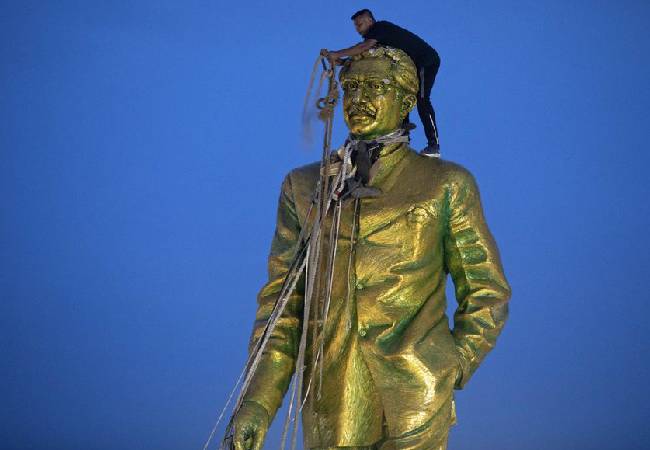
Dhaka (PTI): Bangladesh's interim government on Wednesday dismissed as "completely baseless" and "misleading" the media reports that claimed it has dropped the "Father of the Nation" title for Sheikh Mujibur Rahman and revised the definition of freedom fighter.
The news published in several media outlets that the freedom fighter recognition of over 100 leaders, including President Sheikh Mujibur Rahman, Acting President Nazrul Islam and Prime Minister Tajuddin Ahmed of the Mujibnagar government has been revoked is "completely baseless, false and misleading," the Chief Adviser's office said in a post on X.
The provisional government constituted at Mujibnagar to conduct the Bangladesh Liberation War in April 1971 is popularly known as the Mujibnagar government.
Adviser to the Ministry of Liberation War Affairs Faruk-e-Azam clarified that those who were in the Mujibnagar government were also freedom fighters.
"Those who fought the liberation war with arms, those who led it, were freedom fighters. However, the officials and employees of that government were associate freedom fighters," he said.
According to the National Freedom Fighters Council (JAMUKA) Ordinance, diplomats including the Swadhin Bangla Betar Kendra are associate freedom fighters, he said, adding that being associate does not mean that their honour has been tarnished.
He said that the definition of the freedom fighter that existed in 1972 has been implemented. It was changed in 2018 and 2022.
The "honour, status, and privileges" of both freedom fighters and their associates will remain the same, he added.
Citing a government statement, the state-run BSS news agency on Wednesday reported that the gazette of the “National Freedom Fighters Council (Amendment) Ordinance, 2025” published on Tuesday clearly states that all members of the Mujibnagar government will be recognised as "heroic freedom fighters".
A few days ago, the Muhammad Yunus-led government dropped the portrait of the country’s founding father and deposed prime minister Sheikh Hasina’s father Mujibur Rahman from new currency notes.
Earlier, the Dhaka Tribune newspaper reported that the interim government has amended the National Freedom Fighters Council Act, "altering" the definition of freedom fighter. The amendment to the law also "modifies the term 'Father of the Nation Bangabandhu Sheikh Mujibur Rahman'”, it added.
Bdnews24.com news portal reported that the "words 'Father of the Nation Bangabandhu Sheikh Mujibur Rahman' and portions of the law that mentioned the name of Bangabandhu Sheikh Mujibur Rahman have been deleted."
The Daily Star newspaper reported that the ordinance also makes slight changes to the definition of the Liberation War. "The new definition of Liberation War drops the name of Bangabandhu Sheikh Mujibur Rahman. The previous one mentioned that the war was waged responding to Bangabandhu's call for independence," it said.
According to the revised ordinance, all MNAs (members of the national assembly) and MPAs (members of the provincial assembly) associated with the Mujibnagar Government, who were later considered members of the erstwhile constituent assembly, will now be categorised as “associates of the Liberation War”, the Dhaka Tribune said.
Until now, they were recognised as freedom fighters.
The ordinance redefines Liberation War as the armed struggle carried out between March 26 and December 16, 1971, by the people of Bangladesh aiming to establish a sovereign democratic state founded on equality, human dignity and social justice, against the occupying Pakistani armed forces and their collaborators, the Dhaka Tribune reported.
In January, the interim government introduced new textbooks for primary and secondary students for the 2025 academic year that state that Ziaur Rahman, who was an Army major and later a sector commander of the Liberation War, declared the country’s independence in 1971, replacing the previous ones crediting founding father Mujibur Rahman with the declaration.
Let the Truth be known. If you read VB and like VB, please be a VB Supporter and Help us deliver the Truth to one and all.
Karnataka by-polls: Cong ahead in Bagalkot, BJP leads in Davanagere South
_vb_21.jpeg)
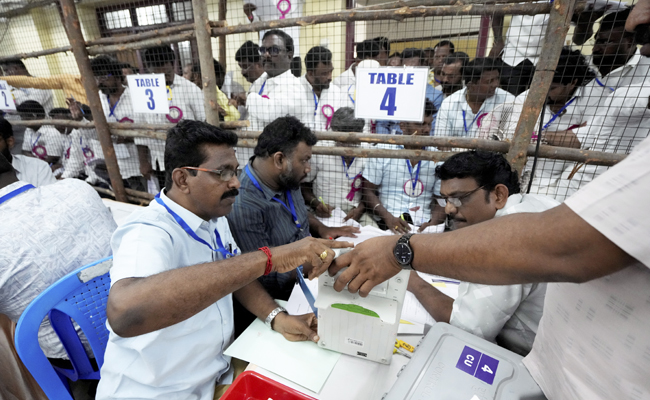
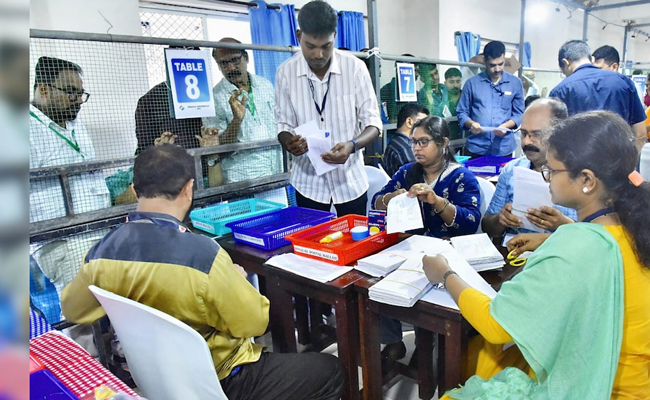
Bengaluru (PTI): Trends show Congress and BJP have maintained leads respectively in Karnataka's Bagalkot and Davanagere South Assembly seats, where counting of votes is underway on Monday, for the bypolls held for two seats on April 9.
The polls were necessitated by the deaths of senior Congress MLAs H Y Meti (Bagalkot) and Shamanur Shivashankarappa (Davanagere South).
According to the Election Commission, Congress party's Umesh Meti was ahead of BJP's Veerabhadrayya Charantimath by a margin of 9,969 votes in Bagalkot.
In Davanagere South, BJP's Srinivas T Dasakariyappa was leading over Congress party's Samarth Mallikarjun by a margin of 8,539 votes.
Nine and 25 candidates were in the fray, respectively in the Bagalkot and Davanagere South Assembly segments.