Beijing COVID-19 cases reach 106, mass testing of nearly 90,000 people underway
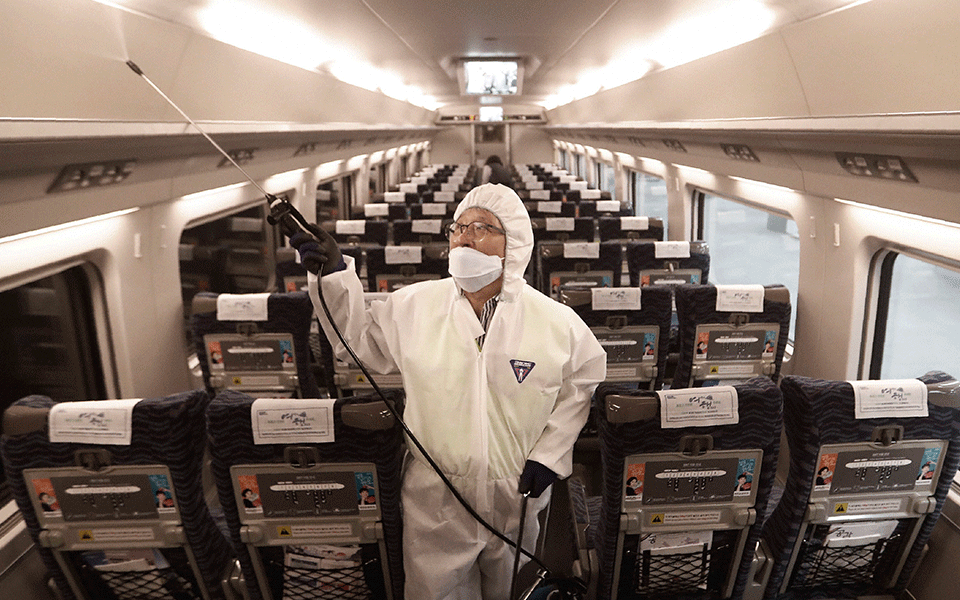
Beijing: The COVID-19 cases in Beijing have jumped to 106, a senior city official said on Tuesday, warning that the situation is "extremely severe" in China's capital where the authorities have mounted massive containment measures including mass testing of about 90,000 people and lockdown around the wholesale market which reported the new infections.
Twenty-seven new cases were reported in the last 22 hours, Beijing city spokesman Xu Hejian said, adding that strict measures have been implemented to stem the spread of the deadly virus.
Since the outbreak at the Xinfadi wholesale market in the last five days, the total confirmed new cases have reached 106, he said.
The official, who is also deputy minister of the Municipal Party Committee Propaganda Department, said the epidemic situation in Beijing remained "extremely severe".
"This is our top priority. We have to strictly implement all the measures and seize every minute," he said.
Earlier, China's National Health Commission (NHC) reported 46 new coronavirus cases including 27 in Beijing, which is currently testing thousands of people and lockdown many residential areas following a sudden spurt of a cluster of cases from a local wholesale market.
The NHC on Tuesday reported 40 new confirmed COVID-19 cases on Monday of which 27 were reported in Beijing, four in Hebei Province, and one in Sichuan Province.
Also on Monday, six new asymptomatic cases were reported. As on Monday 110 asymptomatic cases were under quarantine, NHC said. Officials said Beijing was facing "explosive outbreak" of the coronavirus.
Wu Zunyou, chief epidemiologist with the Chinese Centre for Disease Control and Prevention, told the Communist Party mouthpiece People's Daily on Monday afternoon that the situation was very serious.
"Beijing is facing explosive and concentrated outbreaks even though the national epidemic has basically been blocked. The fact that it happened in Xinfadi, a large wholesale market, is a challenge in itself as we try to carry out epidemiological investigations," Wu said.
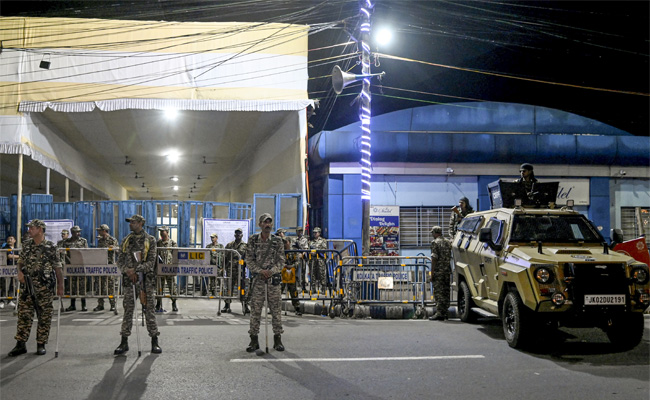
Authorities have locked down 21 residential estates in Fengtai and the northern district of Haidian, which is also home to a big food market. Access to the areas is strictly controlled and mass coronavirus testing is underway.
After reporting zero new cases of the coronavirus infections for 56 consecutive days, Beijing reported 79 cases related to Xinfadi - a large wholesale food market - between Thursday and Sunday including one critically ill patient and two severely ill, as the official data showed, state-run Global Times reported.
"The resurgence of cases sounded the alarm to us, with Xinfadi being a large food market that supplies a large proportion of Beijing's fresh vegetables, recording a high level of daily traffic, which is part of the reason behind such a severe situation," Wang Peiyu, deputy head of Peking University's School of Public Health said.
In a bid to stem the spread of the contagion, the authorities in Beijing started conducting the nucleic acid tests on 90,000 people. About two lakh people were reported to have visited the Xinfadi wholesale market since May 30. Also several residential areas around the market, which supplies 90 per cent of vegetables and meat products, were placed under strict lockdown.
Beijing sacked two officials in Fengtai district - Zhou Yuqing, deputy head of the Fengtai district government, and Wang Hua, Party secretary of Huaxiang Township in Fengtai - for misconduct in office during epidemic prevention and control.
Zhang Yuelin was also ordered to be removed from the post of general manager of the Xinfadi wholesale market, the official media reported.
Also, the official media here revived the debate about the origin of the coronavirus after Yang Peng, a researcher from Beijing CDC, told state-run CCTV that it has been preliminarily determined that the virus found on the samples from the market is related to strains China has seen from imported cases.
The genome sequencing showed that the coronavirus came from Europe. Thousands of overseas Chinese are currently returning with a number of them testing positive for the coronavirus.
The World Health Organisation (WHO), which was blamed for supporting China since the coronavirus outbreak in Wuhan in December last, however, said the strain of the virus circulating at the Xinfadi market is not new.
Gene sequencing for the first case was reported as belonging to the European strain, which has been circulating in China and other countries, the WHO statement said.
The WHO also said it sought a report from China on the new cluster of cases in Beijing while its officials have not yet visited the area.
"We have asked China for the genetic sequencing and to receive new data on the epidemic as the investigation unfolds; and our counterparts are committed to continuing to provide such data. WHO is following up with Chinese officials for further detail," a WHO statement said.
The NHC said as of Monday, the overall confirmed cases on the mainland had reached 83,221, including 210 patients who were still being treated, with five in severe condition.
Altogether 78,377 people have been discharged after recovery and 4,634 people have died of the disease, the commission said.
Let the Truth be known. If you read VB and like VB, please be a VB Supporter and Help us deliver the Truth to one and all.
NIA court to complete framing of charges against 2010 hand-chopping case accused on May 15

Kochi (PTI): A special court here will complete proceedings for framing charges against the prime accused in the 2010 hand-chopping case involving professor T J Joseph, in which PFI activists were accused of attacking him at Muvattupuzha.
Ernakulam Special Court for NIA cases judge P K Mohandas, on April 30, heard the arguments of counsel for accused Savad and Shafeer C and decided to proceed with framing charges against the duo.
A group chopped off Thodupuzha Newman College professor Joseph's right hand in July 2010, accusing him of religious blasphemy in a question paper he had prepared.
The case, later taken over by the National Investigation Agency (NIA), resulted in the conviction of 19 accused.
The first accused, Savad, who allegedly chopped off Joseph’s palm, was arrested in Berram in Mattannur, Kannur, in January 2024, where he had allegedly been hiding under the pseudonym Shajahan.
The NIA also arrested Shafeer, who allegedly arranged shelter and provided logistical support to Savad at Chakkad and Mattannur in Kannur since 2020.
On April 30, the court heard the counsel for the accused and the NIA prosecutor on framing charges against the duo.
"On going through the documents and evidence in the case and on hearing the counsel for the accused and the prosecutor, I am of the opinion that there are grounds for presuming that the first accused has committed offences punishable under provisions of the IPC, the Explosive Substances Act and the Unlawful Activities (Prevention) Act, and that the second accused has committed offences punishable under the IPC and the UAPA, and there are materials for framing charges under these provisions against the accused," the court said.
The court directed that Savad be produced and Shafeer, who is on bail, appear before it on May 15 for recording their pleas as part of the charge-framing process.
After framing the charges, the court will schedule the trial in the case.