Belgian prime minister announces resignation
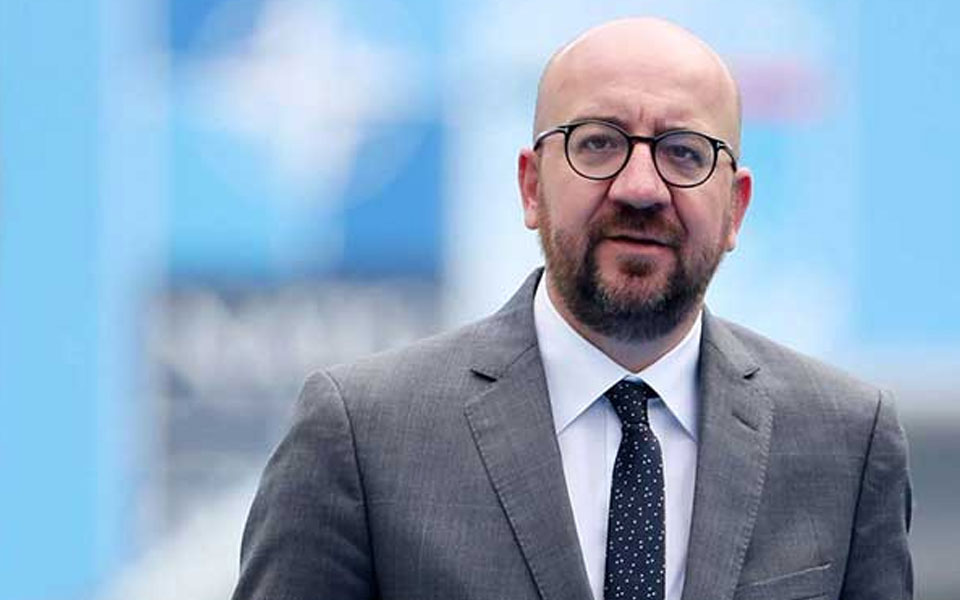
Brussels, Dec 19 : Belgian Prime Minister Charles Michel has announced his resignation, less than two weeks after his main coalition partner quit in a row over migration, leaving him leading a minority government.
Michel, who took office in 2014, lost the backing of the New Flemish Alliance (N-VA) over his support for the UN migration pact, a cause celebre for European anti-immigration parties.
His resignation Tuesday comes two days after demonstrations against the pact in central Brussels descended into scuffles, with police forced to use tear gas and water cannon to restore order.
After a debate in parliament where opposition parties refused to lend their support to keep his government working until legislative elections in May next year, Michel announced he would quit.
"I have taken the decision to submit my resignation and it is my intention to go to see the king immediately," Michel said, jumping before lawmakers could push him with a motion of no confidence.
Afterwards, King Philippe received Michel but will hold consultations before deciding whether to accept his resignation, the palace said in a statement.
Agriculture Minister Denis Ducarne of Michel's liberal MR party, criticised left wing and green parties for risking "paralysis and crisis for our country" instead of cooperating.
The Flemish nationalist N-VA, led by powerful Antwerp mayor Bart De Wever, had made political demands which Michel judged "unacceptable" -- notably on possible constitutional changes.
The liberal premier has steadfastly defended the Marrakesh migration pact, saying it presented an "opportunity for better European and international cooperation." The non-binding UN accord, which would promote a common global approach to migrant flows, was initially supported by all four parties in Belgium's coalition.
But the N-VA changed its mind in late October and pulled out of the coalition the day before Michel flew to Morocco to sign the deal.
Belgium has a history of division between wealthier Dutch-speaking Flanders in the north and the run-down French-speaking former industrial heartland of Wallonia in the south.
This has contributed to political instability, and Belgium holds the modern European record for going the longest time without a government, a whopping 541 days in 2010-2011.
But Michel had so far held together a delicate four-way coalition involving liberals, Flemish Christian Democrats and the nationalist N-VA, which which eventually wants a separate homeland in Flanders.
Let the Truth be known. If you read VB and like VB, please be a VB Supporter and Help us deliver the Truth to one and all.
Man arrested with Rs 2.54-crore heroin in Mumbai

Mumbai (PTI): Police have arrested a man and seized over 500 grams of heroin worth Rs 2.54 crore in the illicit market from him in Mumbai, officials said on Friday.
The police's Anti-Narcotics Cell (ANC) made the drug seizure in Santacruz in the western suburbs. The operation was conducted by the Kandivali unit of the ANC on Thursday as part of a special crackdown against drug trafficking in the area, they said.
Acting on specific inputs, an ANC team conducted a raid in Santacruz (East) and intercepted a man. During a search, the team recovered 508 grams of high-grade heroin from his possession, an official said.
The seized contraband, a highly addictive, opioid drug derived from morphine, is estimated to be worth Rs 2.54 crore in the international market, he informed.
Following the seizure, a case was registered against the man under relevant sections of the Narcotic Drugs and Psychotropic Substances (NDPS) Act, 1985, and he was formally placed under arrest in the early hours of Friday.
The police are currently investigating the source of the drug and trying to identify the intended recipients of the consignment, he said.