Biden and Trump clinch presidential nominations, kicking off gruelling rematch
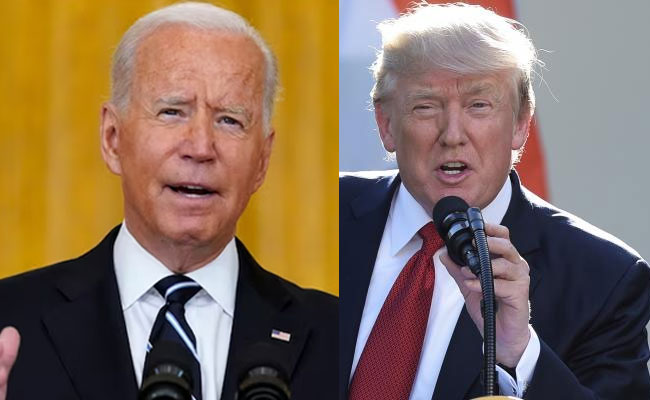
Washington (PTI): US President Biden and his predecessor Donald Trump have clinched their parties' presidential nomination, setting the stage for a 2020 rematch during the November elections.
Biden, 81, won the Democratic presumptive nomination on Tuesday after easily clinching the presidential primaries in Georgia, as the number of delegates in his kitty crossed the halfway mark of 3,933 pledged delegates. A total of 1,968 delegates were required to win the Democratic nomination.
He would formally be declared the party's nomination during the Democratic National Convention in Chicago in August.
Trump, 77, reached the 1,215 delegates necessary with an allocation of delegates from Washington state.
Trump will be officially nominated at the Republican National Convention in Milwaukee this July.
He will lead the Republican Party in a third consecutive presidential election after clinching the nomination Tuesday.
Their rematch, long anticipated, but hardly clamoured for, is broadly expected to mirror the 2020 campaign, though Trump will run this time under the spectre of 91 felony charges.
Trump is scheduled to become the first former American president to go on trial in a criminal case on March 25 in New York, where he faces charges he falsified business records to hide hush money payments to a porn star.
It would be the first presidential rematch since 1956.
The last presidential rematch came in 1956 when Republican President Dwight D Eisenhower again defeated Adlai Stevenson, the Democratic opponent he had four years prior.
Biden defeated Trump in the 2020 November elections, an outcome still challenged by the Republican leader.
Biden has faced only nominal opposition to become the Democratic nominee.
Trump has defeated several Republicans in primary elections, including Indian-origin former UN Ambassador Nikki Haley and Florida Governor Ron DeSantis. Other candidates, including Trump's former vice president, Mike Pence, dropped out months ago for lack of voter support.
Biden said he is honoured to become his party's presumptive nominee and warned of another Trump presidency.
"I am honoured that the broad coalition of voters representing the rich diversity of the Democratic Party across the country have put their faith in me once again to lead our party and our country in a moment when the threat Trump poses is greater than ever," Biden said in a statement after he bagged majority of the delegates.
"Voters now have a choice to make about the future of this country. Are we going to stand up and defend our democracy or let others tear it down? Will we restore the right to choose and protect our freedoms or let extremists take them away? Will we finally make the wealthy pay their fair share in taxes or will we allow corporate greed to run rampant on the backs of the middle class?" he said.
Vice President Kamala Harris celebrated Biden securing the delegates needed to clinch his party's nomination on Tuesday and forecast how the president's campaign will look to take the fight to Donald Trump in the general election.
"From the start, the President and I never took this re-nomination process for granted. We have campaigned in earnest because we know doing so is an important step towards earning reelection and will help us mobilise the voters we need in November," Vice President Kamala Harris said in a statement.
"Now, the general election truly begins, and the contrast could not be clearer. Donald Trump is a threat to our democracy and our fundamental freedoms," she said.
With his State of the Union speech last week, Biden passionately presented our alternative vision, she said. "We will reduce costs for families, make housing more affordable, and raise the minimum wage," she added.
"We will restore Roe (nationwide right to abortion), protect voting rights, and finally address our gun violence epidemic. The American people overwhelmingly support this agenda over Donald Trump's extreme ideas, and that will propel our campaign in the months ahead," Harris said.
Democratic National Convention (DNC) Chair Jaime Harrison said this year's election will decide the future of democracy.
"Donald Trump is running a campaign focused on revenge, retribution, and his own self-interest. President Biden is running a campaign focused on what makes our country so great: the American people. President Biden understands that our freedoms, our democracy, and the very future of our country are at stake and once again, he will meet this moment and bring Democrats together this November," he said.
"America spoke, and today Joe Biden has become the presumptive Democratic nominee for President of the United States. We have arrived at this moment because millions of Americans made their voices heard, choosing Joe Biden's vision of freedom and progress for all Americans," said Democratic National Convention Committee Chair Minyon Moore.
Let the Truth be known. If you read VB and like VB, please be a VB Supporter and Help us deliver the Truth to one and all.
Telangana rains: Four farmers dead, three injured as sheds collapse in Mancherial

Karimnagar (Telangana) (PTI): Four farmers died, and three others were injured after tin-roofed sheds and dilapidated structures collapsed in two separate incidents in Mancherial district of Telangana, officials said on Wednesday.
The incidents occurred in two villages of Luxettipet mandal late on Tuesday night, when the farmers were taking shelter in the structures following heavy rain and strong winds.
According to officials, two people died when a shed caved in at Kothuru village.
In a separate incident in Gampalapalli village, two more persons died after another structure collapsed, police and district authorities said.
The three injured were shifted to a hospital in Karimnagar for treatment, police said.
Preliminary reports indicate that unseasonal rains accompanied by strong winds weakened the structures, leading to the collapses.
Authorities are assessing the situation, and further investigation is underway.