Biden nominates Indian-American woman as judge of DC District Court
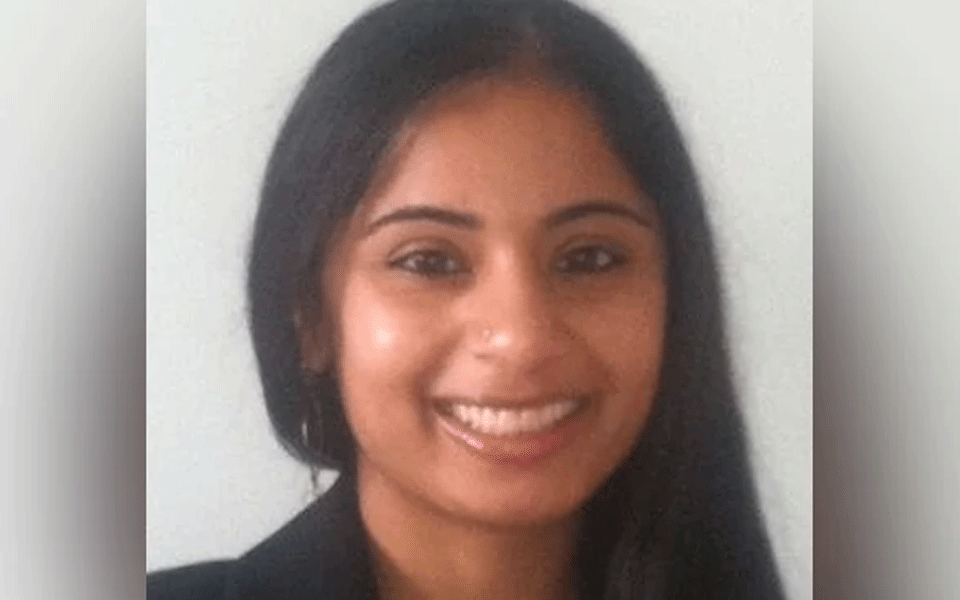
Washington: US President Joe Biden on Tuesday announced his intent to nominate Indian-American Rupa Ranga Puttagunta as a federal judge, among 10 other diverse picks for top judicial positions which include African-American and Muslim American candidates.
Among the presidential nominations, 10 are for Federal Circuit and District Court judge posts, and one is for Superior Court Judge for the District of Columbia.
These highly-qualified candidates reflect the president's deeply-held conviction that the federal bench should reflect the full diversity of the American people - both in background and in professional experience, the White House said.
If confirmed by the US Senate, Judge Puttagunta would be the first Asian American and Pacific Islander (AAPI) woman to serve on the US District Court for the District of DC, the White House said.
Judge Puttagunta currently serves as an Administrative Judge for the D.C. Rental Housing Commission. Prior to joining the Commission in 2019, Judge Puttagunta was a solo practitioner from 2013 to 2019, representing indigent criminal defendants in trial and on appeal.
Before opening her own practice, Judge Puttagunta practised family and appellate law at Delaney McKinney, LLP from 2012 to 2013.
While working on domestic relations matters in private practice, Judge Puttagunta also provided hundreds of hours of pro bono legal services by volunteering at D.C. Superior Court's Family Court Self-Help Center and Attorney Negotiator Program and representing victims of domestic violence in D.C. Superior Court.
Judge Puttagunta began her legal career as a law clerk for Judge William M. Jackson of the D.C. Superior Court from 2008 to 2010, as well as the Senior Judges of the D.C. Court of Appeals from 2010 to 2011.
Judge Puttagunta received her Juris Doctor degree from Ohio State Moritz College of Law in 2007. The nominations announced on Tuesday also include three African American women and a Muslim American.
If confirmed by the Senate, Judge Zahid N Quraishi would be the first Muslim American federal judge in US history.
Of Pakistani descent, Judge Quraishi is a United States Magistrate Judge for the U.S. District Court for the District of New Jersey, a position he was appointed to in 2019.
Prior to his appointment, Judge Quraishi was a partner at Riker Danzig where he chaired the firm's White Collar Criminal Defense and Investigations Group and served as his firm's first Chief Diversity Officer.
Let the Truth be known. If you read VB and like VB, please be a VB Supporter and Help us deliver the Truth to one and all.
Allahabad HC orders probe into 'reinstatement' of teacher in UP's Barabanki
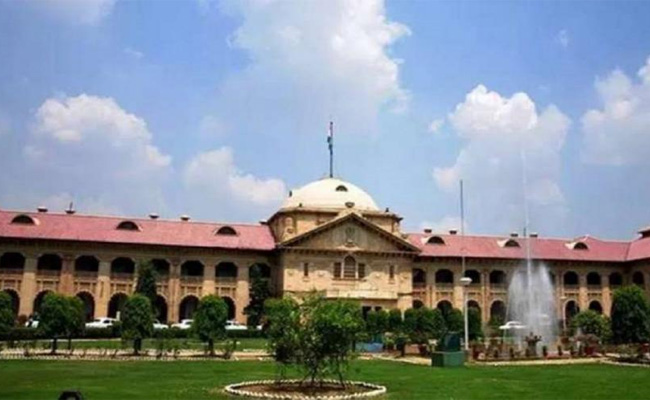
Lucknow (PTI): The Lucknow Bench of the Allahabad High Court on Friday ordered a probe by the special task force (STF) into alleged irregularities in the rejoining of a teacher at City Intermediate College in Barabanki, observing that the reinstatement appeared to be prima facie illegal.
The court also directed the recovery of the salary paid to the teacher during the disputed period.
A bench of Justice Rajeev Singh passed the order on a petition filed by the college management committee. The court expressed doubts over the roles of the District Inspector of Schools (DIOS), Barabanki, the college principal and the teacher concerned and hence, directed a detailed inquiry into the matter.
Taking note of alleged manipulation of records and misleading submissions, the court ordered the immediate transfer of the Barabanki DIOS to ensure a fair probe. It also directed the initiation of disciplinary proceedings against the then joint director of education of the Ayodhya division.
In its order, the court found that the teacher, Abhay Kumar, was initially appointed as an assistant teacher in 2018 but joined an Eklavya Model Residential School in Chhattisgarh as a lecturer in June 2024 without obtaining permission from the management. His subsequent request to retain the lien was rejected.
Despite this, he was allowed to rejoin the Barabanki College in September 2025 on the directions of the joint director of education and the DIOS, and was even paid the salary for October 2025. The court termed the rejoining "wholly illegal" and lacking any legal basis.
The bench also expressed concern over lapses in communication within the education department and directed the Uttar Pradesh chief secretary to ensure that official orders are communicated through email and WhatsApp as well, to prevent disputes.
The matter is next listed for hearing on May 28 when a compliance report is sought.