Bill Gates pledges his remaining fortune to Gates Foundation, which will close in 20 years
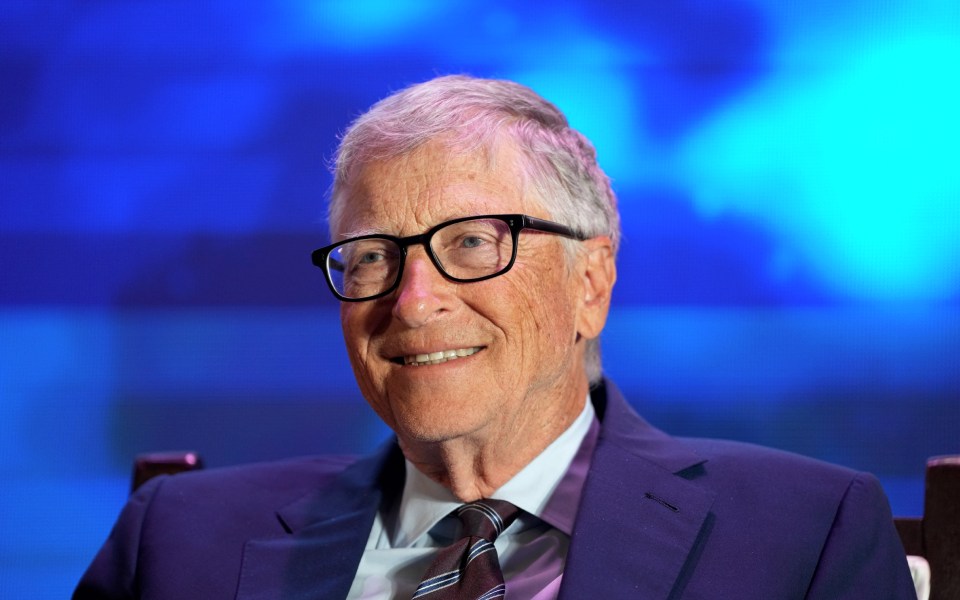
Seattle, May 9 (AP): Bill Gates says he will donate 99% of his remaining tech fortune to the Gates Foundation, which will now close in 2045, earlier than previously planned. Today, that would be worth an estimated $107 billion.
The pledge is among the largest philanthropic gifts ever – outpacing the historic contributions of industrialists like John D. Rockefeller and Andrew Carnegie when adjusted for inflation. Only Berkshire Hathaway investor Warren Buffett's pledge to donate his fortune — currently estimated by Forbes at $160 billion — may be larger depending on stock market fluctuations.
Gates' donation will be delivered over time and allow the foundation to spend an additional $200 billion over the next 20 years.
“It's kind of thrilling to have that much to be able to put into these causes,” Gates said in an interview with The Associated Press.
His announcement Thursday signals both a promise of sustained support to those causes, particularly global health and education in the US, and an eventual end to the foundation's immense worldwide influence.
Gates says spending down his fortune will help save and improve many lives now, which will have positive ripple effects well beyond the foundation's closure. It also makes it more likely that his intentions are honored.
"I think 20 years is the right balance between giving as much as we can to make progress on these things and giving people a lot of notice that now this money will be gone,” Gates said.
In a league of its own
The Gates Foundation has long been peerless among foundations — attracting supporters and detractors but also numerous unfounded conspiracy theories.
In addition to the $100 billion it has spent since its founding 25 years ago, it has directed scientific research, helped develop new technologies, and nurtured long-term partnerships with countries and companies.
About 41% of the foundation's money so far has come from Warren Buffett and the rest from the fortune Gates made at Microsoft.
Started by Bill Gates and Melinda French Gates in 2000, the foundation plays a significant role in shaping global health policy and has carved out a special niche by partnering with companies to drive down the cost of medical treatments so low- and middle-income countries could afford them.
"The foundation work has been way more impactful than I expected,” Gates said, calling it his second and final career.
The foundation's influence on global health — from the World Health Organization to research agendas — is both a measure of its success and a magnet for criticism. For years, researchers have asked why a wealthy family should have so much sway over how the world improves people's health and responds to crises.
Gates said, like any private citizen, he can choose how to spend the money he earns and has decided to do everything he can to reduce childhood deaths.
“Is that a bad thing? It's not an important cause? People can criticize it,” he said, but the foundation will stick to its global health work.
The Associated Press receives financial support for news coverage in Africa from the Gates Foundation and for news coverage of women in the workforce and statehouses from Melinda French Gates' organization, Pivotal Ventures.
Major ambitions for the remaining 20 years
The foundation's most prized metric is the drop in childhood deaths from preventable causes by almost half between 2000 and 2020, according to United Nations figures. The foundation's CEO Mark Suzman is careful to say they do not take credit for this accomplishment. But he believes they had a “catalytic role” — for example, in helping deliver vaccines to children through Gavi, the vaccine alliance they helped create.
The foundation still has numerous goals — eradicating polio, controlling other deadly diseases, like malaria, and reducing malnutrition, which makes children more vulnerable to other illnesses.
Gates hopes that by spending to address these issues now, wealthy donors will be free to tackle other problems later.
The Gates Foundation had planned to wind down two decades after Gates' death, meaning today's announcement significantly moves up that timetable. Gates plans to stay engaged, though at 69, he acknowledged he may not have a say.
In its remaining two decades, the foundation will maintain a budget of around $9 billion a year, which represents a leveling off from its almost annual growth since 2006, when Buffett first started donating.
Suzman expects the foundation will narrow its focus to top priorities.
“Having that time horizon and the resources just puts an even greater burden on us to say, Are you actually putting your resources, your thumb down, on what are going to be the biggest, most successful bets rather than scattering it too thinly?'" Suzman said, which he acknowledged was creating uncertainty even within the foundation about what programs would continue.
Let the Truth be known. If you read VB and like VB, please be a VB Supporter and Help us deliver the Truth to one and all.
Kerala polls: ‘People rejected 10 years of misrule’, says AICC gen secy
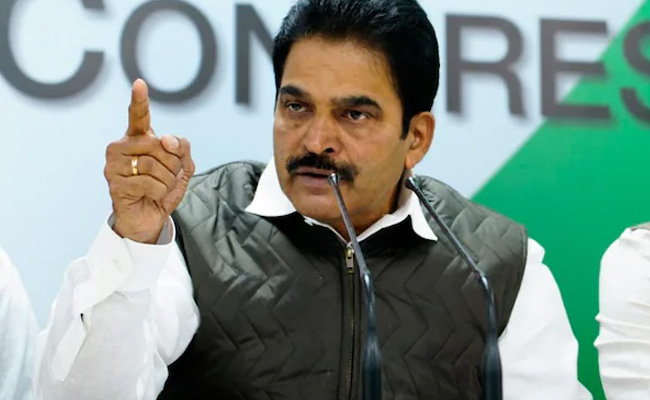
Thiruvananthapuram (PTI): AICC General Secretary K C Venugopal on Monday said the Congress-led UDF’s sweeping victory in the Kerala Assembly polls was a clear verdict against the “arrogance”, corruption, and nepotism of the CPI(M)-led LDF government headed by CM Pinarayi Vijayan.
Addressing a press conference as counting of votes for all 140 Assembly constituencies neared completion, Venugopal said the outcome reflected public anger against what he termed “10 years of misrule” by the Left government.
He claimed that Vijayan’s victory in his home constituency, Dharmadam, was “only technical”, alleging that the CM trailed the UDF candidate in the initial rounds of counting and failed to secure a majority in his own village.
“He just escaped. He suffered a setback even in his home turf. He was the only person who did not realise the people’s mood in this election,” Venugopal said.
Alleging that the CPI(M) and the LDF had resorted to “communal and opportunistic politics”, he further claimed that the ruling front had entered into a “secret understanding” with the BJP in a bid to retain power for a third consecutive term.
He said that when a government driven by power and arrogance attempts to align with anyone to stay in office, even its own cadre turns against it.
Referring to the results, Venugopal said that while the UDF expected rebel CPI(M) leaders, including K Kunhikrishnan in Payyannur, to impact the vote share, their victories came as a surprise.
Describing the UDF’s performance as a “historic victory”, he attributed it to coordinated teamwork, grassroots mobilisation, and the dedication of party workers, adding that the alliance accepted the mandate “with humility”.
Venugopal also credited Rahul Gandhi’s campaign guarantees, calling them a “trump card” that helped voters focus on real issues and reject what he described as the LDF’s “false narratives”.
He claimed that the Congress witnessed one of its lowest levels of rebellion in this election, which contributed to the alliance’s strong performance.
The senior Congress leader further alleged that the BJP managed to win two seats with the help of the CPI(M), and asserted that forces attempting to divide society on communal lines should “learn a lesson” from Kerala’s verdict.
“This is the real Kerala story,” he said.
On the question of the next Chief Minister, Venugopal said the party leadership would decide at the earliest after due consultations.
The counting of votes began on Monday morning for all 140 Assembly constituencies in Kerala, where the Congress-led UDF secured a decisive majority, defeating the CPI(M)-led LDF, which was seeking an unprecedented third consecutive term in office.
Congress MP Rahul Gandhi (@RahulGandhi) posts, "Thank you to my brothers and sisters in Keralam for a truly decisive mandate. Congratulations to every UDF leader and worker for a hard-fought, well-run campaign. As I said before, Keralam has the talent, Keralam has the potential… pic.twitter.com/6T4IZbEmp4
— Press Trust of India (@PTI_News) May 4, 2026