Blowback: Iran abandons nuclear limits after US killing
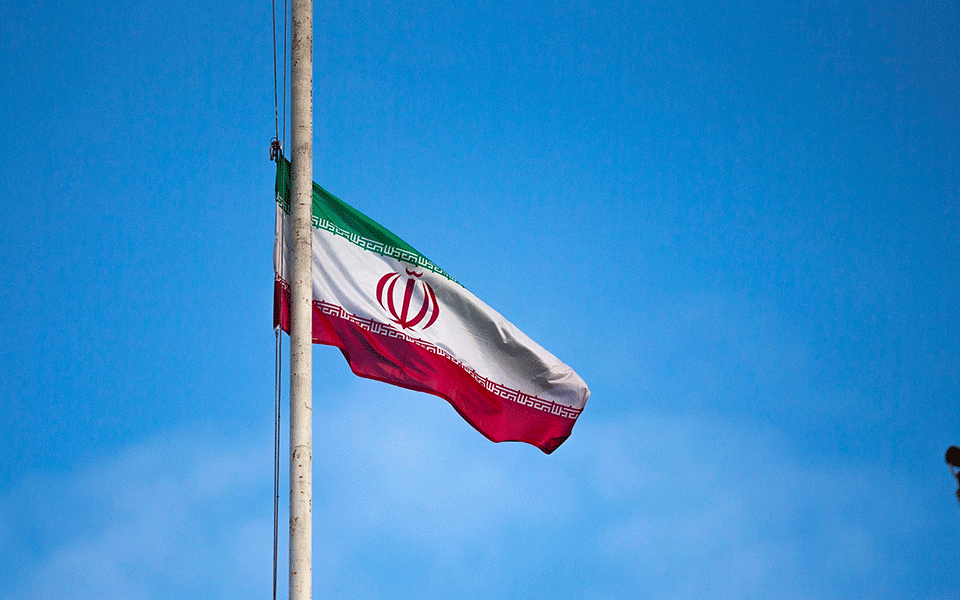
Tehran: The blowback over the US killing of a top Iranian general mounted Sunday as Iran announced it will no longer abide by the limits contained in the 2015 nuclear deal and Iraq's Parliament called for the expulsion of all American troops from Iraqi soil.
The twin developments could bring Iran closer to building an atomic bomb and enable the Islamic State group to stage a comeback in Iraq, making the Middle East a far more dangerous and unstable place.
Adding to the tensions, US President Donald Trump threatened to demand billions of dollars in compensation from Iraq or impose sanctions like they've never seen before if it goes through with expelling US troops.
Iranian state television cited a statement by President Hassan Rouhani's administration saying the country would not observe the nuclear deal's restrictions on fuel enrichment, on the size of its enriched uranium stockpile and on its research and development activities.
"The Islamic Republic of Iran no longer faces any limitations in operations," a state TV broadcaster said.
In Iraq, meanwhile, lawmakers voted in favor of a resolution calling for an end to the foreign military presence in the country, including the estimated 5,200 US troops stationed to help fight Islamic State extremists. The bill is subject to approval by the Iraqi government but has the backing of the outgoing prime minister.
In yet another sign of rising tensions and threats of retaliation over the deadly airstrike, the US-led military coalition in Iraq said it is putting the battle against IS on hold to focus on protecting its own troops and bases.
The string of developments capped a day of mass mourning over Iranian Maj. Gen.
Qassem Soleimani, killed in a US drone strike in Baghdad on Friday. Hundreds of thousands of people flooded the streets in the cities of Ahvaz and Mashhad to walk alongside the casket of Soleimani, who was the architect of Iran's proxy wars across the Mideast and was blamed for the deaths of hundreds of Americans in roadside bombings and other attacks.
Trump responded to the Parliament's troop withdrawal vote with a monetary threat, saying the US expected to be paid for its military investments in Iraq before leaving and threatening economic sanctions if the US is not treated properly.
We have a very extraordinarily expensive air base that's there. It cost billions of dollars to build. Long before my time. We're not leaving unless they pay us back for it," he told reporters aboard Air Force One.
If they do ask us to leave, if we don't do it in a very friendly basis, we will charge them sanctions like they've never seen before ever. It'll make Iranian sanctions look somewhat tame," he said He added: We're not leaving until they pay us back for it.
State Department spokesperson Morgan Ortagus earlier said the US is awaiting clarification on its legal meaning but was disappointed by the move and strongly urged Iraq to reconsider.
We believe it is in the shared interests of the United States and Iraq to continue fighting ISIS together, Ortagus said.
The leaders of Germany, France and Britain issued a joint statement on Sunday calling on Iran to abide by the terms of the nuclear deal and refrain from conducting or supporting further violent acts. German Chancellor Angela Merkel, French President Emmanuel Macron and British Prime Minister Boris Johnson specifically urged Iran to withdraw all measures not in line with the 2015 agreement that was intended to stop Tehran from pursuing its atomic weapons program.
Iran insisted that it remains open to negotiations with European partners over its nuclear program. And it did not back off from earlier promises that it wouldn't seek a nuclear weapon.
However, the announcement represents the clearest nuclear proliferation threat yet made by Iran since Trump unilaterally withdrew from the accord in 2018 and reimposed sanctions. It further raises regional tensions, as Iran's longtime foe Israel has promised never to allow Iran to produce an atomic bomb.
Iran did not elaborate on what levels it would immediately reach in its program. Tehran has already broken some of the deal's limits as part of a step-by-step pressure campaign to get sanctions relief. It has increased its production, begun enriching uranium to 5% and restarted enrichment at an underground facility.
While it does not possess uranium enriched to weapons-grade levels of 90%, any push forward narrows the estimated one-year breakout time needed for it to have enough material to build a nuclear weapon if it chose to do so.
The International Atomic Energy Agency, the United Nations watchdog observing Iran's program, did not immediately respond to a request for comment. However, Iran said that its cooperation with the IAEA will continue as before. Foreign Ministry spokesman Abbas Mousavi earlier told journalists that Soleimani's killing would prompt Iranian officials to take a bigger step away from the nuclear deal.
In the world of politics, all developments are interconnected," Mousavi said.
In Iraq, where the airstrike has been denounced as a violation of the country's sovereignty, Prime Minister Adel Abdul-Mahdi said that the government has two choices: End the presence of foreign troops or restrict their mission to training Iraqi forces. He called for the first option.
Let the Truth be known. If you read VB and like VB, please be a VB Supporter and Help us deliver the Truth to one and all.
Karnataka launches India’s first digital grievance system for gig workers
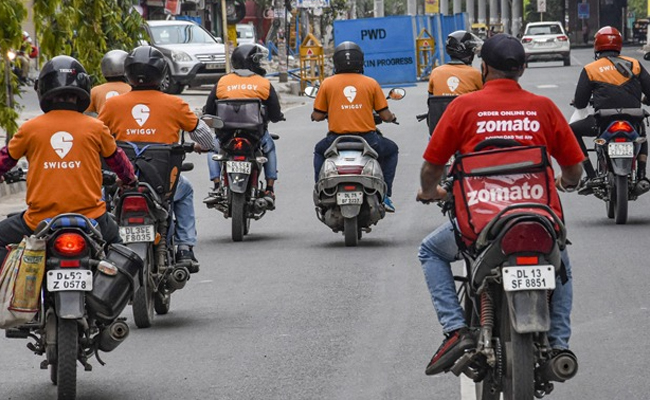
Bengaluru: In a first-of-its-kind initiative in India, the Karnataka government has launched a digital grievance redressal system for gig workers to provide structured support and protection to platform-based workers.
According to The Hindu, the system, developed by the Karnataka Platform-based Gig Workers’ Board in collaboration with the Department of e-Governance, allows workers to file complaints through the Integrated Public Grievance Redressal System (IPGRS).
Gig workers can raise issues related to pay, working conditions, and platform-specific disputes. Complaints will be routed to the Internal Dispute Resolution Committees (IDRCs) of respective platforms and are expected to be resolved within a defined timeframe. This is expected to bring transparency and legal recourse for a workforce that has so far operated without a formal dispute resolution framework.
Under The Karnataka Platform-Based Gig Workers (Social Security and Welfare) Act and Rules, every aggregator platform must constitute an Internal Dispute Resolution Committee (IDRC). Platforms such as Namma Yatri and Yulu have already integrated their IDRC contact details with the government portal.
Around 12 lakh gig workers have been identified in the state, and a unique identification system is being developed to remove duplicate entries. Officials said welfare schemes are also being designed based on type of work, working hours, and contribution.
Labour Minister Santosh Lad said that Karnataka, technology capital of the country, is leveraging this potential for worker welfare as well. “By launching this system, we are ensuring that the gig economy is no longer an informal space, but a structured one where every worker’s voice is heard,” he said.
“The schemes will vary based on the type of platforms. For example, cab rides are mostly undertaken by men whereas urban domestic activity is undertaken mostly by women. It may also be based on the contribution made, and the quantum of gig work done by a gig worker. Some gig workers work for more than eight hours while some may work on a few gigs. So, work load, nature of work, and time period of work could vary,” TH quoted G. Manjunath, Additional Labour Commissioner and CEO of the Board as saying.
“It has to be scientifically structured based on their effort and labour. We are working with experts, including academicians from Briston University, King’s College, and IISc, and other stake holders, including board members,” he said.
Officials added that aggregator platforms will be required to contribute 1 per cent towards worker welfare, with implementation beginning July 5.