Brazil blocks Musk's X after company refuses to name local representative amid feud with judge
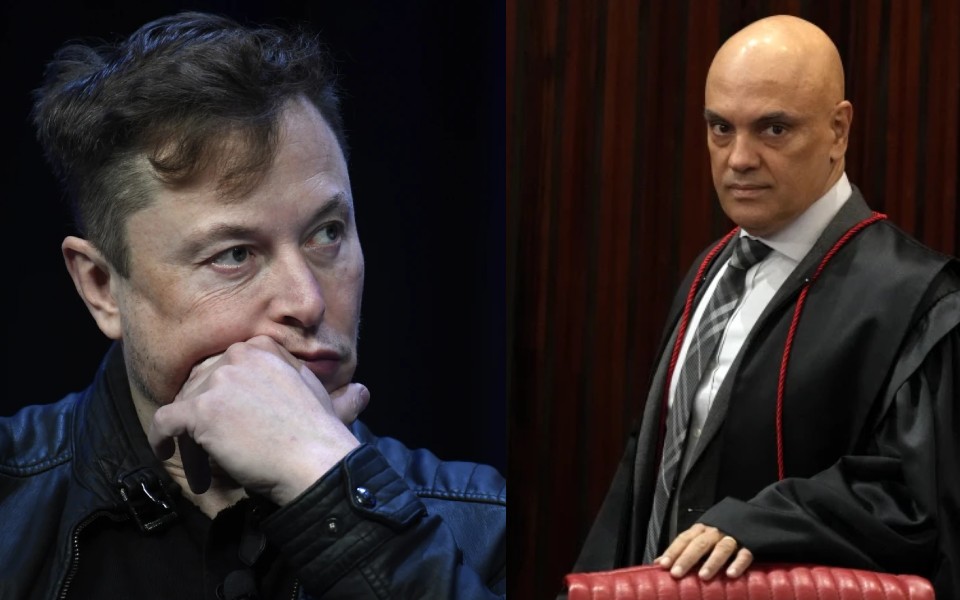
Sao Paulo, Aug 31: Brazil started blocking Elon Musk's social media platform X early Saturday, making it largely inaccessible on both the web and through its mobile app after the company refused to comply with a judge's order.
X missed a deadline imposed by Supreme Court Justice Alexandre de Moraes to name a legal representative in Brazil, triggering the suspension. It marks an escalation in the monthslong feud between Musk and de Moraes over free speech, far-right accounts and misinformation.
To block X, Brazil's telecommunications regulator, Anatel, told internet service providers to suspend users' access to the social media platform. As of Saturday after midnight local time, major operators had begun doing so.
De Moraes had warned Musk on Wednesday night that X could be blocked in Brazil if he failed to comply with his order to name a representative, and established a 24-hour deadline. The company hasn't had a representative in the country since earlier this month.
“Elon Musk showed his total disrespect for Brazilian sovereignty and, in particular, for the judiciary, setting himself up as a true supranational entity and immune to the laws of each country,” de Moraes wrote in his decision on Friday.
The justice said the platform will stay suspended until it complies with his orders, and also set a daily fine of 50,000 reais ($8,900) for people or companies using VPNs to access it.
In a later ruling, he backtracked on his initial decision to establish a 5-day deadline for internet service providers themselves — and not just the telecommunications regulator — to block access to X, as well as his directive for app stores to remove virtual private networks, or VPNs.
Brazil is one of the biggest markets for X, which has struggled with the loss of advertisers since Musk purchased the former Twitter in 2022. Market research group Emarketer says some 40 million Brazilians, roughly one-fifth of the population, access X at least once per month.
“This is a sad day for X users around the world, especially those in Brazil, who are being denied access to our platform. I wish it did not have to come to this – it breaks my heart,” X's CEO Linda Yaccarino said Friday night, adding that Brazil is failing to uphold its constitution's pledge to forbid censorship.
X had posted on its official Global Government Affairs page late Thursday that it expected X to be shut down by de Moraes, “simply because we would not comply with his illegal orders to censor his political opponents.”
“When we attempted to defend ourselves in court, Judge de Moraes threatened our Brazilian legal representative with imprisonment. Even after she resigned, he froze all of her bank accounts,” the company wrote.
X has clashed with de Moraes over its reluctance to comply with orders to block users.
Accounts that the platform previously has shut down on Brazilian orders include lawmakers affiliated with former President Jair Bolsonaro's right-wing party and activists accused of undermining Brazilian democracy. X's lawyers in April sent a document to the Supreme Court in April, saying that since 2019 it had suspended or blocked 226 users.
In his decision Friday, de Moraes' cited Musk's statements as evidence that X's conduct “clearly intends to continue to encourage posts with extremism, hate speech and anti-democratic discourse, and to try to withdraw them from jurisdictional control.”
In April, de Moraes included Musk as a target in an ongoing investigation over the dissemination of fake news and opened a separate investigation into the executive for alleged obstruction.
Musk, a self-proclaimed “free speech absolutist," has repeatedly claimed the justice's actions amount to censorship, and his argument has been echoed by Brazil's political right. He has often insulted de Moraes on his platform, characterizing him as a dictator and tyrant.
De Moraes' defenders have said his actions aimed at X have been lawful, supported by most of the court's full bench and have served to protect democracy at a time it is imperiled. He wrote Friday that his ruling is based on Brazilian law requiring internet services companies to have representation in the country so they can be notified when there are relevant court decisions and take requisite action — specifying the takedown of illicit content posted by users, and an anticipated churn of misinformation during October municipal elections.
Let the Truth be known. If you read VB and like VB, please be a VB Supporter and Help us deliver the Truth to one and all.
4 workers die after being buried under coal slurry in Jharkhand's Dhanbad

Dhanbad (Jharkhand) (PTI): At least four workers died after being buried under coal slurry in Jharkhand's Dhanbad district on Saturday, a police official said.
The incident took place at Moonidih coal washery in the command area of Bharat Coking Coal Limited (BCCL).
"Bodies of all four workers were dug out of debris during a rescue operation," Putki police station in-charge Waqar Hussain told PTI.
The incident took place when coal slurry was being loaded into trucks by workers, during which a large chunk of slurry fell and trapped several workers underneath, officials said.
The deceased have been identified as Manik Bauri, Dinesh Bauri, Deepak Bauri, and Hemlal Gope.
Meanwhile, the family members of the deceased and local villagers placed the bodies in front of the washery gate and began a protest.
They demanded compensation, jobs for dependents and action against those responsible for the incident.
Police and administration officials are trying to pacify the protesters, an official said.