Canada and Malta to recognize Palestinian state, joining France and possibly Britain
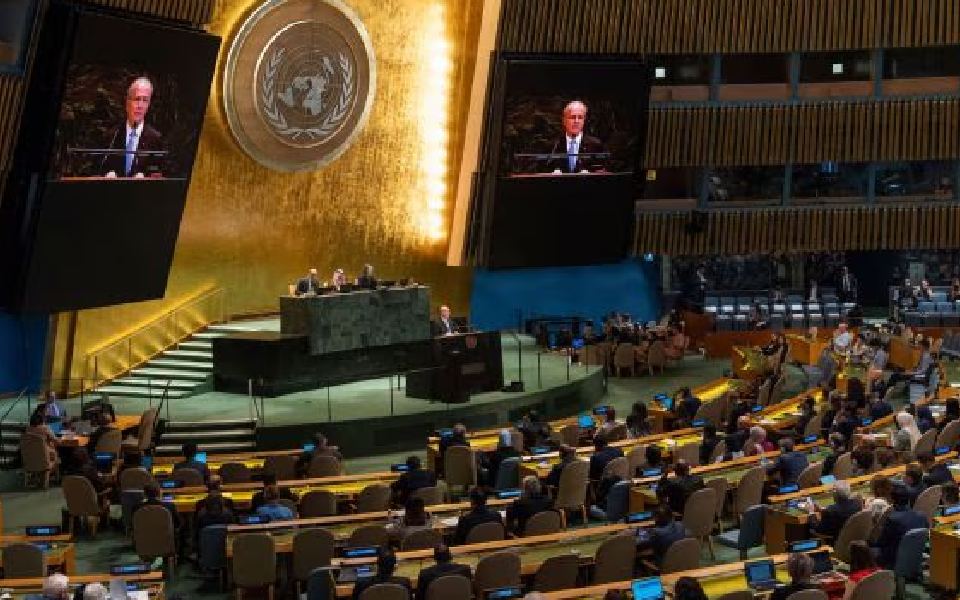
United Nations, Jul 31 (AP): Canada and Malta announced Wednesday they will recognise the state of Palestine in September, joining France and the United Kingdom in stepping up pressure to end the nearly 80-year Israeli-Palestinian conflict.
Canadian Prime Minister Mark Carney made the announcement after a Cabinet meeting. Christopher Cutajar, the permanent secretary at Malta's Foreign Ministry, made his country's announcement earlier at the UN General Assembly's meeting on a two-state solution to the conflict, which was extended to a third day because of the high number of countries wanting to speak.
Cutajar said Malta has long supported self-determination for the Palestinian people, and “as responsible actors, we have a duty to work to translate the concept of a two-state solution from theory into practice.”
“It is for this reason that the government of Malta has taken the principled decision to formally recognise the state of Palestine at the upcoming UN General Assembly in September,” he said.
Carney said Canada will also make its announcement at the annual gathering of world leaders, which starts September 23. He said the intention is predicated on the Palestinian Authority “holding general elections in 2026 in which Hamas can play no part, and to demilitarise the Palestinian state.” Palestinian President Mahmoud Abbas made those promises in a June 10 letter, and it's unclear what more Carney is seeking.
Malta says it wants a 'lasting peace' in Mideast
Malta's Prime Minister Robert Abela earlier announced the decision by his country, a former British colony, to recognise a Palestinian state on Facebook, saying it is part of the nation's efforts “for a lasting peace in the Middle East.”
The Mediterranean island nation and European Union member will join more than 145 countries, including over a dozen European nations, in recognising the state of Palestine.
French President Emmanuel Macron announced ahead of this week's meeting that his country will recognise the state of Palestine at the annual gathering of world leaders at the 193-member General Assembly, which starts September 23.
United Kingdom Prime Minister Keir Starmer announced Tuesday that Britain would recognise the state of Palestine before September's meeting, but would refrain if Israel agrees to a ceasefire and long-term peace process in the next eight weeks.
France and Britain are the biggest Western powers and, with Canada, three members of the Group of Seven major industrialised nations have now made such a pledge.
Israel opposes a two-state solution and is boycotting the meeting along with its closest ally, the United States.
Israel's UN ambassador, Danny Danon, on Tuesday sharply criticised about 125 countries participating in the conference and new recognitions of a Palestinian state, saying “there are those in the world who fight terrorists and extremist forces and then there are those who turn a blind eye to them or resort to appeasement.”
“While our hostages are languishing in Hamas tunnels in Gaza, these countries choose to engage in hollow statements instead of investing their efforts in their release,” Danon said. “This is hypocrisy and a waste of time that legitimises terrorism and distances any chance of regional progress.”
Malta's Cutajar countered that "recognition is not merely symbolic – it is a concrete step towards the realisation of a just and lasting peace.”
Quick action is urged
High-level representatives at the UN conference on Tuesday urged Israel to commit to a Palestinian state and gave “unwavering support” to a two-state solution, and they urged all countries that haven't recognised the state of Palestine to do so quickly.
The seven-page “New York Declaration” sets out a phased plan to end the Israel-Palestinian conflict and the ongoing war in Gaza. The plan would culminate with an independent, demilitarised Palestine living side by side peacefully with Israel, and their eventual integration into the wider Mideast region.
A separate one-page statement titled the “New York Call” approved late Tuesday by 15 Western nations says they have recognised, “expressed or express the willingness or the positive consideration ... to recognise the state of Palestine, as an essential step towards the two-state solution, and invite all countries that have not done so to join this call.”
It included six that have recognised the state of Palestine and nine, including Malta and Canada, that had not. The seven that still haven't are Andorra, Australia, Finland, Luxembourg, New Zealand, Portugal and San Marino.
Saudi Arabia's UN ambassador, Abdulaziz Alwasil, suspended the meeting “until further notice” after the 128th and final speaker, saying an outcome document has been sent to all 193 UN member nations. States have until the beginning of September to endorse the document.
Let the Truth be known. If you read VB and like VB, please be a VB Supporter and Help us deliver the Truth to one and all.
Over 1 lakh students appear for NEET across TN
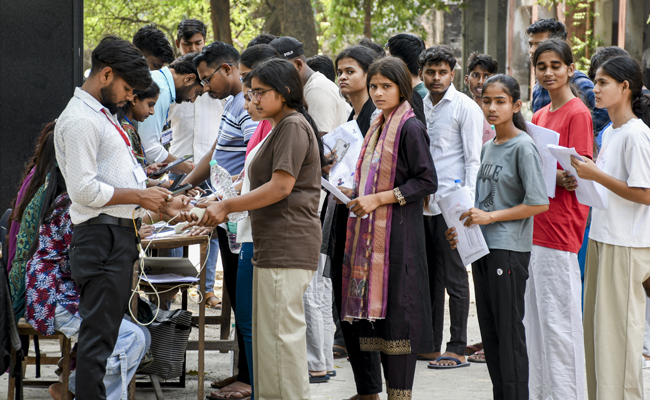
Chennai (PTI): About 1.4 lakh students appeared for the NEET 2026 exam for admission to medical degree courses across 31 centres in Tamil Nadu on Sunday.
Students claimed that the exam paper was easier than the previous year.
Organised by the National Testing Agency (NTA), 22.80 lakh students had registered for the National Eligibility cum Entrance Test (NEET) undergraduate exam nationwide.
NTA sources said that CCTV surveillance was installed at all examination centres, with feeds linked to centralised control rooms.
In view of the large candidate volume and prevailing summer conditions, the NTA ensured reliable power back-up, including generators at all centres, to ensure candidate comfort during the exam. Also, drinking water and on-site medical support were provided to students.
The sources further said that no malpractices were reported, especially in Chennai. The results of NEET are expected to be declared in June, 2026.