Canada will reduce immigration targets as Trudeau acknowledges his policy failed
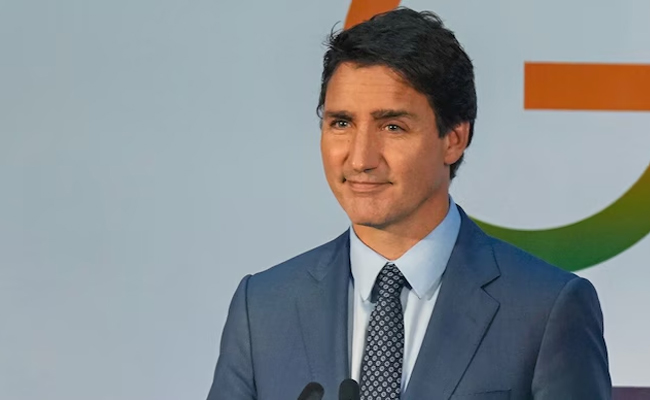
Toronto, Oct 25 (AP) Prime Minister Justin Trudeau said Thursday that Canada will significantly reduce the number of new immigrants it allows into the country after acknowledging that his government failed to get the balance right coming out of the pandemic.
Trudeau's Liberal government was criticised for its plan to allow 500,000 new permanent residents into the country in each of the next two years. On Thursday, he said next year's target will now be 395,000 new permanent residents and that the figure will drop to 380,000 in 2026 and 365,000 in 2027.
“In the tumultuous times as we emerged from the pandemic, between addressing labour needs and maintaining population growth, we didn't get the balance right,” Trudeau said.
“Immigration is essential for Canada's future, but it must be controlled and it must be sustainable.”
Trudeau, who is facing calls from within his own party not to seek a fourth term, has endured mounting criticism over his immigration policies and the negative impact that population growth has had on housing affordability.
He said his government will reduce the number of immigrants Canada brings in over the next three years, and that this will freeze population growth over the next two years. Canada reached 41 million people in April. The population was 37.5 million in 2019.
“Even Justin Trudeau wants to close Canada's Borders,” Donald Trump wrote Thursday on social media while arguing for tougher border measures in the US.
Trudeau said Canada needs to stabilise its population growth to allow all levels of government to make necessary changes to health care, housing and social services so that it can accommodate more people in the future.
Trudeau also blamed others.
“Far too many corporations have chosen to abuse our temporary measures, exploiting foreign workers while refusing to hire Canadians for a fair wage,” Trudeau said. “All while under the watch of provinces, some colleges and universities are bringing in more international students than communities can accommodate, treating them as an expendable means to line their own pockets. That's unacceptable, and it needs to change.”
Immigration Minister Marc Miller said the lower immigration numbers will help with the country's housing shortage.
He also acknowledged the change in public opinion about immigration.
“That volume that we have put forward is of concern,” Miller said.
Miller said the government sees the pressures facing Canadians, and that it must adapt its policies accordingly.
“We are an open country, but not everyone can come to this country,” he said, noting that Canada will continue to welcome outsiders and that the government's immigration targets remain ambitious.
Trudeau's government has long touted Canada's immigration policy and how Canada is better than peer countries in welcoming newcomers and integrating them into the economy.
Pierre Poilievre, the leader of the opposition Conservative Party, accused Trudeau of destroying the national consensus on immigration.
“He has destroyed our immigration system through his own personal incompetence and destroyed 150 years of common sense consensus with the Liberals and Conservatives on that subject," Poilievre said.
“He cannot fix what he broke on immigration and housing or anything else because he is busy fighting his own caucus,” he added.
Poilievre was referring to calls by some lawmakers from Trudeau's own party to not run for a fourth term. Those calls represent one of the biggest tests of Trudeau's political career, but he said Thursday that he intends to stay on through the next election.
Nelson Wiseman, professor emeritus of political science at the University of Toronto, said the Trudeau government messed up badly on immigration.
"The government's logic — to grow the economy and sustain an aging Canadian population by bringing in more young immigrants — was sound. But Ottawa has little control over meeting the housing, health, education, and other welfare needs of residents, whether they are citizens or immigrants,” Wiseman said.
"These are all provincial government responsibilities, and there was little cooperation or coordination between the two levels of government," he said.
A certain percentage of Canadians have always been xenophobic, but much less so than in some other countries, Wiseman said.
“Many Canadians have turned against the recent growing immigrant and temporary worker/student influx because of the growing housing, health, education, and other welfare challenges. Ottawa has read the polls and is responding accordingly," he said.
Let the Truth be known. If you read VB and like VB, please be a VB Supporter and Help us deliver the Truth to one and all.
CM Siddaramaiah alleges ‘criminal conspiracy’ in Sringeri recount, vows legal action
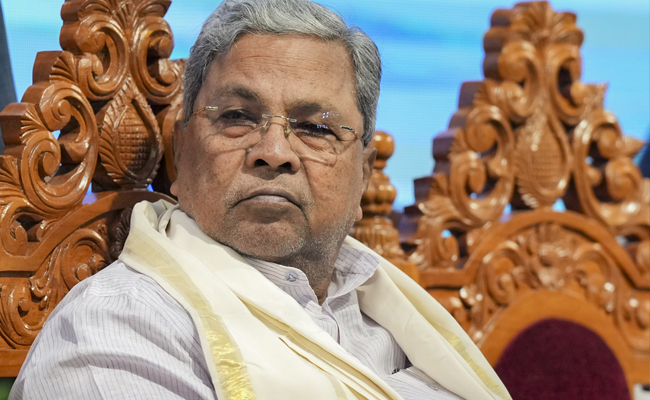
Bengaluru (PTI): Alleging a “criminal conspiracy” by BJP candidate D N Jeevaraj in the Sringeri Assembly poll recounting, Karnataka CM Siddaramaiah on Tuesday said the outcome was manipulated after valid postal ballot votes in favour of Congress leader T D Raje Gowda were tampered with during the recounting process.
Following a Karnataka High Court order on an election petition filed by Jeevaraj, challenging Raje Gowda’s election, the reverification and recounting were conducted on Saturday.
After the reverification and recount of postal ballots for the Sringeri Assembly constituency, votes polled in favour of Raje Gowda were reduced by 255, the returning officer said.
A report on the matter has been submitted to the Election Commission of India for further action, the officer added.
Congress leader Raje Gowda had won the 2023 Assembly polls from Sringeri by 201 votes, defeating his nearest rival Jeevaraj.
Addressing a press conference in Bengaluru, Siddaramaiah said the High Court had directed the recounting of postal ballots and that irregularities were noticed during the exercise conducted on May 2.
“This is a clear case of criminal conspiracy,” Siddaramaiah said, alleging that valid votes cast in favour of Raje Gowda were altered after being accepted by counting agents of all parties, including Congress, BJP, and JD(S).
He claimed that during the recounting of postal ballots, 255 votes were initially accepted as valid by all agents but were later tampered with by subordinate officials.
“There is a second mark on the votes polled in favour of Raje Gowda. They had accepted these as valid votes. Subsequently, another mark was made by officials. This is a clear case of criminal conspiracy,” he said.
When asked who was behind the alleged conspiracy, the CM replied, “It was hatched by Jeevaraj and others. It is planned.”
Siddaramaiah further alleged that the returning officer acted improperly by declaring the result despite the presence of an Election Commission observer during the recounting.
“Immediately after the counting, the returning officer announced the result. He should not have done so; this is against the law,” he said.
He pointed out that Raje Gowda had originally won by 201 votes, but after the recounting, the BJP candidate was declared the winner by 52 votes.
“The BJP has committed a criminal act of conspiracy. This is not vote chori but vote dacoity,” he alleged.
The CM said a police complaint had already been filed by Raje Gowda’s election agent, Sudhir Kumar, and emphasised the need for electoral integrity.
“We want transparency and free and fair elections. That is what our Constitution mandates,” he added.
Stating that the government would pursue legal remedies, Siddaramaiah said, “We are preparing an appeal challenging the returning officer’s announcement in a court of law.”
Responding to a separate query on elections in other states, the CM said there appeared to be an anti-incumbency factor in West Bengal, while results in Tamil Nadu were “surprising,” adding that Vijay’s party was emerging as the largest there.
Following the victory of party candidates in Bagalkote and Davanagere South, Siddaramaiah expressed confidence about future electoral prospects in Karnataka.
“Even in 2028, we will win the Assembly elections. We will come back,” the CM said.
Siddaramaiah added that he would order a forensic examination into the alleged tampering of postal ballots.