Case by case: How nations are going back to school -- or not
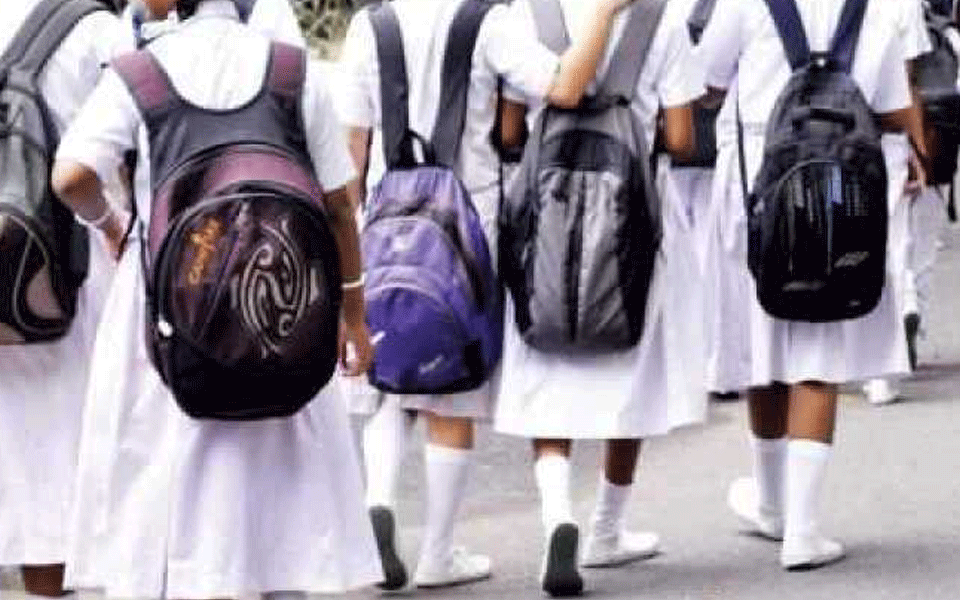
Paris: The U.N. says it's urgent to get kids back to schools after months-long coronavirus lockdowns, but with the virus still raging in parts of the United States and resurging in countries from South Korea to France, Spain and Britain, medical authorities are urging caution.
Governments are taking different strategies toward the new school year, depending on how many infections they're seeing, the state of their health care systems and political considerations.
Here's a look at how some countries are handling reopening schools amid the pandemic: UNITED STATES
In the United States, where K-12 education is largely the responsibility of states and local school districts, President Donald Trump and his education secretary have urged schools to reopen in person.
But there has been heated public debate over the wisdom of bringing students back to the classroom, especially in communities with high daily new infections, so school reopening plans in the U.S. vary widely.
Most of the largest urban districts are starting the year remotely after a summer surge in virus cases. But other districts plan to offer face-to-face instruction at least part of the time. Some have already had to quarantine classrooms or shut down entire schools because of spreading COVID-19 infections.
AFRICA
Only six African countries have fully opened schools. In South Africa, students started returning to class this week class by class. It's the second time schools are reopening, after an initial reopening resulted in new infections and prompted new closures.
As daily COVID-19 cases are decreasing, the government has said all grades should be back in schools by Monday. The South African government has also allowed parents who don't want their children to return to school to apply for home schooling.
Elsewhere in Africa, Kenya has closed its schools for the rest of 2020. In Uganda, the government is procuring radios for rural villages to help poor families with remote learning.
JAPAN Some schools in Japan reopened Monday after a shorter-than-usual summer vacation to make up for missed classes earlier due to the pandemic. At an elementary school in Tokyo, mask-wearing children held a opening ceremony in classrooms instead of the school gym for better social distancing.
CHINA
As of last month, 208 million Chinese students, or roughly 75% of the country's total had returned to class, many on some type of staggered class schedule. The rest are expected to return by Sept. 1.
SOUTH AND SOUTHEAST ASIA
Schools remain shut in India, Nepal and Bangladesh. In Sri Lanka, where the government says the virus has been contained to two clusters, schools were allowed to partially open this month for several grades facing government examinations shortly. Schools throughout Cambodia remain closed, while those in Thailand and Malaysia all reopened in July and August. Indonesian schools reopened in July with half-capacity classes and limited hours.
FRANCE
France is sending its 12.9 million students back to classrooms on Tuesday despite a sharp increase in infections in recent weeks. President Emmanuel Macron's government wants to bridge inequalities for children that were worsened by the coronavirus lockdown and get more parents back to work.
GERMANY Most German students are already back in school and at least 41 of Berlin's 825 schools have reported virus cases. Thousands of students have been quarantined around the country after outbreaks that some doctors attribute to family gatherings and travel during summer vacations.
BRITAIN Most of the U.K.'s 11 million students haven't seen a classroom since March, but children are to start returning to schools across England on Sept. 4. British Prime Minister Boris Johnson called reopening schools a moral duty, and his government even threatened to fine parents who keep their kids at home. Among measures in place are hand-washing stations and staggered starts and lunch times, but masks aren't generally required.
NORDIC COUNTRIES Most schools resumed class last week in the Nordics, as they did at the end of the spring term, amid a general consensus that there is more harm for kids staying home than the risk of sending them to school. Sweden has few virus measures other than banning parents from entering schools when they drop children off.
High school students even protested after Denmark's second-largest city shut their schools because of new infections, saying they don't learn as much remotely and questioning why they can go to shopping malls, gyms or the movies with lots of others but not school.
Let the Truth be known. If you read VB and like VB, please be a VB Supporter and Help us deliver the Truth to one and all.
Commercial LPG hike: Delhi restaurant owners warn of higher menu rates, job losses
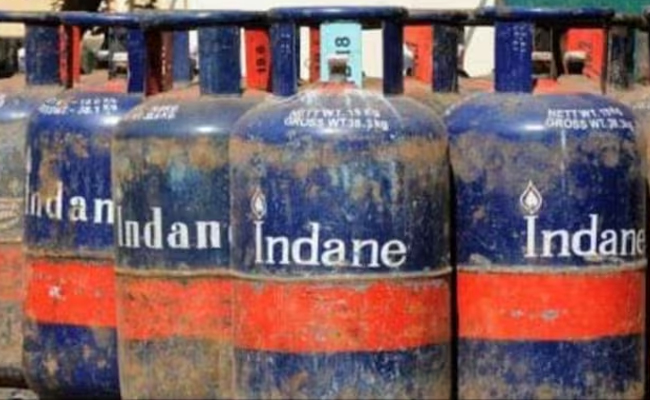
New Delhi (PTI) A day after a 50 per cent rise in commercial LPG cylinder prices, Delhi's food business, with restaurant owners and street vendors have warned of higher menu rates, financial strain and potential job losses if the trend persists.
The price of commercial LPG was hiked by a steep Rs 993 per 19 kg cylinder, marking the third consecutive monthly hike amid rising global energy prices linked to the West Asia conflict.
For many in the restaurant industry, the spike has been both sudden and steep.
Manpreet Singh, honorary treasurer of the National Restaurant Association of India, said that eateries are already grappling with supply challenges alongside rising costs.
"There is a huge difficulty in getting these cylinders, and black marketing is also increasing in many unregulated sectors," he said, noting that prices that were once around Rs 1,600, often dropping to nearly Rs 1,300 with discounts, have now surged to between Rs 3,000 and Rs 4,000 per cylinder.
He further added that a medium-sized restaurant typically uses between two and five cylinders daily, making the increase particularly burdensome as costs mount.
Singh further said that as costs mount, smaller establishments could struggle to stay afloat. Instead, the association has advised restaurants to shift towards piped natural gas connections through Indraprastha Gas Limited as a more sustainable alternative.
"If this problem continues, PNG is the only long-term solution," he said, adding that temporary measures like coal offer limited relief due to slower cooking times and that it can largely be used only for tandoors.
Echoing similar concerns, Kabir Suri, owner of Mamagoto in Khan Market, said the impact is already visible across the industry. "There has been almost a threefold increase in cylinder prices for restaurants," he said, adding that rising fuel and logistics costs are compounding the pressure.
"If this continues, it will become a significant financial burden, and food prices will inevitably go up. Adding to this burden, higher fuel costs are also affecting logistics and transportation, making a price rise unavoidable. The extent of the impact will vary between small eateries and large chains depending on their scale," he said.
Global oil prices have surged nearly 50 per cent following disruptions in energy supply chains due to the West Asia conflict, pushing up commercial fuel costs and transport expenses.
A West Delhi-based restaurateur said they are trying to manage rising costs while keeping their staff secure. "We are trying to ensure that our staff, from kitchen workers to waiters, are paid on time and do not face immediate hardship," the owner said.
"We are a small restaurant with seating for about 20 to 25 people at a time. But if this continues for long, we will have to take difficult calls. There is only so much we can absorb, and menu prices will have to go up. We hope this does not continue for a longer period," he said.
Another restaurant owner in North Delhi, who did not wish to be named, said operational adjustments alone may not be enough. "We are checking our costs very carefully and trying to cut wherever possible, but if fuel prices remain high, it will eventually affect how we run the business," the owner said.
"Coal helps in tandoor cooking, but it takes more time," the owner further added.
The strain is even more acute among street vendors, many of whom operate on thin margins. A vendor in Saket said he had recently expanded his business, moving from a mobile cart to a rented outlet.
"I have a family to feed and more responsibilities now. Earlier, I managed with a moving cart, but after renting the place, expenses increased," he said. "Whenever cylinders were unavailable, I had to buy them at higher rates in the black market. Now even regular supply is too expensive, and if this continues, we may have to shut down," he added.
In Laxmi Nagar, another vendor said they are struggling to keep the business running. "Sometimes we even used domestic cylinders from home when supply ran out because we had to keep the stall running," he said, adding that rising costs leave little choice but to increase prices or bear losses.
On April 1, the rates of commercial LPG cylinders were hiked by Rs 195.50 per cylinder, followed by a Rs 114.5 hike on March 1, taking the total increase over the past three months to Rs 1,303. With the latest revision, a 19 kg commercial LPG cylinder now costs Rs 3,371.5 in Delhi, up from Rs 2,078.5 earlier.
The prices of domestic LPG cylinders used for household cooking have remained unchanged. They were last increased by Rs 60 per 14.2 kg cylinder on March 7 and currently cost Rs 913 in Delhi.