Chairman of Dubai Health Authority Honors Leading Physical Therapy and Rehabilitation Experts
‘Conference on Innovations in Rehabilitation Practice’
Organized by Thumbay Physical Therapy and Rehabilitation Hospital
Ajman, Sep.10: Thumbay Physical Therapy and Rehabilitation Hospital, the biggest and most advanced hospital for physical therapy and rehabilitation in the region successfully conducted the ‘Conference on Innovations in Rehabilitation Practice’.
The programme was attended by renowned international speakers and experts who shared their insights and concepts on the latest and emerging trends in Physical Therapy and Rehabilitation.
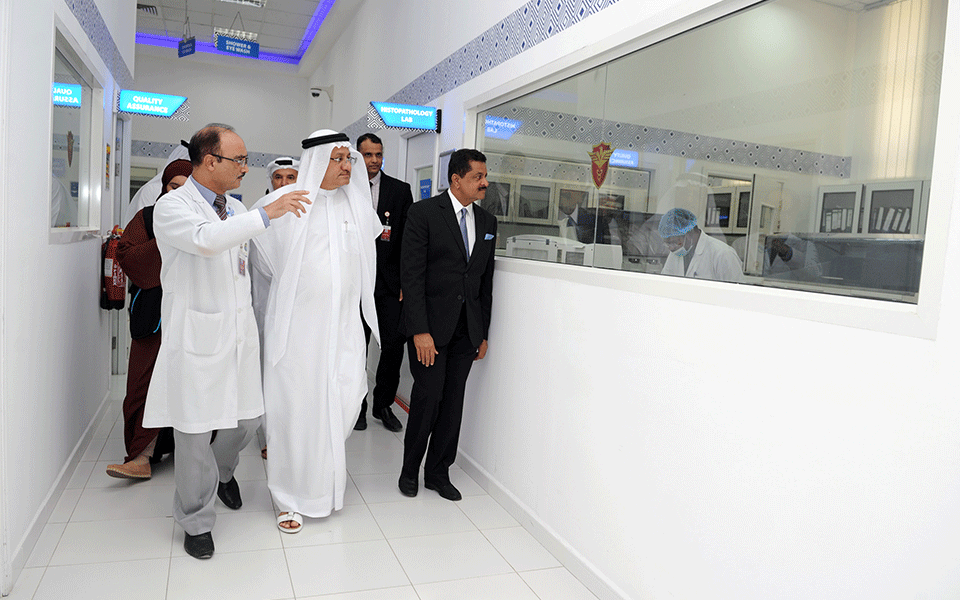
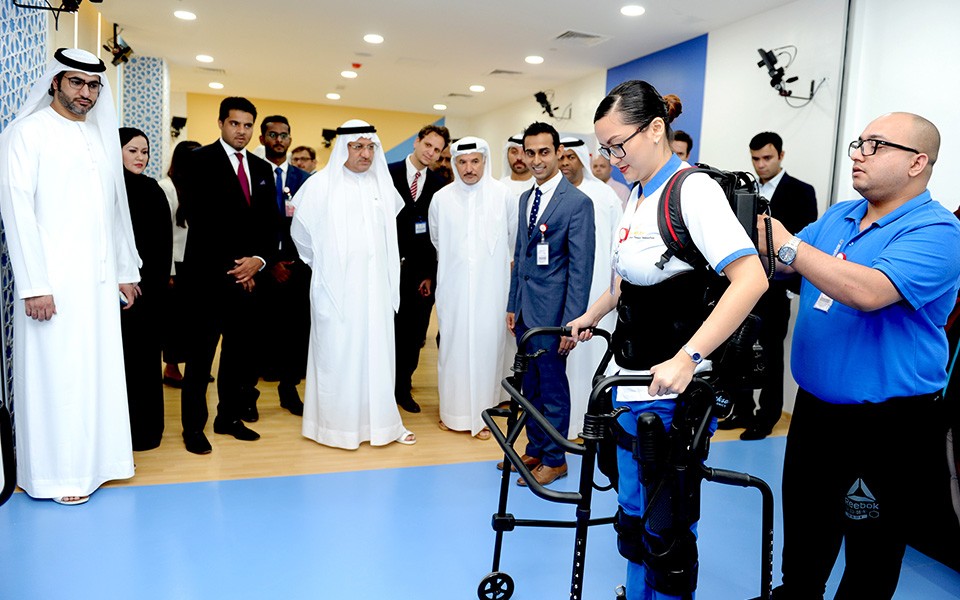
His Excellency Humaid Al Qutami, Chairman of the Board and Director-General of the Dubai Health Authority was the chief guest of the conference held at Thumbay Medicity, Ajman on 10th September 2018. Dr. Thumbay Moideen, Founder President of Thumbay Group presided.
His Excellency Navdeep Singh Suri - Indian Ambassador to the UAE, His Excellency Mr. Liborio Stellino - Ambassador of Italy in the UAE, Her Excellency Ms. Valentina Setta - Consul General of Italy in UAE and Wasim Akram, former Pakistani cricketer attended the Conference as special dignitaries.
His Excellency Humaid Al Qutami presented special awards of honor and recognition to the following leading physical therapy and rehabilitation experts:
- Ms. Amal Al Shamlan - First UAE National physiotherapist, President of Emirates Physiotherapy Society
- Dr. Abdul Adheem Kamkar - Head of Dubai Police Health Center, Physiotherapy section
- Dr. Franco Molteni - Director Hospital Valduce Villa Beretta Rehabilitation Center, Costa Masnaga, Lecco, Italy
- Ms. Amina Al Saadi - Head of Rehabilitation Center, Zayed Higher Organization
- Dr. George John - Transform Fitness, Dubai
- Dr. Osama Kamel Ali Alalla - Specialist in Health and Physical Activities, Ministry of Education, Dubai
- Mr. U T Ifthikar Ali - Physiotherapist, India
- H.E. Marwan Bin Ghalaita - Chairman, UAE Football Association
- H.E. Ahmad Al Kamali - President, UAE Athletic Federation
- H.E. Saeed Mohammad Hareb - Secretary General, Dubai Sports Council
- Dr. Omar Abdul Aziz Al Haai - Secretary-General, UAE Higher Education Sports Federation
- H.E. Marwan Ahmed Alsawaleh - President, UAE Interschool Sports Association (UAESSA)
- Mr. Dave Richardson - Chief Executive, The International Cricket Council
- Mr. Khalid Al Zarouni - Vice Chairman, Emirates Cricket Board
- Mr. Shahzad Altaf - Ajman Cricket Council
- Mr. Strath Sherri - CEO, Dubai Tennis Academy
Accredited by the UAE Ministry of Health and Prevention for 4.5 CME Hours, the Conference on Innovations in Rehabilitation Practice was hosted to mark the occasion of World Physiotherapy Day.
International speakers from Italy along with experts from the region delivered various talk on latest updates in the fields of physical therapy and rehabilitation, before the participants comprising of leading surgeons, physiotherapists and other medical professionals from the region.
Dr. Franco Molteni - Director Hospital Valduce Villa Beretta Rehabilitation Center, Italy and Mr. Riccardo Aggujaro - Project Manager, Thumbay Physical Therapy and Rehabilitation Hospital were the scientific coordinators of the conference. Dr. Praveen Kumar K. – Dean of the College of Health Science, Gulf Medical University, was the scientific advisor.
The keynote talk on the topic ‘From Cell to Society’ was led by Dr. Franco Molteni - Director, Hospital Valduce Villa Beretta Rehabilitation Center, Italy and Dr. P.K. Menon - COO and Director, Thumbay Labs, UAE.
Topics on which the other speakers shared comprehensive insights include:
- Human Behavior and Environment – by Dr. Silvia Aggujaro, Head of Neuropsychology Service, H.Valduce Villa Beretta Rehabilitation Center, Costa Masnaga, Lecco, Italy and Prof. Dr. Maddalena D Alfonso - Associate Professor in Building Technology, Politecnico of Milan University, Milan, Italy
- Educations in Rehabilitation at Gulf Medical University – by Prof. Hossam Hamdy - Chancellor, Gulf Medical University
- From Body Language To Well-Being – by Prof. Dr. Stefano Masiero - Professor and Chair of the Department of Physical Medicine and Rehabilitation, University of Padua, Italy & Head of Rehabilitation Department, University Hospital of Padua, Italy
- Engineering E-Motion – by Dr. Stefano Mazzoleni - Rehabilitation Bioengineering Laboratory Volterra, Bio Robotics Institute, Italy
- Robotics Assisted Rehabilitation – by Dr. Adam Akram - Senior Physiotherapist, Zayed Higher Organization, UAE
- Role of the Industry in Rehabilitation Practice and Medicine
"His Excellency Humaid Al Qutami also inaugurated the Thumbay Physical Therapy and Rehabilitation Hospital and toured its facilities."
Let the Truth be known. If you read VB and like VB, please be a VB Supporter and Help us deliver the Truth to one and all.
4 workers die after being buried under coal slurry in Jharkhand's Dhanbad
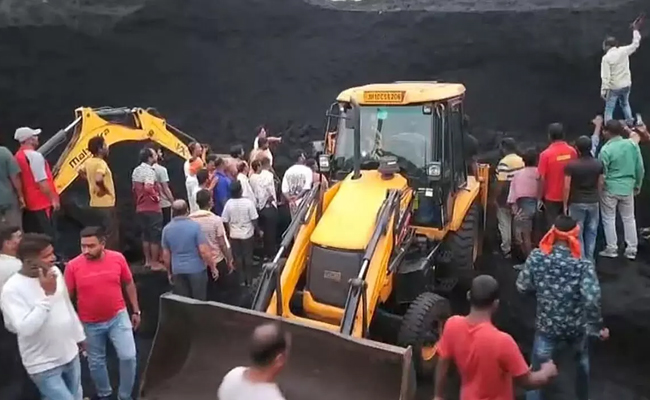
Dhanbad (Jharkhand) (PTI): At least four workers died after being buried under coal slurry in Jharkhand's Dhanbad district on Saturday, a police official said.
The incident took place at Moonidih coal washery in the command area of Bharat Coking Coal Limited (BCCL).
"Bodies of all four workers were dug out of debris during a rescue operation," Putki police station in-charge Waqar Hussain told PTI.
The incident took place when coal slurry was being loaded into trucks by workers, during which a large chunk of slurry fell and trapped several workers underneath, officials said.
The deceased have been identified as Manik Bauri, Dinesh Bauri, Deepak Bauri, and Hemlal Gope.
Meanwhile, the family members of the deceased and local villagers placed the bodies in front of the washery gate and began a protest.
They demanded compensation, jobs for dependents and action against those responsible for the incident.
Police and administration officials are trying to pacify the protesters, an official said.