Children can have both COVID-19 antibodies, virus in their system simultaneously: Study
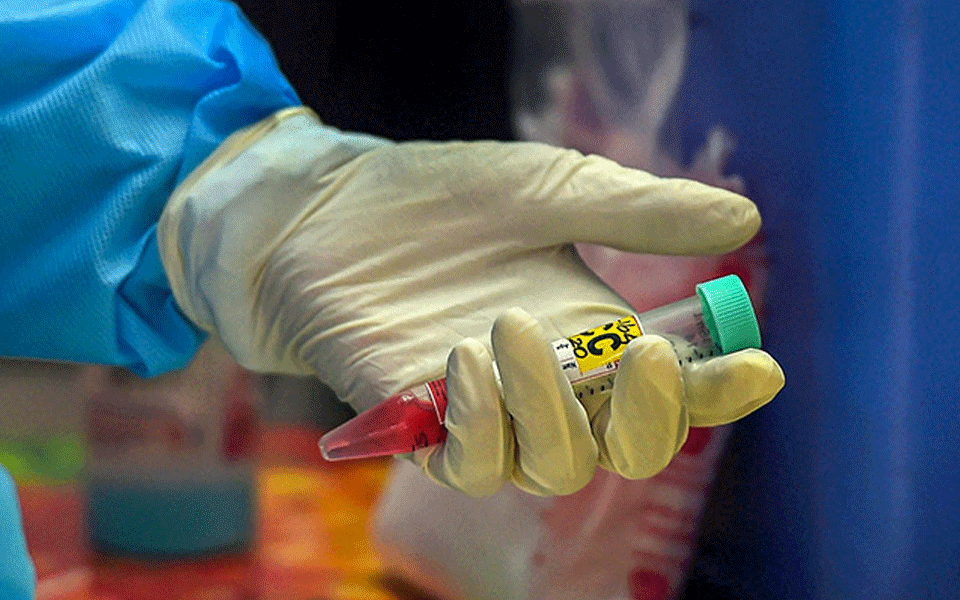
Washington: Children may still have the potential to transmit the novel coronavirus even if they have a measurable immune response, according to a new study which says the virus and antibodies can coexist in young patients.
The study, published in the Journal of Pediatrics, used a retrospective analysis of 6,369 children tested for the novel coronavirus SARS-CoV-2, and 215 patients who underwent antibody testing at the Children's National Hospital in the US between March 13 and June 21.
According to the scientists, including those from the hospital, 33 of the 215 patients had co-testing for both the virus and antibodies during their COVID-19 disease course, with nine of the 33 showing presence in their blood while also later testing positive for the virus.
"With most viruses, when you start to detect antibodies, you won't detect the virus anymore. But with COVID-19, we're seeing both," said Burak Bahar, lead author of the study from the Children's National Hospital.
According to Bahar, the next phase of research will be to test if the virus that is present alongside the antibodies can be transmitted to other people.
She added that it also remains unknown if the antibodies detected in the children correlate with immunity, and how long antibodies and potential protection from reinfection last.
When the scientists assessed the timing of viral clearance and immunologic response, they found the average time from viral positivity to negativity, when the virus can no longer be detected, was 25 days.
The median time to seropositivity, or the presence of antibodies in the blood, was 18 days, while the median time to reach adequate levels of neutralising antibodies was 36 days.
Neutralising antibodies are important in potentially protecting a person from re-infection of the same virus.
The scientists also found that patients six through 15 years old took a longer time to clear the virus compared to patients 16 through 22 years old.
Females in the 6-15 age group also took longer to clear the virus than males, they added.
While there is emerging data regarding this timing in adults with COVID-19, the researchers said there is far less data when it comes to the pediatric population.
"The takeaway here is that we can't let our guard down just because a child has antibodies or is no longer showing symptoms," Bahar said, adding that the continued role of good hygiene and social distancing "remains critical."
Let the Truth be known. If you read VB and like VB, please be a VB Supporter and Help us deliver the Truth to one and all.
Manipur: Mortal remains of children killed in bomb attack handed over to family
Imphal (PTI): The mortal remains of two children, who were killed in a bomb attack in Manipur's Bishnupur district in April, were handed over to family members on Saturday, officials said.
The bodies of the five-year-old boy and his six-month-old sister were kept in the morgue for 25 days, as the family members had refused to accept the mortal remains, demanding that the perpetrators be brought to book at the earliest.
On April 25, Chief Minister Y Khemchand Singh had appealed to the family members of the children to accept the bodies. Singh had also said that all efforts were underway to find the culprits.
The two children were killed in a bomb attack at Tronglaobi in Bishnupur district on April 7. Their bodies were kept in the morgue at the Regional Institute of Medical Sciences in Imphal.
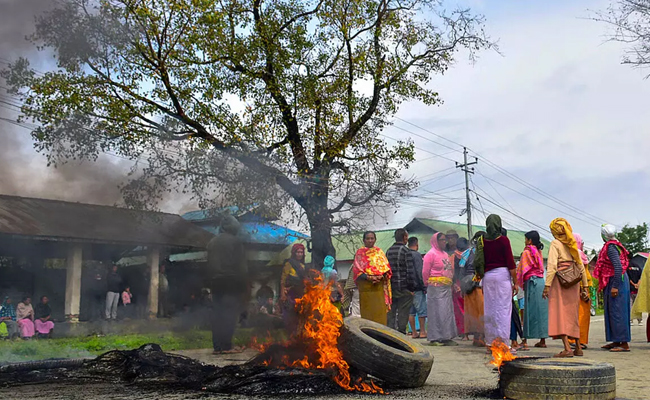
The incident had triggered widespread violent protests in the five valley districts of Manipur, and the case was subsequently handed over to the NIA.
Hundreds of people lined up along the way to Tronglaobi to offer floral tributes, as the mortal remains were taken for the last rites in an open vehicle earlier in the day.