China can no longer rely on old model of development, time for change: Xi
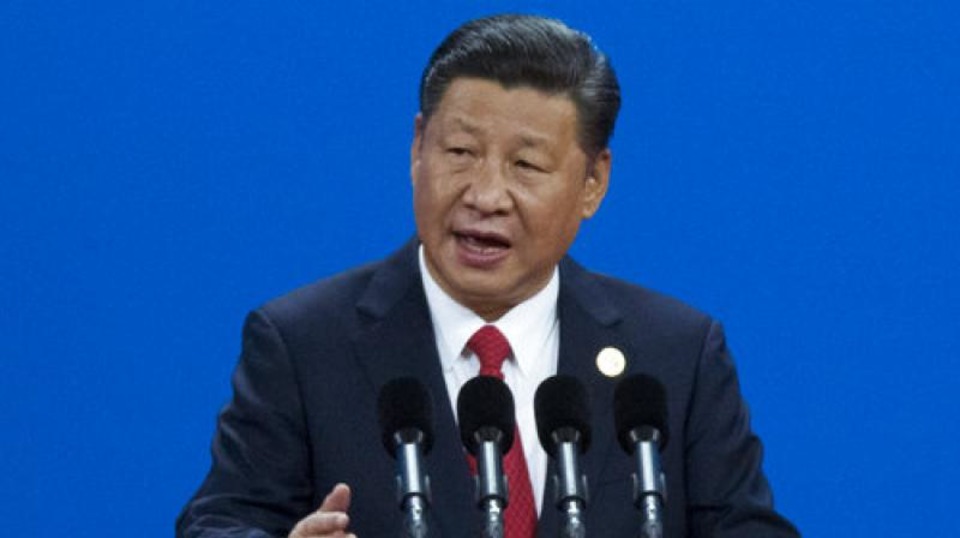
Beijing: President Xi Jinping said on Saturday that China can no longer rely on its previous economic development model of depending on global exports and must build a self-controlled, safe, and reliable domestic production and supply systems to ensure industrial and national security.
The just-concluded plenary session of the ruling Communist Party of China (CPC), headed by Xi, adopted his proposals for the formulation of the 14th Five-Year Plan (2021-2025) for National Economic and Social Development and the Long-Range Objectives Through the Year 2035.
While the 14th five-year plan envisages a massive overhaul of the country's domestic market to boost consumption in order to reduce China's reliance on shrinking export markets, Vision 2035 visualizes a long-term plan, reflecting the development vision of Xi.
Politically, Xi's Vision 2035 plan has sparked speculation that he could continue in power for the next 15 years.
Xi, 67, has emerged as the CPC's most powerful leader after its founder Mao Zedong, holding the posts of CPC General Secretary, head of the military besides the Presidency with prospects of life-long tenure.
A constitutional amendment in 2018 has removed the two-five-year term limit for the president, which would enable Xi to continue in power for life. His second term as the president is due to end in 2022.
We shouldn't and couldn't simply repeat the previous model, but should strive to shape a new industrial chain to enhance technological innovation and import substitution, which is the focus of deepening supply-side structural reforms and the key to achieving high-quality development, Xi was quoted as saying in an article published in Qiushi's, CPC's official journal.
Xi said that in order to ensure China's industrial security and national security, we must build a self-controlled, safe, and reliable domestic production and supply chain .
We should strive to have at least one alternative source for important products and supply channels to form a necessary industrial backup system, Xi said.
He underscored the importance of the industrial and supply chain. One key feature for major economic power is that its industrial and supply chain should not be disrupted at a crucial moment, he said.
China's complete industrial chain has played a key role during the COVID-19 pandemic by guaranteeing the availability of important materials for epidemic prevention and control. However, the public health crisis has also exposed risks in the domestic supply chain and industrial chain, he said.
For the sectors where China has achieved pioneering advantages, for example, the high-speed rail, power-generating equipment, and communication equipment, Xi suggested that technologies should be further honed, so as to forge strong countermeasures and deterrence capabilities when foreign parties block supplies, excerpts of his article published in the state-run Global Times said.
China's status as the world's factory has been affected by declining global markets and US President Donald Trump's trade war and his move to ban Chinese tech firms like Huawei and TikTok over security concerns. The US also recently clamped restrictions on exports of semiconductor chips to China, deepening the technology conflict between the world's top two economies.
Let the Truth be known. If you read VB and like VB, please be a VB Supporter and Help us deliver the Truth to one and all.
4 workers die after being buried under coal slurry in Jharkhand's Dhanbad
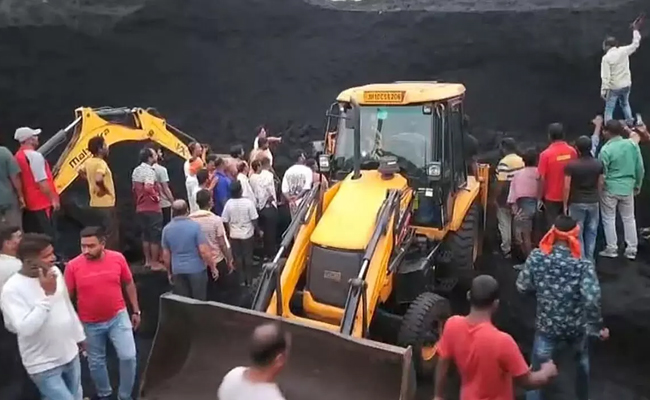
Dhanbad (Jharkhand) (PTI): At least four workers died after being buried under coal slurry in Jharkhand's Dhanbad district on Saturday, a police official said.
The incident took place at Moonidih coal washery in the command area of Bharat Coking Coal Limited (BCCL).
"Bodies of all four workers were dug out of debris during a rescue operation," Putki police station in-charge Waqar Hussain told PTI.
The incident took place when coal slurry was being loaded into trucks by workers, during which a large chunk of slurry fell and trapped several workers underneath, officials said.
The deceased have been identified as Manik Bauri, Dinesh Bauri, Deepak Bauri, and Hemlal Gope.
Meanwhile, the family members of the deceased and local villagers placed the bodies in front of the washery gate and began a protest.
They demanded compensation, jobs for dependents and action against those responsible for the incident.
Police and administration officials are trying to pacify the protesters, an official said.