China considering cancelling trade talks with US: media reports
Washington: China is considering to cancel the high-level trade talks with the US, multiple media reports have said, hours after President Donald Trump threatened to impose more punishing tariffs on USD 200 billion worth of Chinese products.
President Trump's remarks came on Sunday as the two countries locked in a longstanding trade war seemed near to striking a trade deal.
A high-level Chinese delegation led by Vice Premier Liu He was scheduled to be in Washington this week to resume talks aimed at resolving the trade war that has cast gloom over the world economy.
"China is considering cancelling trade talks that are to resume in Washington starting Wednesday," The Wall Street Journal reported Sunday quoting unnamed sources.
"There has been widespread expectations in recent days that an accord could be reached by Friday," it said.
Quoting an unnamed source, CNBC News said the Chinese Vice Premier will likely cancel the trip he had planned for himself and a 100-person delegation for the final round of talks.
The US officials had previously said that a deal could be reached by Friday.
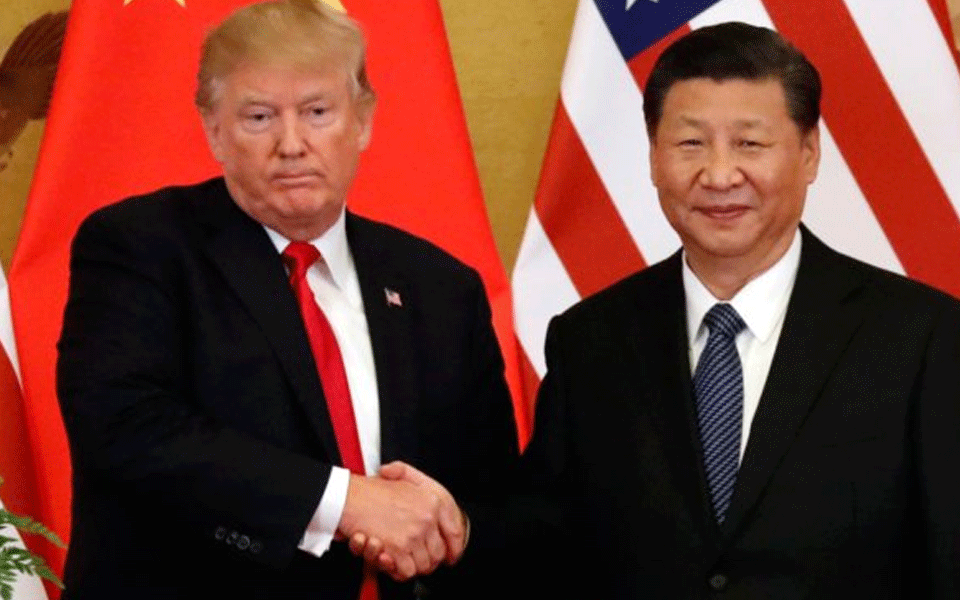
But Trump's tweets surprised many and appear to reflect on the difficulties in the US-China trade negotiations that have been going on since December when the US president and his Chinese counterpart Xi Jinping agreed to work on a trade deal within a time frame of 100 days.
"For 10 months, China has been paying tariffs to the USA of 25 per cent on 50 billion dollars of High Tech, and 10 per cent on 200 billion dollars of other goods," Trump said in a series of tweets on Sunday. These payments are partially responsible for America's great economic results, he said.
"The 10 per cent will go up to 25 per cent on Friday. 325 billions dollars of additional goods sent to us by China remain untaxed, but will be shortly, at a rate of 25 per cent," he said.
Trump said the tariffs paid to the US have had little impact on product cost, mostly borne by China. "The Trade Deal with China continues, but too slowly, as they attempt to renegotiate. No!" he tweeted.
The Wall Street Journal report said that Trump's tweet had taken Beijing by surprise.
"China shouldn't negotiate with a gun pointed to its head," an unnamed Chinese person was quoted as saying in the report.
A decision on whether to go ahead with the talks this week has not been made, the report said.
The Chinese officials have said Beijing would not bend to pressure tactics. By potentially scotching the trip, Beijing would be following up on its pledge to avoid negotiating under threat, it said.
Trump's latest move will raise duties on more than 5,000 products made by Chinese producers, ranging from chemicals to textiles and consumer goods.
The US president originally imposed a 10 per cent tariff on these goods in September that was due to rise in January, but postponed this as negotiations advanced.
In Argentina, Trump agreed not to increase the import tariffs on Chinese products till an agreement is reached in 100 days. The deadline ended in March, which was extended by Trump and he did not increase the import tariffs.
Last month, Trump said the US and China could wrap up trade talks within four weeks after making quick progress on the potentially "epic" deal.
"We will probably know over the next four weeks. It may take two weeks after that.... It's looking very good," Trump had said.
He said a deal would allow a summit between him and Chinese President Xi.
Since last year when Trump launched a trade war with China, the US and China have imposed slapped tariffs on USD 360 billion in two-way trade.
The US has imposed tariffs on USD 250 billion of Chinese goods, having accused the country of unfair trade practices.
Beijing hit back with duties on USD 110 billion of US goods, blaming the US for starting "the largest trade war in economic history".
Both the US and international firms have said they are being harmed by the trade war.
Fears about a further escalation caused a slump in world stock markets towards the end of last year.
The IMF has warned a full-blown trade war would weaken the global economy.
Let the Truth be known. If you read VB and like VB, please be a VB Supporter and Help us deliver the Truth to one and all.
Sujit Nair raises concerns over speculation of DMK-AIADMK understanding to block TVK
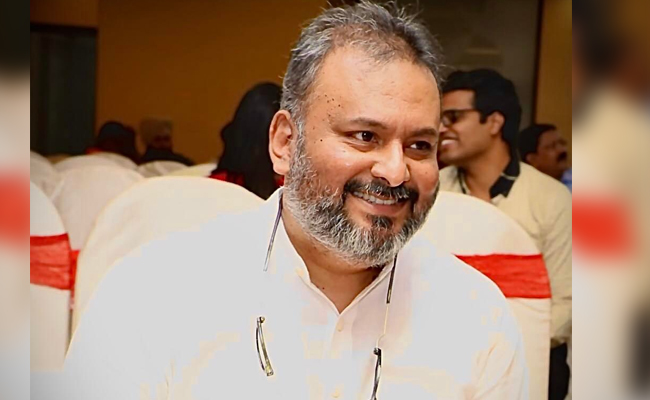
Chennai: Journalist and political commentator Sujit Nair has expressed concern over speculation that the Dravida Munnetra Kazhagam and the All India Anna Dravida Munnetra Kazhagam could explore a post-poll understanding to prevent Vijay-led Tamilaga Vettri Kazhagam from forming the government in Tamil Nadu.
In a social media post, Sujit Nair said the election verdict in Tamil Nadu reflected a clear public demand for political change and argued that the mandate should be respected irrespective of political preferences.
Referring to reports and political discussions surrounding a possible understanding between the DMK and AIADMK, he said he hoped such developments remained only speculative conversations and did not turn into reality.
Nair stated that if such an alliance were to take shape, it would raise serious questions about ideological politics in the country. He said TVK had emerged through a democratic electoral process and that the legitimacy to govern in a parliamentary democracy comes from the people’s verdict.
According to him, attempts to prevent an electoral winner from forming the government through unexpected political arrangements may be constitutionally valid, but many people could view them as politically opportunistic.
He further said that such a move could particularly affect the political image of the DMK, which has historically projected itself around ideology, social justice and opposition politics. Nair said that in ideological terms, the DMK appeared closer to TVK than to the AIADMK, and joining hands with its long-time political rival only to remain in power could weaken its broader political narrative.
He added that the same questions would apply to the AIADMK as well, as the party had spent decades positioning itself against the DMK and such an arrangement could create discomfort among its cadre and supporters.
Drawing a comparison with Maharashtra politics in 2019, Nair said he had expressed similar views when the Shiv Sena formed an alliance with the Indian National Congress and the Nationalist Congress Party after the Assembly elections.
He said post-poll alliances between long-standing political rivals often create a public perception that ideology and electoral mandates become secondary when political power equations come into play.
Nair also said such developments increase public cynicism towards politics and reinforce the belief among voters that ideology is often sidelined after elections.
He maintained that the Tamil Nadu verdict was emphatic and said respecting both the spirit and substance of the mandate was important for the credibility of democratic politics.