China coronavirus death toll rises to 170; confirmed cases soar to 7,711
Beijing: The nationwide death toll from China's novel coronavirus epidemic has jumped to 170 with 38 more fatalities reported mainly from the worst-affected central Hubei province, the government said on Thursday, while confirming more than 1,700 new infections.
The coronavirus outbreak began in Wuhan, capital of China's Hubei province, in December and has now spread across the globe. The Chinese authorities are trying to contain the epidemic while other countries, including India, are working on plans to evacuate their citizens from Wuhan and other cities in Hubei province, the epicentre of the outbreak.
Chinese President Xi Jinping on Tuesday called the coronavirus a "demon" which should be brought under control, pledging that the government would be transparent and release information on the virus in a "timely" manner.
China's National Health Commission said on Thursday that 7,711 confirmed cases of pneumonia caused by the novel coronavirus had been reported in 31 provincial-level regions and in the Xinjiang Production and Construction Corps by the end of Wednesday.
A total of 170 people have died of the disease, it said.
It said in its daily report that 1,370 patients remained in critical conditions, and 12,167 people were suspected of being infected with the virus by the end of Wednesday.
A total of 124 people have been discharged from hospital after recovery.
A total of 1,737 new confirmed cases, including the first in Tibet, and 4,148 new suspected cases, and 38 deaths - 37 in Hubei Province and one in Sichuan Province - were reported by Wednesday.
Also, 131 patients became seriously ill, and 21 people were discharged from hospital after recovery, it said.
A total of 88,693 close contacts had been traced, the commission said, adding that among them, 2,364 were discharged from medical observation on Wednesday, with 81,947 others still under medical observation, state-run Xinhua news agency reported.
By the end of Wednesday, 10 confirmed cases had been reported in Hong Kong Special Administrative Region, seven in Macao Special Administrative Region and eight in Taiwan, the commission said.
A number of global airlines, including Air India, British Airways, Lion Air and Indigo airlines on Wednesday suspended their flights to Chinese cities as Beijing struggled to contain the rapid spread of the virus.
India, the US, the UK and Germany have already issued travel advisories against travelling to China. Beijing too has been asking Chinese not to travel at home and abroad in view of the virus.
Air India suspended its flights on Delhi-Shanghai route from January 31 to February 14. IndiGo airlines also suspended its flights on the Bengaluru-Hong Kong route from February 1 and on the Delhi-Chengdu route from February 1 to 20.
Besides India, several other countries including the US, France, Japan, South Korea, are making arrangements to airlift their nationals from central Hubei province and its capital city Wuhan.
Over 23,000 Indian students of which 21,000 are medical students are studying in China.
China has ramped up efforts to contain the virus. The country has extended the New Year Festival holidays till February 2 to prevent reverse migration of millions of migrants works to return to their work from holidays.
Universities, primary and middle schools and kindergartens across the country will postpone the opening of the spring semester until further notice.
The government is focussing efforts to prevent mass gatherings and mass travel to ensure the virus is not spread fast.
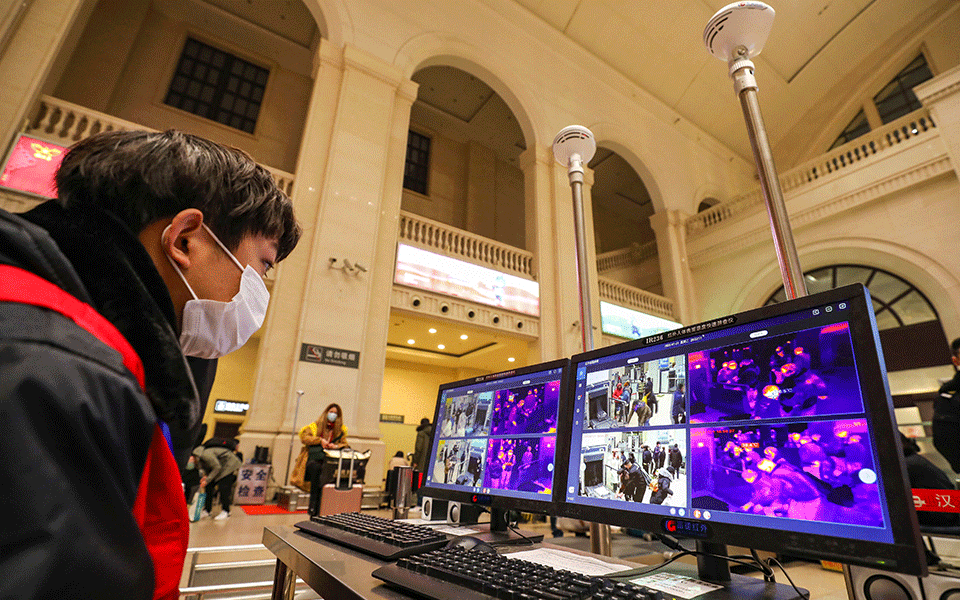
Beijing has also launched temperature detection at 55 subway stations, including stops at railway stations and Beijing airport. Passengers with abnormal body temperatures will be sent to hospital.
Let the Truth be known. If you read VB and like VB, please be a VB Supporter and Help us deliver the Truth to one and all.
Unidentified men set fire to TVK campaign office near Srirangam
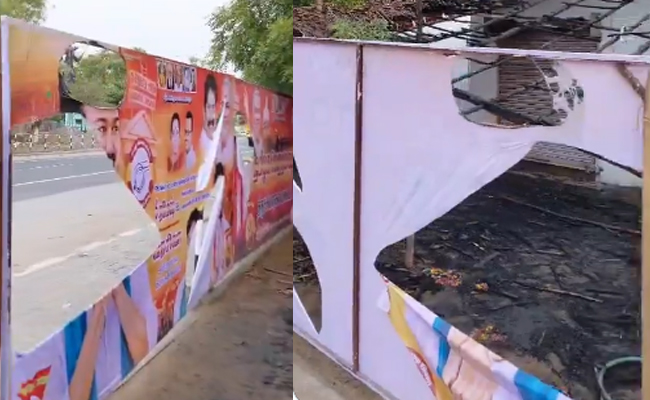
Tiruchirapalli (PTI): A campaign office of the actor Vijay-led TVK was allegedly torched by unidentified miscreants in Kamanayakkanpalayam village near Srirangam in the early hours of Friday, police said.
According to the police, the damage is minimal. Fire had engulfed the thatched roof providing shade at the entrance of the building that served as the party’s election office for the Srirangam constituency.
While on social media, a CCTV footage of two unidentified men fleeing on motorbike is being circulated as the culprits, police said the video footage is yet to be verified.
Based on a complaint lodged by TVK, the Pettaivaithalai Police have registered a case and initiated a search for the perpetrators.
திருவரங்கம் தொகுதியில் த.வெ.க வேட்பாளரின் தேர்தல் அலுவலகம் மர்ம நபர்களால் தீவைக்கப்பட்டு சேதப்படுத்தப்பட்டுள்ளது. @TNelectionsCEO @ECISVEEP#TVKVijay #தமிழகவெற்றிக்கழகம் pic.twitter.com/ImDZfTkuAq
— Thanjavur_District_Head (TVK) (@TVK_Thanjai) May 1, 2026