China 'firmly opposes' Modi's Arunachal visit
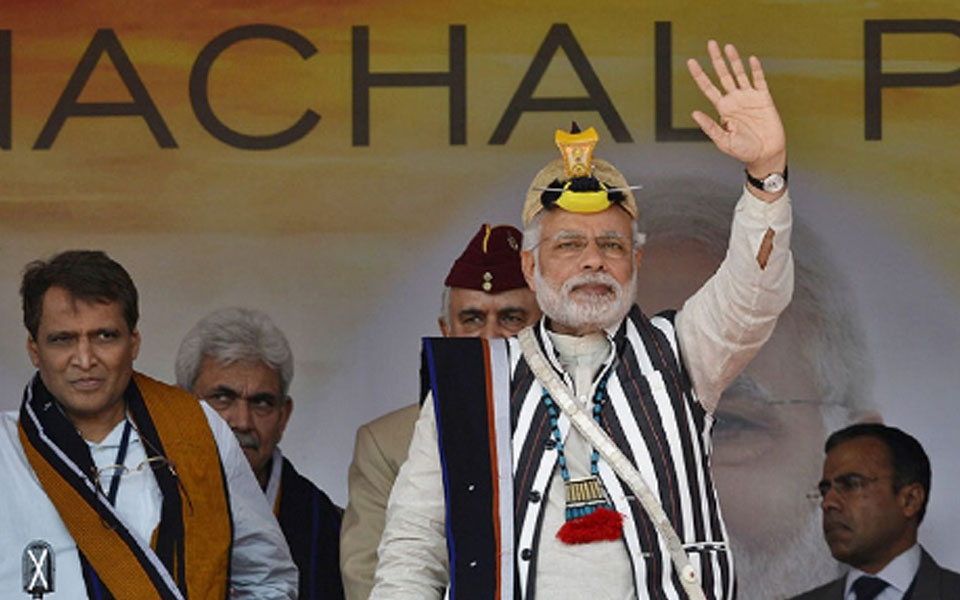
Beijing : China on Saturday "firmly opposed" Prime Minister Narendra Modi's visit to Arunachal Pradesh, asserting that it has never recognised the sensitive border state and the Indian leadership should refrain from any action that may "complicate the boundary question".
Prime Minister Modi Saturday inaugurated and laid foundation stone of projects in Arunachal Pradesh worth over Rs 4,000 crore and said his government was giving a lot of importance to improve connectivity in the border state.
Modi said his government was giving importance to improve the highway, railway, airway and power situation in Arunachal Pradesh, which was neglected by the previous governments.
In New Delhi, Ministry of External Affairs reacted sharply to China's remarks, saying the state of Arunachal Pradesh is an "integral and inalienable part" of India.
"Indian leaders visit Arunachal Pradesh from time to time, as they visit other parts of India. This consistent position has been conveyed to the Chinese side on several occasions," the MEA spokesperson said in a statement.
Chinese Foreign Ministry spokesperson Hua Chunying in response to a question on Modi's visit said, "China's position on the China-India boundary question is consistent and clear-cut. The Chinese government has never recognised the so-called 'Arunachal Pradesh' and is firmly opposed to the Indian leader's visit to the East Section of the China-India boundary."
China urges the Indian side to bear in mind the common interests of the two countries, respect the interests and concerns of the Chinese side, cherish the momentum of improvement in bilateral relations, and refrain from any action that may lead to the escalation of disputes or complicate the boundary question," she said in her reaction posted on the Chinese Foreign Ministry's website.
China claims the north-eastern Indian state of Arunachal Pradesh as part of southern Tibet. India and China have so far held 21 rounds of talks to resolve the border dispute.
The India-China border dispute covers 3,488-km-long Line of Actual Control (LAC). China routinely objects to Indian leaders visiting Arunachal Pradesh to highlight its stand.
Let the Truth be known. If you read VB and like VB, please be a VB Supporter and Help us deliver the Truth to one and all.
Power struggle in ruling Cong has 'created massive confusion' in Karnataka: BJP leader Ashoka
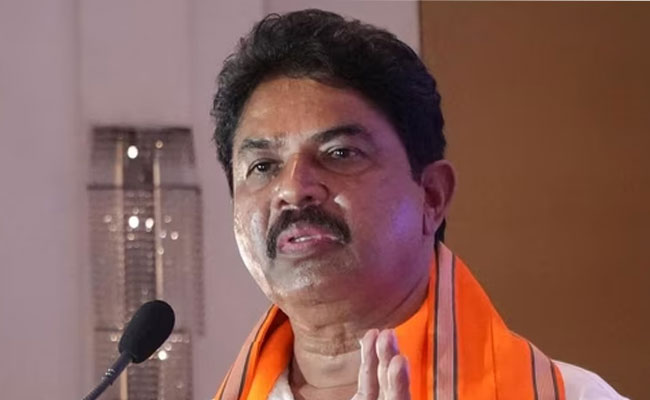
Bengaluru (PTI): BJP leader R Ashoka on Friday claimed that the ongoing power struggle between Chief Minister Siddaramaiah and his deputy D K Shivakumar has created massive confusion in Karnataka.
He remarked that the proverb “when two people fight, the third one benefits” has come true, as AICC President Mallikarjun Kharge is also now making efforts to become Chief Minister.
Speaking to reporters here, Ashoka said the entire government has turned into a house of confusion due to the alleged power tussle.
Kharge’s new statement has only added to the chaos, he said.
Congress chief Mallikarjun Kharge had on Friday said that no date has been fixed yet to discuss possible leadership change in Karnataka.
This came a day after Kharge said there was no change of CM in Karnataka "for now" and that the leadership issue in the state would be resolved soon.
The BJP leader said that Kharge too has aspirations and that he was cheated earlier.
"Perhaps he has received a green signal from the Congress high command to become CM. Everyone is already saying Kharge should become CM. Kharge himself has declared, “I am ready to become CM.” Despite many attempts in the past, he never became CM. Now he is trying to seize the opportunity," the Leader of Opposition in the state assembly said.
According to him, the situation in Congress has perfectly become a case of “two people fighting, third one benefits.”