China raises Kashmir issue at UN
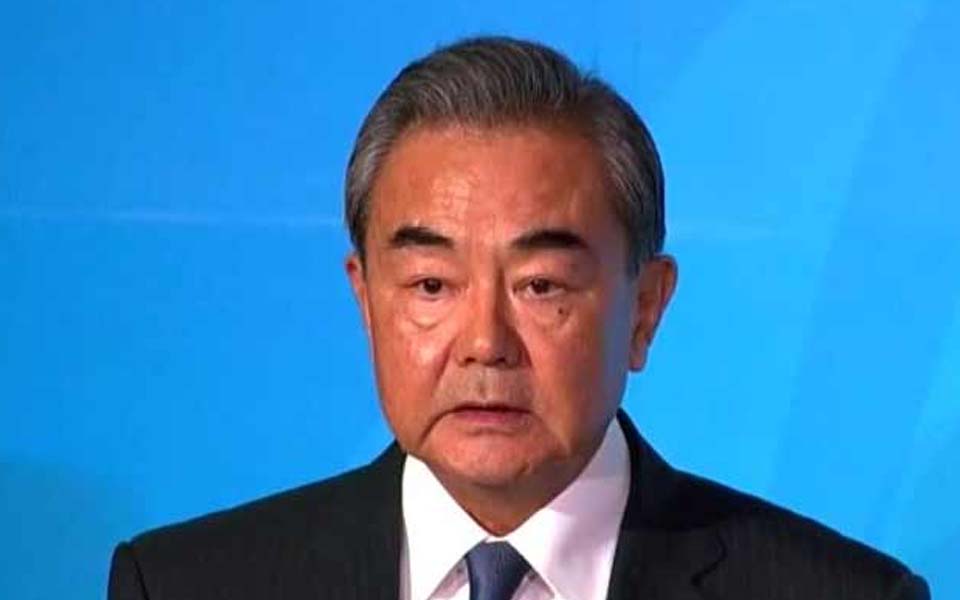
United Nations, Sep 28: Raising the Kashmir issue at the UN, China has told the General Assembly that the "dispute" should be peacefully and properly addressed in accordance with the UN Charter, Security Council resolutions and the bilateral agreement.
China, a close ally of Pakistan, also stressed that no actions should be taken that would unilaterally change the "status quo".
"The Kashmir issue, a dispute left from the past, should be peacefully and properly addressed in accordance with the UN Charter, Security Council resolutions and bilateral agreement," State Councilor and Foreign Minister of China Wang Yi said in his address to the UN General Assembly on Friday.
"No actions that would unilaterally change the status quo should be taken. As a neighbour of both India and Pakistan, China hopes to see the dispute effectively managed and stability restored to the relationship between the two sides," Wang said.
India ended Jammu and Kashmir's special status by abrogating Article 370 of its Constitution on August 5.
India's decision evoked strong reactions from Pakistan, which downgraded diplomatic ties and expelled the Indian ambassador.
Pakistan has been trying to internationalise the Kashmir issue after India withdrew the special status of Jammu and Kashmir on August 5, but New Delhi has asserted the abrogation of Article 370 was its "internal matter".
India has also said that there is no scope for any third party mediation on the Kashmir issue.
Let the Truth be known. If you read VB and like VB, please be a VB Supporter and Help us deliver the Truth to one and all.
Delimitation will turn out to be 'political demonetisation': Tharoor slams govt
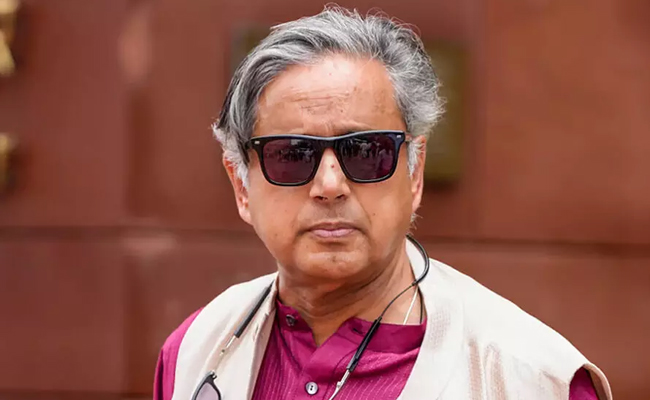
New Delhi (PTI): Delimitation will turn out to be "political demonetisation", senior Congress leader Shashi Tharoor said on Friday while slamming the government for linking women's reservation with the expansion of Parliament.
Participating in a debate in the Lok Sabha on the three bills introduced for amendments in the women's quota law and setting up a delimitation commission, Tharoor said linking women's reservation with delimitation is to hold the aspirations of Indian women hostage to "one of the most contentious and complex" administrative exercises in the country's history.
"Today we stand at a threshold where there is near unanimous political consensus in favour of women's reservation. Every major party realises that the time for tokenism is over and the era of collective partnership must begin and yet I am finding myself deeply perturbed by the legislative exercise before us," he said.
"The prime minister says he has brought 'nari shakti' the gift of justice but he has wrapped it in barbed wire, tethering the implementation of women's reservation to the expansion of Parliament, to numbers from the 2011 census and an exercise of delimitation... Why must we entangle a moral imperative with a demographic minefield, he asked.
Women's reservation, he said, is ready for harvest and can and should be implemented immediately based on existing parliamentary strength.
"Delimitation is not a mere bureaucratic rearranging of maps, it is a profound shift in political power that is intended....Any delimitation exercise is fraught with complications that could tear at the very fabric of our federalism," he said.
"You have proposed delimitation with such haste, the same haste that you showed on demonetisation. Unfortunately, we all know what damage that did to the country. Delimitation will turn out to be political demonetisation. Don't do it," Tharoor said.
The Constitution (131st Amendment) Bill to tweak the women's quota law was introduced in Lok Sabha on Thursday after a division of votes.
Two ordinary bills -- the Delimitation Bill and the Union Territories Laws (Amendment) Bill to implement the proposed amended women's quota law in Union territories of Delhi, Puducherry and Jammu and Kashmir -- were also introduced in the House.