China reports deadly anthrax pneumonia case
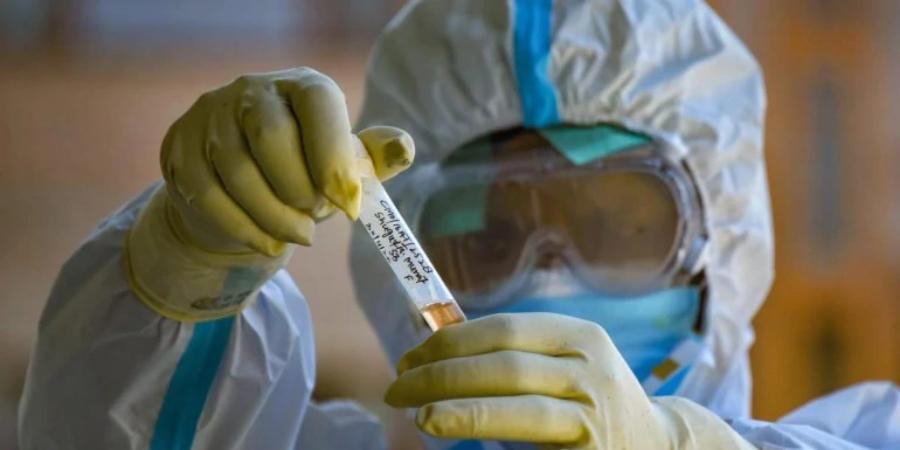
Beijing: China on Monday reported an anthrax pneumonia patient from northern Hebei Province's Chengde city, who had contact history with cattle, sheep and products that come from these animals.
The patient was transported to Beijing by an ambulance four days ago after showing symptoms and the person was later quarantined and put under treatment, state-run Global Times reported, quoting the Beijing Centre for Disease Control and Prevention (Beijing CDC).
Anthrax is prevalent among cattle and sheep. Human beings usually get infected after coming in contact with sick animals or contaminated products. The most common way of infection -- 95 per cent of reported cases -- are caused by skin contact which lead to blisters and skin necrosis, the Beijing CDC said.
The most dangerous infection is anthrax pneumonia, which happens when a patient inhales dust containing bacillus anthracis and gets infected.
People can get intestinal anthrax after eating contaminated food, usually meat, and will develop symptoms such as nausea, vomiting and diarrhoea.
Anthrax can be transmitted directly between human beings but it is not as infectious as flu or COVID-19.
Bacillus anthracis is a bacterium and multiple antibiotics are effective for treatment, the report said.
Since Sunday, Beijing has stepped up measures to prevent the spread of coronavirus cases by virtually banning people from travelling to the Chinese capital from provinces with COVID-19 cases in the country.
Beijing has rolled out a range of measures to strengthen the management of people returning from regions with relatively high virus transmission rates, including imposing restrictions on their purchase of railway tickets and air services.
So far, the coronavirus has claimed 4,848 lives, along with 105,904 confirmed infections, in China, according to Johns Hopkins University.
Let the Truth be known. If you read VB and like VB, please be a VB Supporter and Help us deliver the Truth to one and all.
Two injuries, one DNF, a DQ as India end messy World Relays campaign

Gaborone (Botswana) (PTI): Amoj Jacob and Ragul Kumar got injured during the men's 4x400m and 4x100 races respectively as India ended their World Athletics Relays campaign in disappointment on the second day of competitions here on Sunday.
The Indian camp had high hopes of making the 2027 World Championships in the men's 4x400m relay but the team did not finish (DNF) the race as Jacob suffered cramps and pulled out of the race after taking the baton from the first leg runner Dharamveer Choudhary. Rajesh Ramesh and Vishal TK were to run in the third and fourth legs.
Those teams which could not qualify for the 2027 Beijing World Championships by reaching the final round of each of the six relay events on Saturday were given another chance in the second qualification round on Sunday.
The top two teams in each of the two heats (in all six relay events) booked the Beijing ticket on Sunday.
India will now have to try and qualify for the World Championships through the Top Lists of the World Athletics, which is a long and tedious process.
In the men's 4x100m race, third leg runner Ragul Kumar fell down the track after failing to hand over the baton inside the exchange zone to fourth leg runner Gurindervir Singh, which clearly showed the lack of coordination among the runners.
Harsh Santosh Raut and Animesh Kujur ran the first two legs.
The Indian quartet was disqualified and Kumar was seen being taken away from the Field of Play with the help of the volunteers.
It was a comedy of errors in the case of the women's 4x100m race, which saw the baton being dropped during an exchange between first leg runner Tamanna and second runner Nithya Gandhe, though the Indians finished the race in 53.09 seconds.
Gandhe started running quite a distance, but after realising that the baton was not in her hand, she turned and ran back to pick it up.
The only silver-lining for the Indian contingent was the national record time in the mixed 4x100m relay race, though the quartet of Ragul Kumar, Nithya Gandhe, Animesh Kujur and Sneha SS finished sixth in heat number two with a time of 41.35 seconds, bettering the previous national mark of 42.30 seconds set in March in Chandigarh.
The mixed 4x400m relay quartet of Theerthesh P Shetty, Kumari Saloni, Nihal William and Rashdeep Kaur ended at fifth in heat number one with a time of 3 minutes and 19.40 seconds.
On Saturday, all the five Indian relay teams had failed to make it to the respective final rounds and thus missed out on the 2027 World Championships berths.