China seeks urgent meeting with Lanka over postponement of its ship’s visit due to India pressure
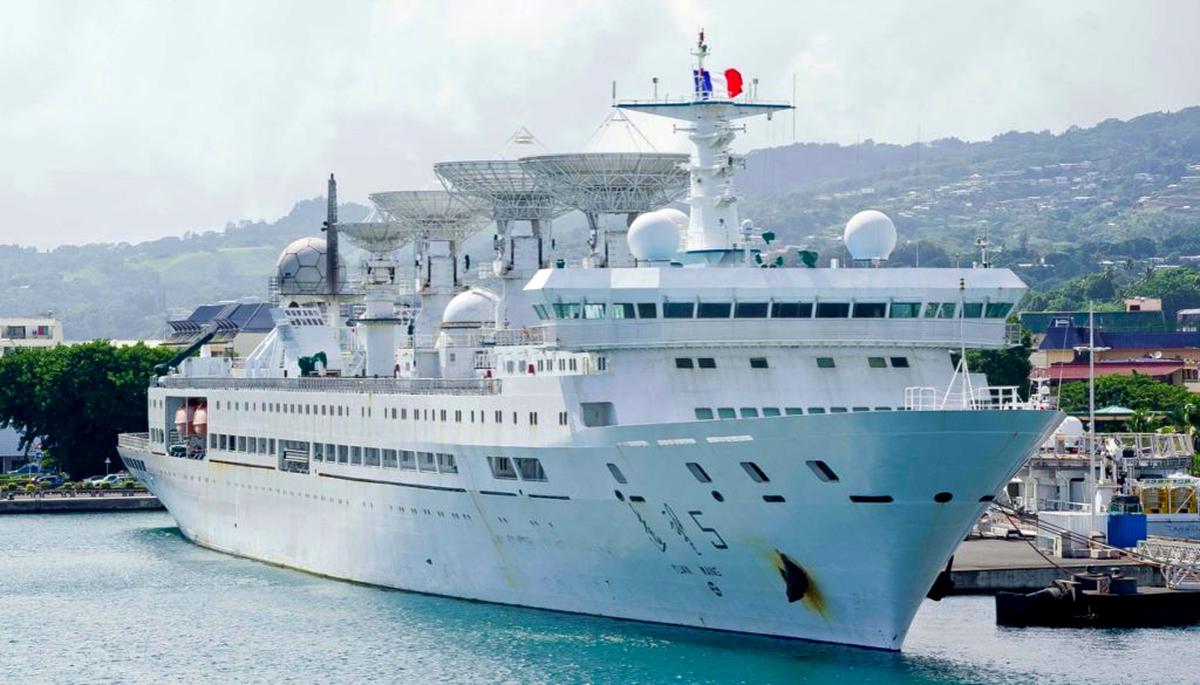
Colombo, Aug 7: China's embassy here has sought an urgent meeting with senior Sri Lankan authorities after Colombo sought a deferment of the planned docking of a high-tech Chinese research vessel at the strategic Hambantota port over which India raised concerns, sources said.
The Chinese space and satellite tracking research vessel 'Yuan Wang 5' was scheduled to dock at the Hambantota Port from August 11 to 17, weeks after Sri Lanka witnessed a major political turmoil following massive mass protests over the country's worst economic crisis in decades.
A 'third-person' note from Sri Lanka's Foreign Ministry to the Chinese embassy in Colombo dated August 5 says the ministry wishes to request that the arrival of the vessel Yuan Wang 5 in Hambantota to be deferred until further consultations are made on the matter.
The Chinese embassy in Colombo sought an urgent meeting with the higher Sri Lankan authorities to discuss the issue after receiving the note from the Foreign Ministry seeking a delay in the visit, sources here said.
Some Sri Lankan news portals also reported that Sri Lankan President Ranil Wickremesinghe held a closed-door meeting with China's Ambassador Qi Zhenhong after Colombo sought a deferment of the planned docking.
But the President's Office denied the media reports over the meeting.
On July 12, amidst the political turmoil in Sri Lanka, the then government approved the Chinese vessel's docking at the Hambantota port.
The Chinese vessel was expected to dock at the Sri Lankan port for "refuelling and replenishment' and will conduct satellite control and research tracking in the northwestern part of the Indian Ocean region through August and September.
The southern deep-sea port of Hambantota is considered strategically important for its location. The port, located in the hometown of the Rajapaksa family, has been developed largely with Chinese loans.
According to media reports here, India has informed Sri Lanka that the docking of the high-tech Chinese research vessel could pose a threat to its national security.
Sri Lanka received strong messages of protests from India as the ship was said to have the capability to track satellites and intercontinental ballistic missiles, the report said.
India has said it carefully monitors any development having a bearing on its security and economic interests.
"We are aware of reports of a proposed visit by this vessel to Hambantota in August," External Affairs Ministry Spokesperson Arindam Bagchi said in New Delhi when asked about the reports of a proposed visit by a Chinese vessel.
"The government carefully monitors any development having a bearing on India's security and economic interests and takes all necessary measures to safeguard them," he said last month.
New Delhi is concerned about the possibility of the ship's tracking systems attempting to snoop on Indian installations while being on its way to the Sri Lankan port.
India has traditionally taken a stern view of Chinese military vessels in the Indian Ocean and has protested such visits with Sri Lanka in the past.
The ties between India and Sri Lanka had come under strain after Colombo gave permission to a Chinese nuclear-powered submarine to dock in one of its ports in 2014.
China is the main creditor of Sri Lanka with investment in infrastructure. Debt restructuring of Chinese loans would be key to the island's success in the ongoing talks with the International Monetary Fund for a bailout.
India on the other hand has been Sri Lanka's lifeline in the ongoing economic crisis.
India has been at the forefront of extending economic assistance of nearly USD 4 billion to Sri Lanka during the year as the island nation is grappling with the worst economic crisis since independence in 1948.
As the new Sri Lankan president looks at pulling the country out of its economic crisis, India has said that it will continue to assist the island nation and support its people in their quest for stability and prosperity.
Prime Minister Dinesh Gunawardena last week said Sri Lanka was looking forward to settle the issue of the vessel's visit with an "approach of friendship".
India's concerns have been focused on Hambantota port in particular. In 2017, Colombo leased the southern port to China Merchant Port Holdings for 99 years, after Sri Lanka was unable to keep its loan repayment commitments, fanning fears over the potential use of the port for military purposes.
Let the Truth be known. If you read VB and like VB, please be a VB Supporter and Help us deliver the Truth to one and all.
Delhi: Teenager slashes boy for refusing money for drugs; held

New Delhi (PTI): A 16-year-old boy has been apprehended for allegedly attacking a teenager with a paper cutter near the Red Fort area last month after the victim refused to give him money for drugs, an official said on Tuesday.
The juvenile, who had been absconding after the incident, was also found to be involved in another attempt to murder case registered at Jama Masjid police station, they said.
The case came to light on April 5 when police received information from LNJP Hospital about a 17-year-old boy, a resident of Nangloi, who had been admitted with serious injuries.
The victim had sustained sharp wounds on his neck and abdomen and was unfit to give a statement, the police said.
Preliminary inquiry revealed that the victim quarrelled with an unidentified boy at Parade Ground near the Red Fort, following which he was attacked. A case under relevant sections of the BNS was registered.
A team was constituted to trace the accused, which analysed CCTV footage from the area and identified a suspect seen fleeing the spot. The boy was later identified with the help of local intelligence as a vagabond frequenting the Chandni Chowk area, police said.
Despite multiple raids in Delhi and adjoining areas, the accused remained untraceable. Subsequently, his mobile number was tracked, and technical surveillance led police to Haridwar in Uttarakhand.
On April 29, the police team conducted a raid in a village in Haridwar and apprehended the juvenile after sustained efforts, an officer said.
During questioning, the accused disclosed that he had been living in the Chandni Chowk area for the past two years and was addicted to drugs. On the night of April 4, he allegedly got into an argument with the victim after the latter refused to give him money and slapped him. Enraged, he attacked the boy with a paper cutter, inflicting multiple injuries.
The police said the accused later attacked another person near the Jama Masjid Metro Station on the same night before fleeing to Haridwar.
He also disposed of the weapon and clothes by throwing them from a moving train to evade arrest, they said.
Further investigation is underway, they added.