China slaps 34 pc tariff on US goods in tit-for-tat move
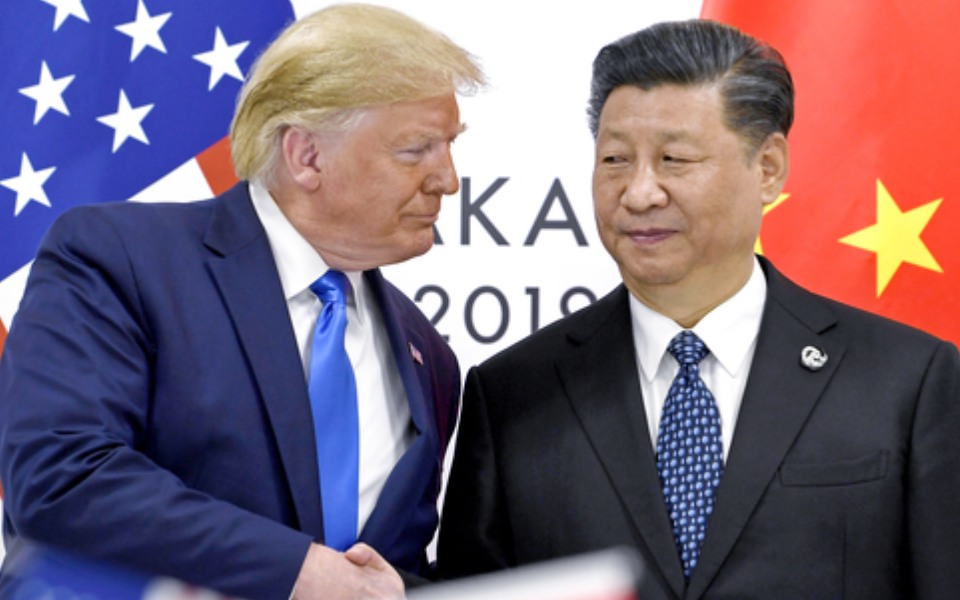
Beijing, Apr 4 (PTI): China on Friday slapped a 34 per cent additional tariff on imports from the US in a tit-for-tat response to President Donald Trump’s move to impose a similar levy on Chinese goods.
Beijing also announced export controls on certain rare earth metals, aiming to hit American defence, computer, and smartphone industries.
The tariffs on all products imported from the US will be imposed from April 10, the Customs Tariff Commission of the State Council announced Friday.
The announcement follows the US decision to impose "reciprocal tariffs" on Chinese exports to America, a move that the commission said does not conform to international trade rules. It also seriously undermines China's legitimate rights and interests, and represents a typical act of unilateral bullying, the state-run Xinhua news agency reported.
Beijing filed a lawsuit with the World Trade Organisation after the US slapped "reciprocal tariffs" on trading partners, the report said.
"By imposing the so-called 'reciprocal tariffs,' the US gravely violated WTO rules, seriously undermined the legitimate rights and interests of WTO members, and seriously damaged the rules-based multilateral trading system and the international economic and trade order," a spokesperson from the Commerce Ministry here said.
"It is a typical unilateral practice of bullying that jeopardises the stability of the global economic and trade order, and China is firmly opposed to this," the spokesperson said, urging the US to immediately correct its wrongdoings and cancel its unilateral tariff measures.
Trump announced 34 per cent tariffs on Chinese imports on Wednesday, unveiling them as part of a sweeping “Liberation Day” package aimed at reshaping American trade policy.
The new tariffs on Chinese imports reflect a 10 per cent universal baseline plus 24 per cent specific to the country. The 10 per cent will come into effect on April 5 while the higher reciprocal tariffs will take effect on April 9.
In a statement, the commerce ministry here said that China has also decided to ban the export of dual-use items to 16 US entities.
These US entities engage in activities that may endanger China's national security and interests, it said, stressing that no exporter may violate the aforementioned rules.
In addition, the customs authority has suspended six US firms' qualifications for exporting to China. Beijing has also launched an anti-dumping probe into imports of medical CT tubes from the US and India, the ministry said.
Significantly, Beijing also announced immediate export control measures on certain rare earth-related items over which it has a near monopoly.
China's Ministry of Commerce and General Administration of Customs said export control measures on certain items relate to seven types of medium and heavy rare earths.
The measures, effective immediately, aim to better safeguard national security and interests and fulfil non-proliferation and other international obligations, the spokesperson said.
These materials have both military and civil uses, and imposing export controls on them is a common international practice, the spokesperson said, adding that the move reflects China's consistent stance in firmly maintaining world peace and regional stability as a responsible major country.
China is willing to strengthen foreign exchanges and cooperation and promote compliant trade through bilateral export control dialogue and communication mechanisms, the spokesperson added.
Beijing dominates the global rare earth minerals industry, producing a significant portion of the world's rare earth ores and processing nearly all of them, giving it a near-monopoly on the refined supply.
It has over 30 per cent of the world's share of rare earth mineral resources – essential for the manufacture of smartphone chips, LCD screens and more – but it has been meeting over 70 per cent of the world's need for it, according to official media accounts here.
The US, which is not adept at processing rare earth metals, has long been importing these from China.
In December 2023, China announced a ban on rare earth extraction and separation technologies, which, according to a report by the US think tank Centre for Strategic and International Studies (CSIS), will have significant implications for US national, economic, and rare earth security.
Rare earth elements—a group of 17 metals are used in defence technologies, including missiles, lasers, vehicle-mounted systems such as tanks, and military communications, the report stated.
The metals are also used in computers, televisions, and smartphones, along with various clean energy technologies central to decarbonisation, the report released in January last year said.
Since beginning his second presidential term this year, Trump has intensified his quest to secure rare earth metals from Ukraine and Greenland.
While Ukraine responded positively to having an agreement with the US, Greenland under the Denmark protectorate, cold-shouldered Trump's plans.
The additional tariffs will hit over USD 143 billion in American exports to China, just as Trump’s tariffs affected USD 438.9 billion last year.
The US goods trade deficit with China was USD 295.4 billion in 2024, according to official data from the Office of the US Trade Representative.
On China’s retaliatory tariffs, Su Yue, principal economist for China with the Economist Intelligence Unit, said Beijing's counter-attack “might reflect its assessment that the US has little room left for further escalation in its China policy”, adding that it strengthened China’s bargaining position for trade negotiations.
“We expect this round of actions to increase the likelihood of negotiations, although the possibility of further trade-war escalation cannot be ruled out. Even if negotiations take place, a portion of the newly imposed tariffs is likely to remain permanently. The risk of a global trade war is also increasing,” Su told Hong Kong-based South China Morning Post.
Ding Shuang, chief Greater China economist at Standard Chartered, also said “the latest tariffs are so steep that there’s little room left for compromise”.
“Any further escalation would have diminishing returns. And if China were to retaliate with broad-based tariffs of its own, the impact on the US could far outweigh the damage China would take from reciprocal measures.
“Beijing’s stance now is clear: no concessions. That also means talks over TikTok will not be wrapped up quickly – China does not want to appear as if it’s backing down too easily,” Ding said.
The tariffs brought the total levies on China to 54 per cent, close to the 60 per cent Trump threatened during his poll campaign.
With the inclusion of tariffs imposed during Trump’s first term, the overall tariffs on Chinese goods amounted to 79 per cent.
Soon after he took office this year, Trump imposed two rounds of 10 per cent tariffs on Chinese goods, first in February and then in March.
He had said he would consider lowering tariffs if Beijing supported a deal for ByteDance to divest its short-video app TikTok to a US buyer.
China earlier retaliated against Trump's tariffs with an additional 15 per cent tariff on American goods and initiated legal action against Washington in the WTO.
Additionally, China added 10 US firms to the country's Unreliable Entity List and took corresponding measures against them. These include several companies linked to defence and security besides AI, aviation, IT and dual-use items that carry both civilian and military applications.
Though Chinese officials argue that the new tariffs would hurt the US consumers more, these tariffs are expected to lower substantial exports to the US hitting heavily its domestic industries, already reeling under the impact of the slowdown of the economy.
Let the Truth be known. If you read VB and like VB, please be a VB Supporter and Help us deliver the Truth to one and all.
Maharashtra sets up state vaccination task force to strengthen immunisation programme

Mumbai (PTI): The Maharashtra government has set up a State Vaccination Task Force to strengthen the regular immunisation programme and review the progress of related campaigns, a health department official said on Monday.
The State Vaccination Task Force will comprise at least 29 members and will be headed by the administrative head of the health department, he informed.
The government has also constituted separate district-level and municipal vaccination task forces to improve implementation and address challenges at the grassroots level, he said.
Municipal task forces, chaired by respective civic commissioners, have been constituted in view of the vast urban population in Maharashtra and the role of civic bodies in implementing different health programmes.
The district-level task forces will function under the chairmanship of collectors.
"Complete immunisation of children at the appropriate age is an extremely simple, cost-effective and highly effective measure to reduce child mortality and the prevalence of diseases among kids. Immunisation is a powerful tool for reducing illness in children," maintained the official.
To ensure full vaccination of all children, the state government implements various campaigns from time to time as per the central government guidelines, he pointed out.
"Active participation and cooperation of other relevant government departments are essential (in making these campaigns successful)," according to the official.
The state-level body will review the regular immunisation programme, associated campaigns and vaccine-preventable diseases in detail. It will also conduct focused assessments of high-risk districts and municipal corporations, including vacancies at district, municipal and sub-district levels, availability of cold chain equipment, resource gaps and training requirements, he noted.
The state task force will review allocation and utilisation of funds for immunisation and ensure timely action by officers concerned based on reports from district and municipal task forces and state-level monitoring mechanisms, the official said.
It will also ensure active coordination and participation of other government departments in immunisation drives, while district and municipal task forces will carry out similar functions at their respective levels, the official added.