China to sell 48 high-end military drones to Pakistan
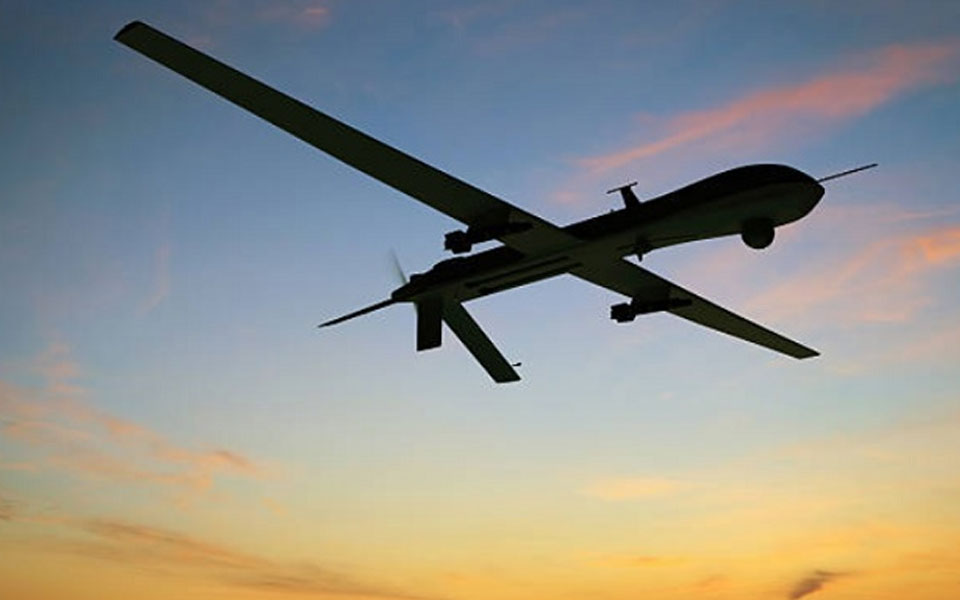
Beijing, Oct 9 : China will sell 48 high-end military drones to its "all-weather ally" Pakistan in what a military observer said will be the largest deal of its kind, official media here reported on Tuesday.
The cost of the deal was not revealed.
Wing Loong II, a high-end reconnaissance, strike and multi-role endurance unmanned aircraft system, is manufactured by Chengdu Aircraft Industrial (Group) Company.
The Unmanned Aerial Vehicle (UAV) will also be jointly manufactured, state-run Global Times reported.
China, an "all-weather ally" of Islamabad, is the largest supplier of weapon system to the Pakistan Army. Both the countries also jointly manufacture JF-Thunder a single engine multi-role combat aircraft.
The announcement by China to permit the sale of high-end military drones comes in the immediate backdrop of India's move to acquire S-400 sophisticated missile defence systems from Russia. The deal was clinched during last week's visit of Russian President Vladimir Putin to New Delhi.
The deal for the acquisition of Chinese drones was announced by Pakistan Air Force's Sherdils Aerobatic Team on its official Facebook account on Sunday, the Global Times report said.
It did not reveal the cost of the deal, when it was struck or when the Wing Loong IIs will be delivered, it said.
The air force academy aerobatics team announced that in the future, the Pakistan Aeronautical Complex Kamra and the Aviation Industry Corporation of China's Chengdu Aircraft Industrial (Group) Company will jointly manufacture the drones, the report said.
Chengdu Aircraft Industrial Group did not confirm when the deal was reached.
Wing Loong II made its maiden flight in February last year, an earlier report by the state-run Xinhua news agency said.
A Xinhua report in December last year said Wing Loong II UAS has already obtained the largest order of Chinese UAVs in the overseas market, even before its maiden flight. But the report did not specify the buyer.
According to the report, the system is composed of the ground station and various number of unmanned aerial vehicles.
Within 10 months of its maiden flight, multiple live firing tests had been conducted in accordance with the requirement of its customers, including stationary targets, moving targets, time sensitive targets and air-ground coordination, the report said.
A deal involving as many as 48 Wing Loong IIs, if confirmed, would be China's largest export deal for drones to date, Song Zhongping, a military expert and TV commentator, told the Global Times.
It makes sense the aerobatic team was closely involved with the deal, Song said, noting that the team is expected to train the drone operators.
The deal is trustworthy given the close military ties between the two countries and Pakistan's need for drones, Song said. US drones like the MQ-1 Predator and MQ-9 Reaper are technologically more advanced, but Washington limits their export, Song said.
Chinese drones will enjoy more success in the international market in the future, he said, as they perform similarly at a lower cost.
Let the Truth be known. If you read VB and like VB, please be a VB Supporter and Help us deliver the Truth to one and all.
44 peacocks die of H5N1 in Karnataka’s Tumakuru; minister orders precautions

Bengaluru (PTI): After 44 peacocks died of the H5N1 virus in Tumakuru district, Karnataka Minister Eshwar Khandre on Saturday directed officials to implement strict precautionary measures to prevent its spread across forest areas, including zoos and bird sanctuaries.
The directive comes after laboratory reports from the ICAR–National Institute of High Security Animal Diseases in Bhopal recently confirmed H5N1 avian influenza as the cause of the deaths.
According to the state forest minister, the peacocks died between April 16 and 21 in and around Bommanahalli and Kolihalli villages in Urdigere hobli, and Bairasandra and Hullenahalli villages in Gulur hobli of Tumakuru district.
“In this context, instructions have been issued in line with the revised H5N1 Action Plan of the Central Government to prevent the spread of infection across all forest areas, including zoos, bird sanctuaries, Magadi Lake, and the community reserve at Kokkare Bellur,” Khandre said in a note addressed to the principal chief conservator of forests (wildlife) and chief wildlife warden.
He also directed that any deaths of birds, whether migratory or local, must be reported immediately, and that samples from carcasses should be collected and sent for testing.
If required, a nodal officer may be appointed to monitor the situation across the state, he added.
Authorities have established an infected zone within a 0–3 km radius and a surveillance zone extending from 3 to 10 km.
According to the Health Department, surveillance for fever, Influenza-Like Illness (ILI), and Severe Acute Respiratory Infection (SARI) will be carried out over the next 10 days, covering a population of 20,432 across 38 villages.
In light of the situation, the department has advised the public to follow precautionary measures to minimise the risk of infection by avoiding contact with sick or dead birds and maintaining hand hygiene by washing hands frequently with soap and water.
It has also suggested the use of personal protective equipment (PPE) while handling birds or their droppings, and advised ensuring that poultry and eggs are thoroughly cooked (above 80 degrees celcius) before consumption.
The health department has also recommended avoiding close contact with individuals exhibiting symptoms of respiratory illness.
The department said it is closely monitoring the situation and has put necessary precautionary measures in place.
The public has been advised to remain vigilant and report any unusual bird deaths or symptoms promptly, officials added.
Avian influenza (H5N1) is a subtype of the influenza virus that infects birds and mammals, including humans in rare instances, according to the World Health Organisation. Human cases reported so far have been mostly linked to close contact with infected birds or other animals, or with contaminated environments.