China urges India to exercise caution on Tibet after Rijiju's remarks on Dalai Lama's successor
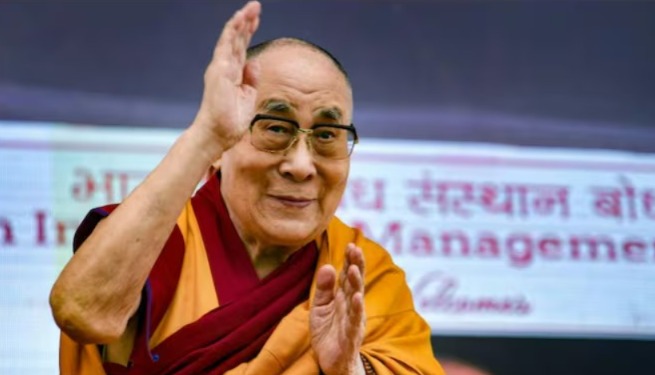
Beijing (PTI): China on Friday objected to Minority Affairs Minister Kiren Rijiju’s remarks that the incarnation of the Dalai Lama should follow his own wishes, urging India to act cautiously on Tibet-related issues to avoid its impact on the improvement of bilateral relations.
India should be clear of the anti-China separatist nature of the 14th Dalai Lama and honour its commitments on Xizang (Tibet) related issues, Chinese Foreign Ministry spokesperson Mao Ning told a media briefing here responding to a question on Rijiju’s comments. China refers to Tibet as Xizang.
India should exercise caution in its words and actions, stop interfering in China’s internal affairs with Xizang related issues and avoid impact on the improvement and development of the China-India relationship, Mao said.
Rijiju on Thursday asserted that the decision on the incarnation of the Dalai Lama would be taken by the established institution and the leader of Tibetan Buddhists himself and no one else.
It was the first reaction from a senior Indian government functionary on the comments of the Dalai Lama on his successor.
On Wednesday, the Tibetan spiritual leader said that the institution of the Dalai Lama will continue, and only the Gaden Phodrang Trust - founded by his office in 2015 - will have the authority to recognise his future reincarnation.
Rijiju's remarks came after China rejected the Nobel Peace laureate's succession plan, insisting that any future heir must receive its seal of approval.
Rijiju, a practising Buddhist, and Rajiv Ranjan Singh, a fellow Union minister, are representing the Government of India at the Dalai Lama's 90th birthday celebrations in Dharamshala on July 6.
The minister said that the birthday event is a religious function and has nothing to do with politics.
Mao reiterated China’s stand that the reincarnation of the Dalai Lama and the Panchen Lama, the second-high priest of Tibetan Buddhism, has to comply with rigorous religious rituals and historical conventions in line with domestic search, lots drawn from a 'golden urn' and the central government's approval.
The present 14th Dalai Lama went through this procedure and was approved by the then-central government, she said.
The reincarnation of the Dalai Lama must uphold those principles and follow religious rituals, historical conventions, Chinese law and regulations, she said.
Mao’s comments related to the improvement and development of relations refer to the efforts by both India and China to normalisation of ties after over four years of freeze following the Eastern Ladakh standoff.
The two countries resumed ties after a meeting between Prime Minister Narendra Modi and Chinese President Xi Jinping on the sidelines of the BRICS Summit at Kazan in Russia last year followed by a series of high-level meetings.
The resumption of the Kailash and Mansarovar Yatra for Indian pilgrims, which began recently, is stated to be the first step initiated by the two countries to normalise ties.
Let the Truth be known. If you read VB and like VB, please be a VB Supporter and Help us deliver the Truth to one and all.
Two injuries, one DNF, a DQ as India end messy World Relays campaign
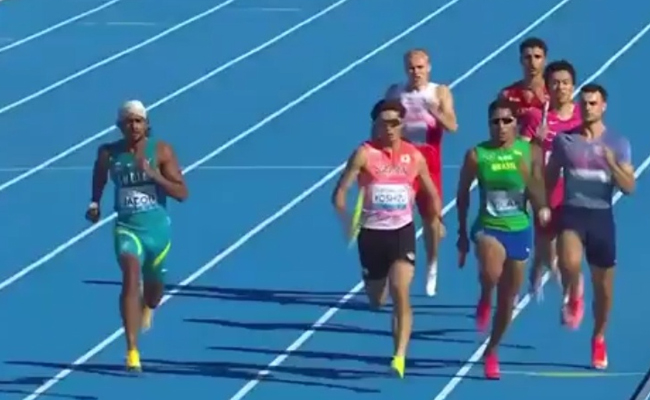
Gaborone (Botswana) (PTI): Amoj Jacob and Ragul Kumar got injured during the men's 4x400m and 4x100 races respectively as India ended their World Athletics Relays campaign in disappointment on the second day of competitions here on Sunday.
The Indian camp had high hopes of making the 2027 World Championships in the men's 4x400m relay but the team did not finish (DNF) the race as Jacob suffered cramps and pulled out of the race after taking the baton from the first leg runner Dharamveer Choudhary. Rajesh Ramesh and Vishal TK were to run in the third and fourth legs.
Those teams which could not qualify for the 2027 Beijing World Championships by reaching the final round of each of the six relay events on Saturday were given another chance in the second qualification round on Sunday.
The top two teams in each of the two heats (in all six relay events) booked the Beijing ticket on Sunday.
India will now have to try and qualify for the World Championships through the Top Lists of the World Athletics, which is a long and tedious process.
In the men's 4x100m race, third leg runner Ragul Kumar fell down the track after failing to hand over the baton inside the exchange zone to fourth leg runner Gurindervir Singh, which clearly showed the lack of coordination among the runners.
Harsh Santosh Raut and Animesh Kujur ran the first two legs.
The Indian quartet was disqualified and Kumar was seen being taken away from the Field of Play with the help of the volunteers.
It was a comedy of errors in the case of the women's 4x100m race, which saw the baton being dropped during an exchange between first leg runner Tamanna and second runner Nithya Gandhe, though the Indians finished the race in 53.09 seconds.
Gandhe started running quite a distance, but after realising that the baton was not in her hand, she turned and ran back to pick it up.
The only silver-lining for the Indian contingent was the national record time in the mixed 4x100m relay race, though the quartet of Ragul Kumar, Nithya Gandhe, Animesh Kujur and Sneha SS finished sixth in heat number two with a time of 41.35 seconds, bettering the previous national mark of 42.30 seconds set in March in Chandigarh.
The mixed 4x400m relay quartet of Theerthesh P Shetty, Kumari Saloni, Nihal William and Rashdeep Kaur ended at fifth in heat number one with a time of 3 minutes and 19.40 seconds.
On Saturday, all the five Indian relay teams had failed to make it to the respective final rounds and thus missed out on the 2027 World Championships berths.