China virus death toll jumps to 106; confirmed cases climb to over 4,500
Beijing: China has reported 24 more deaths from coronavirus epidemic, taking the number of fatalities to 106 as the confirmed cases of pneumonia caused by the outbreak stand at 4,515, the health authorities announced on Tuesday.
Barring Tibet, all Chinese provinces have reported the virus cases, posing a major challenge for the health authorities to contain it.
Overseas confirmed cases have been reported in Thailand (7), Japan (3), South Korea (3), the United States (3), Vietnam (2), Singapore (4), Malaysia (3), Nepal (1), France (3), Australia (4) and Sri Lanka (1).
The death toll from a coronavirus outbreak in China has soared to 106 while nearly 1,300 new cases have been confirmed, authorities said Tuesday.
The provincial authorities in the virus epicentre of Hubei province, of which Wuhan city is the capital, said 24 more people had died from the virus with 1,291 more infections.
By the end of Monday, a total of 4,515 cumulative confirmed cases of the new pneumonia had been reported in Hubei, while 2,567 patients are hospitalised, with 563 in severe conditions and 127 in critical conditions, the Hubei Provincial Health Commission said on Tuesday.
Hospitals across the province received 31,934 fever patients on Monday, state-run Xinhua news agency reported. As of now, 4,200 confirmed cases of the virus have been reported from China.
China's top cities of Beijing and Shanghai reported their first deaths on late Monday first from the novel coronavirus. The health commissions in both Beijing and Shanghai reported.
A 50-year-old male died of respiratory failure in Beijing on Monday. He was diagnosed on January 22, and was in Wuhan City from January 8 to 15.
Shanghai authorities have yet to release details of the deceased patient, state-run CGTN reported. As of Monday night, Beijing had eight more confirmed cases of the disease, bringing the total number to 80.
Two patients have been discharged from hospitals after treatment, while 63 patients were in stable condition. Shanghai had 66 confirmed cases as of Monday night, aged between seven and 88 years old.
A sense of disquiet prevailed in Beijing as officials announced the capital's first death from the deadly virus, a grim reminder that the epidemic has begun to take toll outside Hubei province.
On Monday, Chinese Premier Li Keqiang visited Wuhan, the first such trip by a top leader to the epicentre of the coronavirus outbreak, to boost the morale of millions of beleaguered people and medical staff.
The World Health Organisation on Monday admitted an error in its assessment of the global risk of a deadly virus in China, saying it was "high" and not "moderate", reports said.
The Geneva-based WHO in its latest situation report said the risk was "very high in China, high at the regional level and high at the global level."
The organisation attached to UN admitted that it had stated "incorrectly" in its previous reports that the global risk was "moderate".
WHO chief Tedros Adhanom Ghebreyesus is currently visiting Beijing to discuss how to contain the outbreak. He was quoted as saying on Thursday that "this is an emergency in China, but it has not yet become a global health emergency".
Meanwhile, the train and bus services between Beijing and neighbouring Tianjin have been suspended.
China has also extended the New Year Festival holidays till February 2 to prevent reverse migration of millions of migrants works to return to their work from holidays.
Universities, primary and middle schools and kindergartens across the country will postpone the opening of the spring semester until further notice.
The government is focussing efforts to prevent mass gatherings and mass travel to ensure the virus is not spread fast.
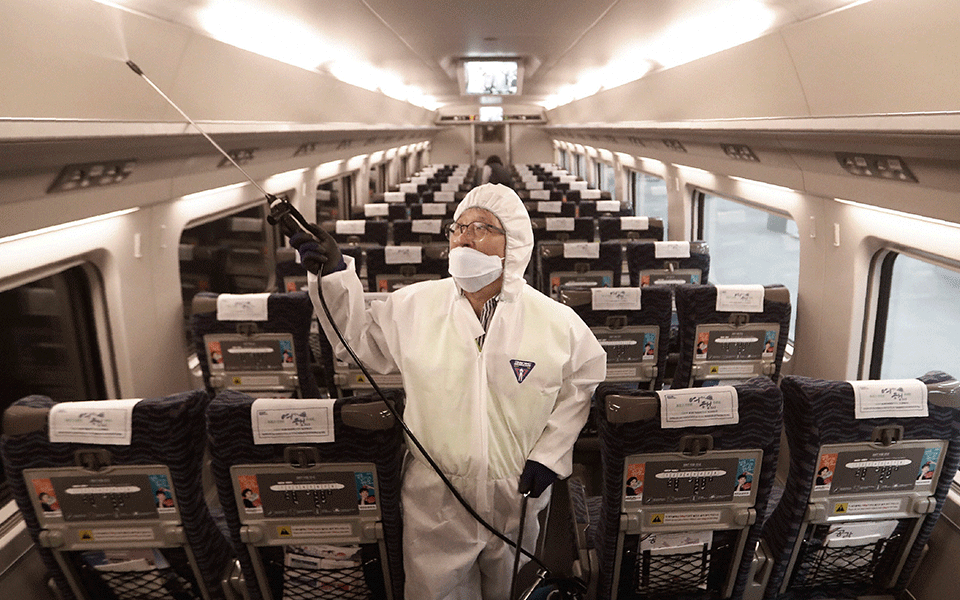
Beijing has also launched temperature detection at 55 subway stations, including stops at railway stations and Beijing airport. Passengers with abnormal body temperatures will be sent to hospital.
Let the Truth be known. If you read VB and like VB, please be a VB Supporter and Help us deliver the Truth to one and all.
Cong slams Modi govt as 'anti-worker', calls for review of new Labour code
New Delhi (PTI): The Congress on Friday accused the Modi government of being "anti-worker" and demanded that the new labour code be reviewed, MGNREGA be revived as well as a national minimum wage of Rs 400 per day be established.
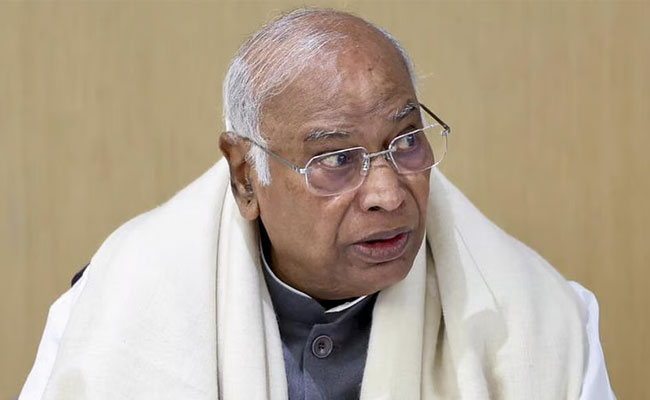
On International Labour Day, Congress president Mallikarjun Kharge took a swipe at the government and said unemployment in India today is a direct consequence of the 'Hum Do, Hamare Do' policies.
"Driven by the 'Hum Do, Hamare Do' policy, the Modi government implemented an anti-worker Labour Code. As a result, unrest has erupted everywhere - be it in Noida, at the IOCL facility in Panipat, Adani's factory in Raikheda, NTPC Patratu, or the Samsung factory in Sriperumbudur," Kharge said in a post in Hindi on X.
Instead of ensuring job security, this Code promotes policies such as contract labour and 'Hire & Fire' practices, Kharge said and called for a review of the new Labour Code.
The Modi government has effectively dismantled MGNREGA by forcibly pushing legislation through Parliament, he alleged.
"Mr. Modi has shifted 40% of the wage burden onto the State governments. State governments are unable to bear this financial strain and will eventually be forced to stop providing work," he claimed.
The Modi government has compelled workers into a state of unemployment and pushed them towards 'gig work', Kharge said.
Currently, 69% of the workforce is working for wages below the statutory minimum wage, he said.
The Modi government has engineered a crisis of stagnant wages, Kharge alleged.
"When adjusted for inflation, the wages of the majority of India's workers have grown by less than 1% annually over the last decade (from 2014-15 to 2022-23)," he said.
The Modi government has created a massive unemployment crisis among the educated workforce, specifically, among graduates, Kharge claimed and added that jobs have been eliminated through the sale of Public Sector Undertakings (PSUs).
"The government has refused to fill approximately 30 lakh vacant government positions. Furthermore, the government's policy blunders have led to the decimation of Micro, Small, and Medium Enterprises (MSMEs)," the Congress chief said.
The Congress reiterates its five demands for India's workers including revival of MGNREGA and its expansion to urban areas, Kharge said.
He said a national minimum wage of Rs 400 per day should be established, with MNREGA included within its scope.
Kharged demanded that a 'Right to Health' law must be enacted, providing Universal Health Coverage of up to Rs 25 lakh for laborers and workers.
"'Life Insurance and Accident Insurance' coverage must be provided for all unorganized workers. Preventing the contractualization of employment must be made a core priority of the government, and the new Labour Codes must be reviewed," Kharge asserted.