China virus death toll jumps to 41, cases soar to nearly 1,300

Wuhan: A deadly viral outbreak in China has now killed 41 people, while the number of infected cases has soared to nearly 1,300, authorities said Saturday.
The 15 new deaths all took place in Wuhan, the city of 11 million where the deadly respiratory contagion first emerged, the Hubei Health Commission said.
At least 444 new cases of the virus have been found, raising the total number to 1,287, the National Health Commission said in a separate statement.
The disease has spread to 30 provinces, autonomous regions and municipalities.
Wuhan and 13 other cities in Hubei have been locked down in an unprecedented quarantine effort aimed at containing the deadly respiratory contagion, which has spread to several other countries.
The Hubei Health Commission also reported 180 new cases overall in the province, 77 of them in Wuhan but the bulk of the rest spread out across the locked-down smaller cities. There are now 729 cases in Hubei alone.
Several of those cities were reporting their first cases of the pathogen -- 2019 Novel Coronavirus (2019-nCoV) -- the commission said.
The previously unknown virus has caused global concern because of its similarity to SARS (Severe Acute Respiratory Syndrome), which killed hundreds across mainland China and Hong Kong in 2002-2003.
It also has struck at possibly the worst time for China, when hundreds of millions of people are travelling across the country or overseas to celebrate the Lunar New Year holiday, China's most important festival.
Let the Truth be known. If you read VB and like VB, please be a VB Supporter and Help us deliver the Truth to one and all.
Madras HC strikes down TN order limiting maternity leave for third child
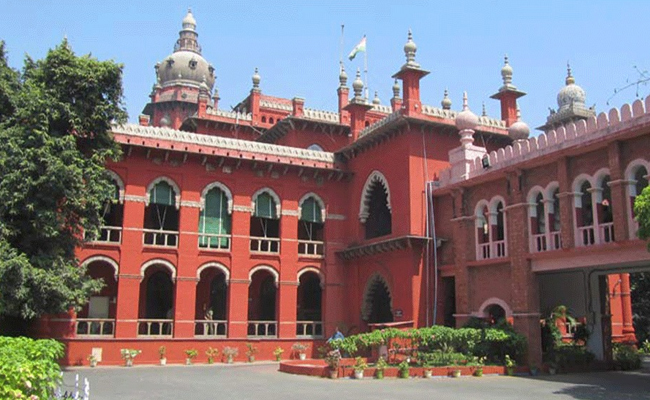
Chennai: The Madras High Court has set aside a Tamil Nadu government order restricting maternity leave for a third pregnancy to 12 weeks, holding the move to be contrary to established legal principles.
A division bench comprising Justices R Suresh Kumar and N Senthil Kumar ruled that there was no justification to treat third pregnancies differently from the first two, observing that the physical and medical requirements of childbirth remain the same irrespective of the number of pregnancies, as reported by The News Minute.
According to a report published by Live Law, the court was hearing a petition filed by Shayee Nisha, a staff member of the district judiciary in Villupuram, whose request for maternity leave from February 2026 to February 2027 had been curtailed to three months by authorities citing the March 13, 2026 government order.
Quashing the decision of the Principal District Judge and related directions asking her to resume duty, the bench directed that she be granted maternity leave on par with that provided for earlier pregnancies, allowing up to 365 days.
The court noted that both the Supreme Court of India and earlier rulings of the High Court had consistently held that maternity benefits cannot be denied for a third child. Holding the restriction to be unsustainable, the court directed authorities to process maternity leave applications without discrimination based on the number of pregnancies.
It also pointed out that a similar issue had been addressed by a division bench earlier this year, which had disapproved denial of maternity leave in such cases and directed that its ruling be circulated among judicial officers. Despite this, the state issued the impugned order, the bench observed.