China warns of 'substantial damage' to ties if Bangladesh joins US-led Quad alliance
Dhaka calls it 'aggressive'
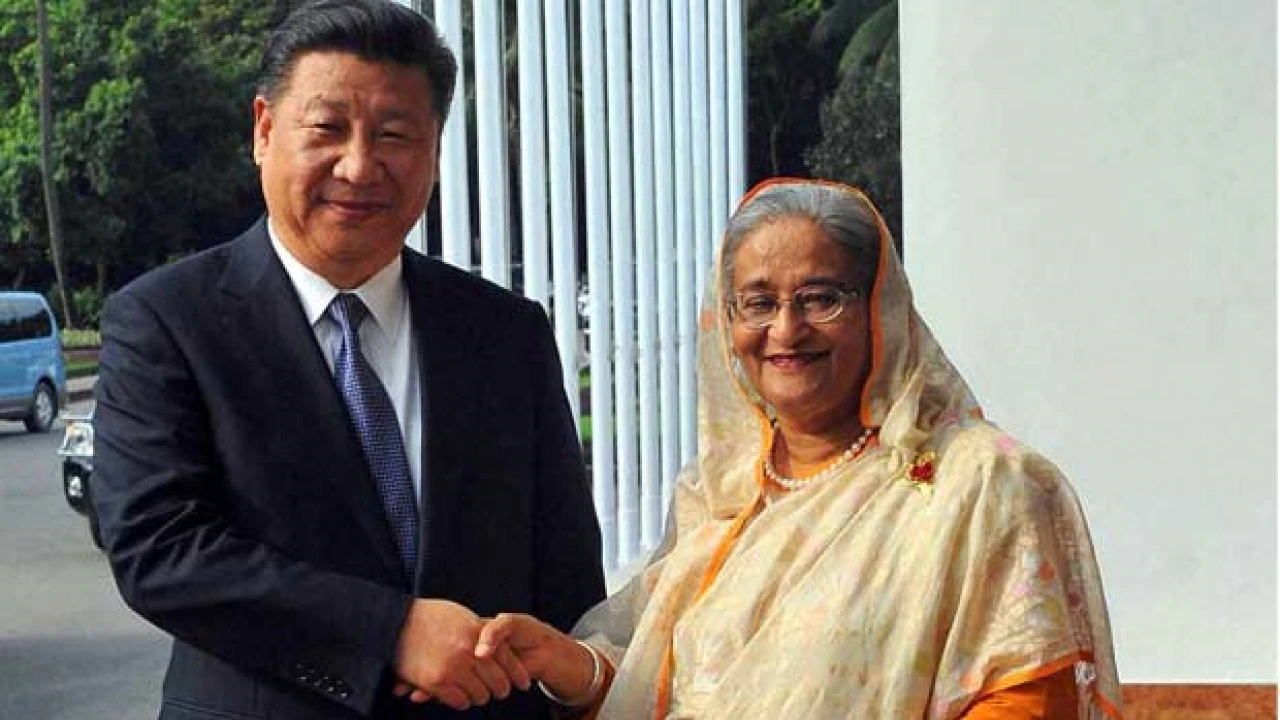
Dhaka, May 11: China has warned Bangladesh against joining the US-led Quad alliance, saying that Dhaka's participation in the anti-Beijing "club" would result in "substantial damage" to bilateral relations.
The provocative remarks by China's Ambassador in Dhaka Li Jiming was described by Bangladesh's foreign minister Dr AK Abdul on Tuesday as "very unfortunate" and "aggressive".
"We are an independent and sovereign State. We decide our foreign policy," he told reporters here, a day after Li made the remarks.
"Obviously it will not be a good idea for Bangladesh to participate in this small club of four (Quad) because it will substantially damage our bilateral relationship, Ambassador Li said at a virtual meeting organised by the Diplomatic Correspondents Association, Bangladesh on Monday.
Momen called the ambassador's comment "very unfortunate" and "aggressive", adding that he never heard such comments from any Chinese diplomat before.
We didn't expect such behaviour from China, he said.
Momen also called the ambassador's comment "irrelevant" and an "advanced one", adding that Bangladesh had been following a "non-aligned" and "balanced" foreign policy and the country would decide what to do in line with that principle.
A senior Bangladesh foreign ministry official, preferring anonymity, said Dhaka has so far has not expressed about the Quad while nobody either approached Bangladesh to join the platform and therefore the Chinese envoy's comments appeared "irrelevant".
The foreign minister said any country could express its position or views and being the representative of Beijing the Chinese ambassador could disseminate what his country wanted.
He said that when Chinese defence minister Gen. Wei Fenghe during his visit to Dhaka last month explained Beijing's attitude towards the Quad when "we (Bangladesh side) listened to them but didn't make any comment .
Gen. Wei told Bangladesh President Abdul Hamid that Beijing and Dhaka should make joint efforts against powers from outside the region establishing a "military alliance" in South Asia and practising "hegemonism".
Quad is a small group of elites working against China, Ambassador Li said on Monday.
Initiated in 2007, the Quadrilateral Security Dialogue, Quad for short, is an informal grouping of the US, India, Australia and Japan.
Quad says it is only for economic purposes and security and so on. But that's not true. We know that Quad is aimed at China, the envoy was quoted as saying by BDNews24.com news portal and other newspapers.
Japan, together with the US, has stated it very clearly - they are participating in [Quad] because of China, Li said.
Li described the Quad as a "narrow-purposed" geopolitical clique, and Bangladesh should not join it as the country will not derive any benefit from the initiative.
"History has proved again and again such partnership surely damages our neighbours' own social, economic development and people's well-being," Li was quoted as saying by the UNB news agency.
China has vehemently opposed the formation of the Quad with a Chinese foreign ministry spokesman emphasising in March that exchanges and cooperation between countries should help expand mutual understanding and trust, instead of targeting or harming the interests of third parties.
The Quad member countries have resolved to uphold a rules-based international order in the Indo-Pacific amid growing Chinese assertiveness in the strategically vital region.
The first summit of the Quad leaders was hosted by US President Joe Biden on March 12 and the virtual meeting was attended by Prime Minister Narendra Modi, Australian Prime Minister Scott Morrison and Japanese Prime Minister Yoshihide Suga.
The four Quad leaders have vowed to strive for an Indo-Pacific region that is free, open, inclusive, healthy, anchored by democratic values, and unconstrained by coercion, sending an clear message to China against its aggressive actions in the region.
"The (Chinese) ambassador's comment appeared a little 'provocative', which we could not welcome," said a senior foreign ministry official here said, preferring anonymity but added that it could a be Beijing's strategy to make known its attitude towards the grouping.
Let the Truth be known. If you read VB and like VB, please be a VB Supporter and Help us deliver the Truth to one and all.
Allahabad HC orders probe into 'reinstatement' of teacher in UP's Barabanki
Lucknow (PTI): The Lucknow Bench of the Allahabad High Court on Friday ordered a probe by the special task force (STF) into alleged irregularities in the rejoining of a teacher at City Intermediate College in Barabanki, observing that the reinstatement appeared to be prima facie illegal.
The court also directed the recovery of the salary paid to the teacher during the disputed period.
A bench of Justice Rajeev Singh passed the order on a petition filed by the college management committee. The court expressed doubts over the roles of the District Inspector of Schools (DIOS), Barabanki, the college principal and the teacher concerned and hence, directed a detailed inquiry into the matter.
Taking note of alleged manipulation of records and misleading submissions, the court ordered the immediate transfer of the Barabanki DIOS to ensure a fair probe. It also directed the initiation of disciplinary proceedings against the then joint director of education of the Ayodhya division.
In its order, the court found that the teacher, Abhay Kumar, was initially appointed as an assistant teacher in 2018 but joined an Eklavya Model Residential School in Chhattisgarh as a lecturer in June 2024 without obtaining permission from the management. His subsequent request to retain the lien was rejected.
Despite this, he was allowed to rejoin the Barabanki College in September 2025 on the directions of the joint director of education and the DIOS, and was even paid the salary for October 2025. The court termed the rejoining "wholly illegal" and lacking any legal basis.
The bench also expressed concern over lapses in communication within the education department and directed the Uttar Pradesh chief secretary to ensure that official orders are communicated through email and WhatsApp as well, to prevent disputes.
The matter is next listed for hearing on May 28 when a compliance report is sought.